In twenty short books, Penguin brings you the classics of the environmental movement - now in one complete set Over the past 75 years, a new canon has emerged. As humans have driven the living planet to the brink of collapse, visionary thinkers around the world have raised their voices to defend it. Their words have endured, becoming the classics that define the environmental movement today. From art, literature, food and gardening, to technology, economics, politics and ethics, each of these short books deepens our sense of our place in nature; each is a seed from which a bold activism can grow. Together, they show the richness of environmental thought, and point the way to a fairer, saner, greener world.
Authors


Wangari Maathai was a Kenyan environmental and political activist. She was educated in the United States at Mount St. Scholastica and the University of Pittsburgh, as well as the University of Nairobi in Kenya. In the 1970s, Maathai founded the Green Belt Movement, an environmental non-governmental organization focused on the planting of trees, environmental conservation, and women's rights. In 1984, she was awarded the Right Livelihood Award, and in 2004, she became the first African woman to receive the Nobel Peace Prize for “her contribution to sustainable development, democracy and peace.” Maathai was an elected member of Parliament and served as Assistant Minister for Environment and Natural Resources in the government of President Mwai Kibaki between January 2003 and November 2005.In June 2009, Maathai was named as one of PeaceByPeace.com's first peace heroes.Until her death, Maathai served on the Eminent Advisory Board of the Association of European Parliamentarians with Africa (AWEPA).Maathai died on 25 September 2011 in Nairobi while receiving ovarian cancer treatment. She was 71.Selected publications The Green Belt Movement: sharing the approach and the experience (1985) The bottom is heavy too: even with the Green Belt Movement : the Fifth Edinburgh Medal Address (1994) Bottle-necks of development in Africa (1995) The Canopy of Hope: My Life Campaigning for Africa, Women, and the Environment (2002) Unbowed: A Memoir (2006) Reclaiming rights and resources women, poverty and environment (2007) Rainwater Harvesting (2008) State of the world's minorities 2008: events of 2007 (2008) The Challenge for Africa (2009) Replenishing the Earth (2010) ISBN 978030759114 more info at http://en.wikipedia.org/wiki/Wangari\_...

Næss was a Norwegian philosopher, known foremost as the founder of the concept Deep Ecology Næss combined his ecological vision with Gandhian nonviolence and on several occasions participated in direct action events. He was the youngest person to ever be promoted to professor at Oslo University (27), a position he inhabited from 1939 to 1970. Næss' main philosophical work from the 1950s was entitled Interpretation and Preciseness. . He later developed the conclusions in that book into a simplified, practical textbook, entitled Communication and Argument, which became a valued introduction to pragmatics or rather "language logic", and was thus used over many decades as a sine qua non for the preparatory examination at the University of Oslo, later known as "Examen Philosophicum". From the 1960s and forward his work came to be more and more focused on what would later be known as deep ecology. The name was first introduced to the public by Næss in 1972 during a lecture and was later explained further in The Shallow and the Deep Long-Range Ecology Movement: A Summary (published 1973 in the Inquiry journal).

Alternate spelling of James E. Lovelock. James Lovelock was born in Letchworth Garden City to Tom Arthur Lovelock (1873–1957) and his second wife Nellie Annie Elizabeth née March (1887–1980). Nell, his mother, won a scholarship to a grammar school but was unable to take it up, and started work at 13 in a pickle factory. His father, Tom, had served six months hard labour for poaching in his teens and was illiterate until attending technical college, and later ran a book shop. Lovelock was brought up a Quaker and indoctrinated with the notion that "God is a still, small voice within rather than some mysterious old gentleman way out in the universe", which he thinks is a helpful way of thinking for inventors, but would eventually end up as being non-religious. The family moved to London, where his dislike of authority made him, by his own account, an unhappy pupil at Strand School. Lovelock could not at first afford to go to university, something which he believes helped prevent him becoming overspecialised and aided the development of Gaia theory.


Rachel Louise Carson (May 27, 1907 – April 14, 1964) was an American marine biologist and conservationist whose book Silent Spring and other writings are credited with advancing the global environmental movement. Carson began her career as an aquatic biologist in the U.S. Bureau of Fisheries, and became a full-time nature writer in the 1950s. Her widely praised 1951 bestseller The Sea Around Us won her a U.S. National Book Award, recognition as a gifted writer, and financial security. Her next book, The Edge of the Sea, and the reissued version of her first book, Under the Sea Wind, were also bestsellers. This sea trilogy explores the whole of ocean life from the shores to the depths. Late in the 1950s, Carson turned her attention to conservation, especially environmental problems that she believed were caused by synthetic pesticides. The result was Silent Spring (1962), which brought environmental concerns to an unprecedented share of the American people. Although Silent Spring was met with fierce opposition by chemical companies, it spurred a reversal in national pesticide policy, which led to a nationwide ban on DDT and other pesticides, and it inspired a grassroots environmental movement that led to the creation of the U.S. Environmental Protection Agency. Carson was posthumously awarded the Presidential Medal of Freedom. A variety of groups ranging from government institutions to environmental and conservation organizations to scholarly societies have celebrated Carson's life and work since her death. Perhaps most significantly, on June 9, 1980, Carson was awarded the Presidential Medal of Freedom, the highest civilian honor in the United States. A 17¢ Great Americans series postage stamp was issued in her honor the following year; several other countries have since issued Carson postage as well. Carson's birthplace and childhood home in Springdale, Pennsylvania—now known as the Rachel Carson Homestead—became a National Register of Historic Places site, and the nonprofit Rachel Carson Homestead Association was created in 1975 to manage it. Her home in Colesville, Maryland where she wrote Silent Spring was named a National Historic Landmark in 1991. Near Pittsburgh, a 35.7 miles (57 km) hiking trail, maintained by the Rachel Carson Trails Conservancy, was dedicated to Carson in 1975. A Pittsburgh bridge was also renamed in Carson's honor as the Rachel Carson Bridge. The Pennsylvania Department of Environmental Protection State Office Building in Harrisburg is named in her honor. Elementary schools in Gaithersburg, Montgomery County, Maryland, Sammamish, Washington and San Jose, California were named in her honor, as were middle schools in Beaverton, Oregon and Herndon, Virginia (Rachel Carson Middle School), and a high school in Brooklyn, New York. Between 1964 and 1990, 650 acres (3 km2) near Brookeville in Montgomery County, Maryland were acquired and set aside as the Rachel Carson Conservation Park, administered by the Maryland-National Capital Park and Planning Commission. In 1969, the Coastal Maine National Wildlife Refuge became the Rachel Carson National Wildlife Refuge; expansions will bring the size of the refuge to about 9,125 acres (37 km2). In 1985, North Carolina renamed one of its estuarine reserves in honor of Carson, in Beaufort. Carson is also a frequent namesake for prizes awarded by philanthropic, educational and scholarly institutions. The Rachel Carson Prize, founded in Stavanger, Norway in 1991, is awarded to women who have made a contribution in the field of environmental protection. The American Society for Environmental History has awarded the Rachel Carson Prize for Best Dissertation since 1993. Since 1998, the Society for Social Studies of Science has awarded an annual Rachel Carson Book Prize for "a book length work of social or political relevance in the area of science and technology studies." More: http://en.wikipedia.org/wiki/Rachel\_C...

Masanobu Fukuoka was born in 1914 in a small farming village on the island of Shikoku in Southern Japan. He was educated in microbiology and worked as a soil scientist specializing in plant pathology, but at the age of twenty-five he began to have doubts about the "wonders of modern agriculture science." While recovering from a severe attack of pneumonia, Fukuoka experienced a moment of satori or personal enlightenment. He had a vision in which something one might call true nature was revealed to him. He saw that all the "accomplishments" of human civilization are meaningless before the totality of nature. He saw that humans had become separated from nature and that our attempts to control or even understand all the complexities of life were not only futile, they were self-destructive. From that moment on, he has spent his life trying to return to the state of being one with nature. At the time of his revelation, Fukuoka was living in a Japan that was abandoning its traditional farming methods and adopting Western agriculture, economic and industrial models. He saw how this trend was driving the Japanese even further from a oneness with nature, and how destructive and polluting those practices were. As a result, he resigned his job as a research scientist and returned to his father's farm on Shikoku determined to demonstrate the practical value of his vision by restoring the land to a condition that would enable nature's original harmony to prevail. Through 30 years of refinement he was able to develop a "do-nothing" method of farming. Without soil cultivation such as plowing or tilling, chemical fertilizers, pesticides, weeding, pruning, machinery or compost, Fukuoka was able to produce high-quality fruit, vegetables and grains with yields equal to or greater than those of any neighboring farm. In his 60's, Fukuoka sat down to document what he had seen and done. In 1975 his first book "One Straw Revolution" was released and has had a profound impact on agriculture and human consciousness all over the world. "One Straw Revolution" was followed by "The Natural Way of Farming" and then by "The Road Back To Nature." Since 1979, Fukuoka has been touring, giving lectures and sowing the seeds of natural farming all over the world. In 1988 he was given Deshikottan Award, and the Ramon Magsaysay Award. In 1997 he received the Earth Council Award. from http://fukuokafarmingol.info/fintro.html

A Sand County Almanac , published posthumously in 1949, of American writer and naturalist Aldo Leopold celebrates the beauty of the world and advocates the conscious protection of wild places. His effect on resource management and policy lasted in the early to mid-twentieth century, and since his death, his influence continued to expand. Through his observation, experience, and reflection at his river farm in Wisconsin, he honed the concepts of land health and a land ethic that since his death ever influenced in the years. Despite more than five hundred articles and three books during the course of his geographically widespread career, time at his shack and farm in Wisconsin inspired most of the disarmingly simple essays that so many persons found so thought-provoking. Life story of Aldo Leopold, the development of his career as a conservationist, scientist, and philosopher, and his open-mindedness, his vision, and the evolution of his thinking throughout his life inspire other persons to start or to further their own intellectual journey of discovery. A closer engagement with his story, his inspiration, and his family helps persons better to understand the contours of environmental history and the role in culture and to reflect on their own in the complex weave of the way in which our society relates to land. His vision of a society that cares about the connections between people and land provides a starting point for thinking about modern-day cultures, economies, ecosystems, and communities. Starker Leopold, Luna Leopold, Nina Leopold, Carl Leopold, and Estella Leopold—children of Aldo—founded the Aldo Leopold foundation in 1982. People respected all members of the Leopold family as scientists and conservationists in their own right. They recognized the shack and farm as a focal point for legacy of their father for generations to come and for this primary reason established the foundation. This public charity owns and manages the Leopold center, including the Leopold shack and 264 surrounding acres in addition to several other parcels and also manages much of the adjoining 1,800-acre Leopold memorial reserve, which neighboring landowners established as an early trust in 1967. It acts as the executor of literary estate of Leopold, encourages scholarship on Leopold, and serves as a clearinghouse for information regarding Leopold, his work, and his ideas. It provides interpretive resources and tours for five thousand visitors annually, cooperates with partners on education and other programming off site, and maintains a robust website and numerous print resources. The Aldo Leopold foundation manages this Goodreads page.

Amitav Ghosh is one of India's best-known writers. His books include The Circle of Reason, The Shadow Lines, In An Antique Land, Dancing in Cambodia, The Calcutta Chromosome, The Glass Palace, Incendiary Circumstances, The Hungry Tide. His most recent novel, Sea of Poppies, is the first volume of the Ibis Trilogy. Amitav Ghosh was born in Calcutta in 1956. He studied in Dehra Dun, New Delhi, Alexandria and Oxford and his first job was at the Indian Express newspaper in New Delhi. He earned a doctorate at Oxford before he wrote his first novel, which was published in 1986. The Circle of Reason won the Prix Medicis Etranger, one of France's top literary awards, and The Shadow Lines won the Sahitya Akademi Award and the Ananda Puraskar. The Calcutta Chromosome won the Arthur C. Clarke Award for 1997 and The Glass Palace won the Grand Prize for Fiction at the Frankfurt International e-Book Awards in 2001. The Hungry Tide won the Hutch Crossword Book Prize in 2006. In 2007 Amitav Ghosh was awarded the Grinzane Cavour Prize in Turin, Italy. Amitav Ghosh has written for many publications, including the Hindu, The New Yorker and Granta, and he has served on the juries of several international film festivals, including Locarno and Venice. He has taught at many universities in India and the USA, including Delhi University, Columbia, the City University of New York and Harvard. He no longer teaches and is currently writing the next volume of the Ibis Trilogy. He is married to the writer, Deborah Baker, and has two children, Lila and Nayan. He divides his time between Kolkata, Goa and Brooklyn.


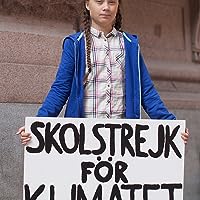
Greta Thunberg is a Swedish climate activist who, as a schoolgirl at age 15, began protesting outside the Swedish parliament about the need for immediate action to combat climate change. She has since become an outspoken and world famous climate activist. She is known for having initiated the school strike for climate movement that formed in November 2018 and surged globally after the United Nations Climate Change Conference (COP24) in December the same year. Her personal activism began in August 2018, when her recurring and solitary Skolstrejk för klimatet ("School strike for the climate") protesting outside the Swedish parliament in Stockholm began attracting media coverage, even though Sweden has already enacted "the most ambitious climate law in the world" – to be carbon neutral by 2045. On 15 March 2019, an estimated 1.4 million students in 112 countries around the world joined her call in striking and protesting. A similar event involving students from 125 countries took place on 24 May 2019. Thunberg has received various prizes and awards for her activism. In March 2019, three members of the Norwegian parliament nominated Thunberg for the Nobel Peace Prize. In May 2019, at the age of 16, she featured on the cover of Time magazine. Some media have described her impact on the world stage as the Greta Thunberg effect. Source: Wikipedia


Tim Flannery is one of Australia's leading thinkers and writers. An internationally acclaimed scientist, explorer and conservationist, he has published more than 130 peer-reviewed scientific papers and many books. His books include the landmark works The Future Eaters and The Weather Makers, which has been translated into more than 20 languages and in 2006 won the NSW Premiers Literary Prizes for Best Critical Writing and Book of the Year. He received a Centenary of Federation Medal for his services to Australian science and in 2002 delivered the Australia Day address. In 2005 he was named Australian Humanist of the Year, and in 2007 honoured as Australian of the Year. He spent a year teaching at Harvard, and is a founding member of the Wentworth Group of Concerned Scientists, a director of the Australian Wildlife Conservancy, and the National Geographic Society's representative in Australasia. He serves on the board of WWF International (London and Gland) and on the sustainability advisory councils of Siemens (Munich) and Tata Power (Mumbai). In 2007 he co-founded and was appointed Chair of the Copenhagen Climate Council, a coalition of community, business, and political leaders who came together to confront climate change. Tim Flannery is currently Professor of Science at Maquarie University, Sydney.