Margins
Histoire d'une couleur book cover 1
Histoire d'une couleur book cover 2
Histoire d'une couleur book cover 3
Histoire d'une couleur
Series · 6 books · 2000-2022

Books in series

Blue book cover
#1

Blue

The History of a Color

2000

A beautifully illustrated visual and cultural history of the color blue throughout the ages Blue has had a long and topsy-turvy history in the Western world. The ancient Greeks scorned it as ugly and barbaric, but most Americans and Europeans now cite it as their favorite color. In this fascinating history, the renowned medievalist Michel Pastoureau traces the changing meanings of blue from its rare appearance in prehistoric art to its international ubiquity today. Any history of color is, above all, a social history. Pastoureau investigates how the ever-changing role of blue in society has been reflected in manuscripts, stained glass, heraldry, clothing, paintings, and popular culture. Beginning with the almost total absence of blue from ancient Western art and language, the story moves to medieval Europe. As people began to associate blue with the Virgin Mary, the color became a powerful element in church decoration and symbolism. Blue gained new favor as a royal color in the twelfth century and became a formidable political and military force during the French Revolution. As blue triumphed in the modern era, new shades were created and blue became the color of romance and the blues. Finally, Pastoureau follows blue into contemporary times, when military clothing gave way to the everyday uniform of blue jeans and blue became the universal and unifying color of the Earth as seen from space. Beautifully illustrated, Blue tells the intriguing story of our favorite color and the cultures that have hated it, loved it, and made it essential to some of our greatest works of art.
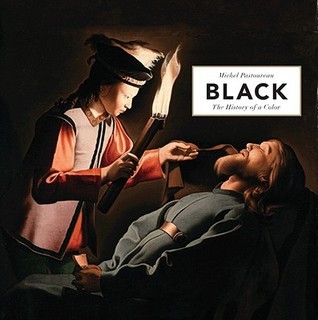
Black book cover
#2

Black

The History of a Color

2008

Black - favorite color of priests and penitents, artists and ascetics, fashion designers and fascists - has always stood for powerfully opposed ideas: authority and humility, sin and holiness, rebellion and conformity, wealth and poverty, good and bad. In this beautiful and richly illustrated book, the acclaimed author of Blue now tells the fascinating social history of the color black in Europe. In the beginning was black, Michel Pastoureau tells us. The archetypal color of darkness and death, black was associated in the early Christian period with hell and the devil but also with monastic virtue. In the medieval era, black became the habit of courtiers and a hallmark of royal luxury. Black took on new meanings for early modern Europeans as they began to print words and images in black and white, and to absorb Isaac Newton's announcement that black was no color after all. During the romantic period, black was melancholy's friend, while in the twentieth century black (and white) came to dominate art, print, photography, and film, and was finally restored to the status of a true color. For Pastoureau, the history of any color must be a social history first because it is societies that give colors everything from their changing names to their changing meanings#151;and black is exemplary in this regard. In dyes, fabrics, and clothing, and in painting and other art works, black has always been a forceful, and ambivalent, shaper of social, symbolic, and ideological meaning in European societies. With its striking design and compelling text, Black will delight anyone who is interested in the history of fashion, art, media, or design.
Green book cover
#3

Green

The History of a Color

2013

In this beautiful and richly illustrated book, the acclaimed author of Blue and Black presents a fascinating and revealing history of the color green in European societies from prehistoric times to today. Examining the evolving place of green in art, clothes, literature, religion, science, and everyday life, Michel Pastoureau traces how culture has profoundly changed the perception and meaning of the color over millennia—and how we misread cultural, social, and art history when we assume that colors have always signified what they do today. Filled with entertaining and enlightening anecdotes, Green shows that the color has been ambivalent: a symbol of life, luck, and hope, but also disorder, greed, poison, and the devil. Chemically unstable, green pigments were long difficult to produce and even harder to fix. Not surprisingly, the color has been associated with all that is changeable and fleeting: childhood, love, and money. Only in the Romantic period did green definitively become the color of nature. Pastoureau also explains why the color was connected with the Roman emperor Nero, how it became the color of Islam, why Goethe believed it was the color of the middle class, why some nineteenth-century scholars speculated that the ancient Greeks couldn’t see green, and how the color was denigrated by Kandinsky and the Bauhaus. More broadly, Green demonstrates that the history of the color is, to a large degree, one of dramatic reversal: long absent, ignored, or rejected, green today has become a ubiquitous and soothing presence as the symbol of environmental causes and the mission to save the planet. With its striking design and compelling text, Green will delight anyone who is interested in history, culture, art, fashion, or media.
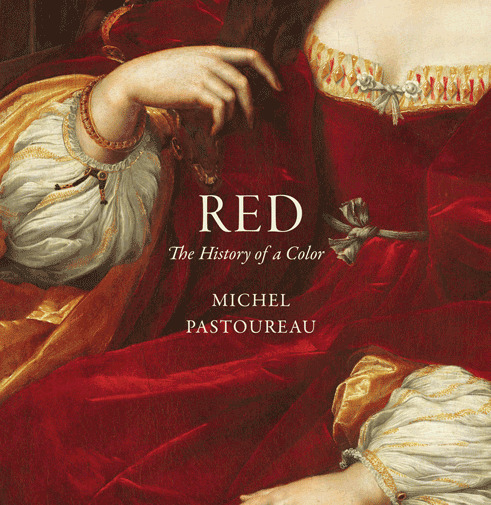
Red book cover
#4

Red

The History of a Color

2017

The color red has represented many things, from the life force and the divine to love, lust, and anger. Up through the Middle Ages, red held a place of privilege in the Western world. For many cultures, red was not just one color of many but rather the only color worthy enough to be used for social purposes. In some languages, the word for red was the same as the word for color. The first color developed for painting and dying, red became associated in antiquity with war, wealth, and power. In the medieval period, red held both religious significance, as the color of the blood of Christ and the fires of Hell, and secular meaning, as a symbol of love, glory, and beauty. Yet during the Protestant Reformation, red began to decline in status. Viewed as indecent and immoral and linked to luxury and the excesses of the Catholic Church, red fell out of favor. After the French Revolution, red gained new respect as the color of progressive movements and radical left-wing politics. In this beautifully illustrated book, Michel Pastoureau, the acclaimed author of Blue, Black, and Green, now masterfully navigates centuries of symbolism and complex meanings to present the fascinating and sometimes controversial history of the color red. Pastoureau illuminates red's evolution through a diverse selection of captivating images, including the cave paintings of Lascaux, the works of Renaissance masters, and the modern paintings and stained glass of Mark Rothko and Josef Albers.
Yellow book cover
#5

Yellow

The History of a Color

2019

From the acclaimed author of Blue, a beautifully illustrated history of yellow around the world, from antiquity to the present In this richly illustrated book, Michel Pastoureau—a renowned authority on the history of color and the author of celebrated volumes on blue, black, green, and red—now traces the history of yellow around the world. Filled with entertaining and enlightening anecdotes from Europe, East Asia, India, Africa, and South America, Yellow tells the intriguing story of the color's evolving place in art, religion, fashion, literature, science, and everyday life, and reveals how its meaning has changed profoundly over millennia and varied among cultures. In European societies today, yellow is a discreet color, little present in everyday life and rarely carrying great symbolism. This has not always been the case. In antiquity, yellow was almost sacred, a symbol of light, warmth, and prosperity. It became highly ambivalent in medieval Europe: greenish yellow came to signify demonic sulfur and bile, the color of forgers, lawless knights, Judas, and Lucifer—while warm yellow recalled honey and gold, serving as a sign of pleasure and abundance. In Asia, yellow has generally had a positive meaning. In ancient China, yellow clothing was reserved for the emperor, while in India the color is associated with happiness. Above all, yellow is the color of Buddhism, whose temple doors are marked with it. Throughout, Pastoureau illuminates the history of yellow with a wealth of captivating images. With its striking design and compelling text, Yellow is a feast for the eye and mind.
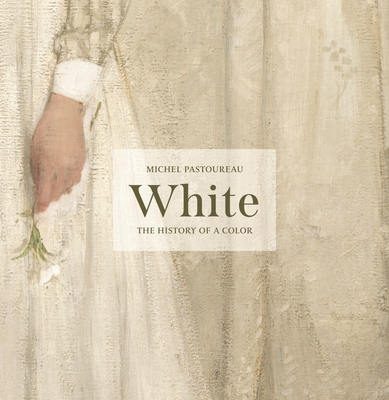
White book cover
#6

White

The History of a Color

2022

From the acclaimed author of Blue, a beautifully illustrated history of the color white in visual culture, from antiquity to today As a pigment, white is often thought to represent an absence of color, but it is without doubt an important color in its own right, just like red, blue, green, or yellow―and, like them, white has its own intriguing history. In this richly illustrated book, Michel Pastoureau, a celebrated authority on the history of colors, presents a fascinating visual, social, and cultural history of the color white in European societies, from antiquity to today. Illustrated throughout with a wealth of captivating images ranging from the ancient world to the twenty-first century, White examines the evolving place, perception, and meaning of this deceptively simple but complex hue in art, fashion, literature, religion, science, and everyday life across the millennia. Before the seventeenth century, white’s status as a true color was never contested. On the contrary, from antiquity until the height of the Middle Ages, white formed with red and black a chromatic triad that played a central role in life and art. Nor has white always been thought of as the opposite of black. Through the Middle Ages, the true opposite of white was red. White also has an especially rich symbolic history, and the color has often been associated with purity, virginity, innocence, wisdom, peace, beauty, and cleanliness. With its striking design and compelling text, White is a colorful history of a surprisingly vivid and various color.


Author

Michel Pastoureau
Michel Pastoureau
Author · 23 books

Pastoureau was born in Paris on 17 June 1947. He studied at the École Nationale des Chartes, a college for prospective archivists and librarians. After writing his 1972 thesis about heraldic bestiaries in the Middle Ages, he worked in the coins, medals and antiquities department of the French National Library until 1982. Since 1983 he has held the Chair of History of Western Symbolism (Chaire d'histoire de la symbolique occidentale) and is a director of studies at the Sorbonne's École pratique des hautes études. He is an academician of the Académie internationale d'héraldique (International Academy of Heraldry) and vice-president of the Société française d'héraldique (French Heraldry Society). When he received an honorary doctorate from the University of Lausanne in 1996, he was described as an eminent scholar who has made a radical contribution to several disciplines. Professor Pastoureau has published widely, including work on the history of colours, animals, symbols, and the Knights of the Round Table. He has also written on emblems and heraldry, as well as sigillography and numismatics.

548 Market St PMB 65688, San Francisco California 94104-5401 USA
© 2026 Paratext Inc. All rights reserved
Histoire d'une couleur