Margins
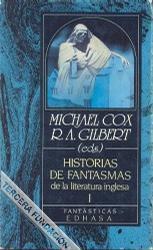
Historias de fantasmas de la literatura inglesa I book cover
Historias de fantasmas de la literatura inglesa I
1948
First Published
4.50
Average Rating
399
Number of Pages

Part of Series

Los cuentos de fantasmas han ejercido durante mucho tiempo una fascinación universal, pero el cuento de fantasmas literario, comparado con los relatos de tradición oral, es de origen relativamente tardío, y los primeros ejemplos aparecieron en las décadas iniciales del siglo diecinueve. Esta relación -en dos volúmenes- de cuarenta y dos relatos escritos entre 1829 y 1968 es la primera que presenta la diversidad y vitalidad de la tradición inglesa de los cuentos de fantasmas, mostrando tanto su desarrollo histórico como sus principales temas y características.

Avg Rating
4.50
Number of Ratings
8
5 STARS
50%
4 STARS
50%
3 STARS
0%
2 STARS
0%
1 STARS
0%
goodreads

Authors

Henry James
Henry James
Author · 235 books

Henry James, OM (1843-1916), son of theologian Henry James Sr., brother of the philosopher and psychologist William James and diarist Alice James, was an American-born author, one of the founders and leaders of a school of realism in fiction. He spent much of his life in England and became a British subject shortly before his death. He is primarily known for a series of major novels in which he portrayed the encounter of America with Europe. His plots centered on personal relationships, the proper exercise of power in such relationships, and other moral questions. His method of writing from the point of view of a character within a tale allowed him to explore the phenomena of consciousness and perception, and his style in later works has been compared to impressionist painting. James insisted that writers in Great Britain and America should be allowed the greatest freedom possible in presenting their view of the world, as French authors were. His imaginative use of point of view, interior monologue and unreliable narrators in his own novels and tales brought a new depth and interest to realistic fiction, and foreshadowed the modernist work of the twentieth century. An extraordinarily productive writer, in addition to his voluminous works of fiction he published articles and books of travel writing, biography, autobiography, and criticism,and wrote plays, some of which were performed during his lifetime with moderate success. His theatrical work is thought to have profoundly influenced his later novels and tales.

Walter Scott
Walter Scott
Author · 85 books

Librarian Note: There is more than one author in the GoodReads database with this name. British writer Sir Walter Scott popularized and refined a genre of ballads and historical novels; his works include Waverley (1814) and Ivanhoe (1819). Sir Walter Alva Scott created and called a series. Scott arranged the plots and characters so that the reader enters into the lives of great and ordinary persons, caught in violent, dramatic changes. Work of Scott shows the influence of the 18th century Enlightenment. He thought of every basically decent human, regardless of class, religion, politics, or ancestry. A major theme tolerates. They express his theory in the need for social progress that rejects not the traditions of the past. He first portrayed peasant characters sympathetically and realistically and equally justly portrayed merchants, soldiers, and even kings. In central themes, cultures conflict and oppose. Normans and Saxons warred. In The Talisman (1825), Christians and Muslims conflict. He deals with clashes between the new English and the old Scottish culture. Other great include Old Mortality (1816), The Heart of Midlothian (1819), and Saint Ronan's Well (1824). His series includes Rob Roy (1817), A Legend of Montrose (1819), and Quentin Durward (1823). Amiability, generosity, and modesty made Scott popular with his contemporaries. He also famously entertained on a grand scale at Abbotsford, his Scottish estate.

E. Nesbit
E. Nesbit
Author · 105 books

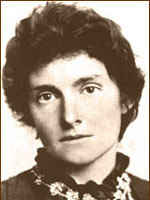
Edith Nesbit (married name Edith Bland; 15 August 1858 – 4 May 1924) was an English author and poet; she published her books for children under the name of E. Nesbit. She wrote or collaborated on over 60 books of fiction for children, several of which have been adapted for film and television. She was also a political activist and co-founded the Fabian Society, a socialist organisation later connected to the Labour Party. Edith Nesbit was born in Kennington, Surrey, the daughter of agricultural chemist and schoolmaster John Collis Nesbit. The death of her father when she was four and the continuing ill health of her sister meant that Nesbit had a transitory childhood, her family moving across Europe in search of healthy climates only to return to England for financial reasons. Nesbit therefore spent her childhood attaining an education from whatever sources were available—local grammars, the occasional boarding school but mainly through reading. At 17 her family finally settled in London and aged 19, Nesbit met Hubert Bland, a political activist and writer. They became lovers and when Nesbit found she was pregnant they became engaged, marrying in April 1880. After this scandalous (for Victorian society) beginning, the marriage would be an unconventional one. Initially, the couple lived separately—Nesbit with her family and Bland with his mother and her live-in companion Maggie Doran. Initially, Edith Nesbit books were novels meant for adults, including The Prophet's Mantle (1885) and The Marden Mystery (1896) about the early days of the socialist movement. Written under the pen name of her third child 'Fabian Bland', these books were not successful. Nesbit generated an income for the family by lecturing around the country on socialism and through her journalism (she was editor of the Fabian Society's journal, Today). In 1899 she had published The Adventures of the Treasure Seekers to great acclaim.

J. Sheridan Le Fanu
J. Sheridan Le Fanu
Author · 104 books
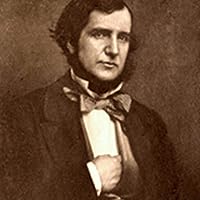
Joseph Thomas Sheridan Le Fanu was an Irish writer of Gothic tales and mystery novels. He was the leading ghost-story writer of the nineteenth century and was central to the development of the genre in the Victorian era. M.R. James described Le Fanu as "absolutely in the first rank as a writer of ghost stories". Three of his best-known works are Uncle Silas, Carmilla and The House by the Churchyard.
Amelia B. Edwards
Amelia B. Edwards
Author · 26 books

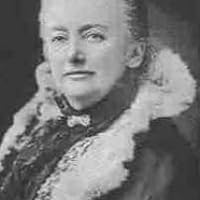
Amelia Ann Blandford Edwards An English novelist, journalist, lady traveller and Egyptologist, born to an Irish mother and a father who had been a British Army officer before becoming a banker. Edwards was educated at home by her mother, showing considerable promise as a writer at a young age. She published her first poem at the age of 7, her first story at age 12. Edwards thereafter proceeded to publish a variety of poetry, stories and articles in a large number of magazines. Edwards' first full-length novel was My Brother's Wife (1855). Her early novels were well received, but it was Barbara's History (1864), a novel of bigamy, that solidly established her reputation as a novelist. She spent considerable time and effort on their settings and backgrounds, estimating that it took her about two years to complete the researching and writing of each. This painstaking work paid off, her last novel, Lord Brackenbury (1880), emerged as a run-away success which went to 15 editions. In the winter of 1873–1874, accompanied by several friends, Edwards toured Egypt, discovering a fascination with the land and its cultures, both ancient and modern. Journeying southwards from Cairo in a hired dahabiyeh (manned houseboat), the companions visited Philae and ultimately reached Abu Simbel where they remained for six weeks. During this last period, a member of Edwards' party, the English painter Andrew McCallum, discovered a previously-unknown sanctuary which bore her name for some time afterwards. Having once returned to the UK, Edwards proceeded to write a vivid description of her Nile voyage, publishing the resulting book in 1876 under the title of A Thousand Miles up the Nile. Enhanced with her own hand-drawn illustrations, the travelogue became an immediate bestseller. Edwards' travels in Egypt had made her aware of the increasing threat directed towards the ancient monuments by tourism and modern development. Determined to stem these threats by the force of public awareness and scientific endeavour, Edwards became a tireless public advocate for the research and preservation of the ancient monuments and, in 1882, co-founded the Egypt Exploration Fund (now the Egypt Exploration Society) with Reginald Stuart Poole, curator of the Department of Coins and Medals at the British Museum. Edwards was to serve as joint Honorary Secretary of the Fund until her death some 14 years later. With the aims of advancing the Fund's work, Edwards largely abandoned her other literary work to concentrate solely on Egyptology. In this field she contributed to the ninth edition of the Encyclopædia Britannica, to the American supplement of that work, and to the Standard Dictionary. As part of her efforts Edwards embarked on an ambitious lecture tour of the United States in the period 1889–1890. The content of these lectures was later published under the title Pharaohs, Fellahs, and Explorer (1891). Amelia Edwards died at Weston-super-Mare, Somerset, on the 15 April 1892, bequeathing her collection of Egyptian antiquities and her library to University College London, together with a sum of £2,500 to found an Edwards Chair of Egyptology. She was buried in St Mary's Church Henbury, Bristol, Wikipedia: Amelia B. Edwards

Mary E. Wilkins Freeman
Author · 51 books

Mary Eleanor Wilkins Freeman was born in Randolph, Massachusetts, and attended Mount Holyoke College (then, Mount Holyoke Female Seminary) in South Hadley, Massachusetts, for one year, from 1870–71. Freeman's parents were orthodox Congregationalists, causing her to have a very strict childhood. Religious constraints play a key role in some of her works. She later finished her education at West Brattleboro Seminary. She passed the greater part of her life in Massachusetts and Vermont. Freeman began writing stories and verse for children while still a teenager to help support her family and was quickly successful. Her best known work was written in the 1880s and 1890s while she lived in Randolph. She produced more than two dozen volumes of published short stories and novels. She is best known for two collections of stories, A Humble Romance and Other Stories (1887) and A New England Nun and Other Stories (1891). Her stories deal mostly with New England life and are among the best of their kind. Freeman is also remembered for her novel Pembroke (1894), and she contributed a notable chapter to the collaborative novel The Whole Family (1908). In 1902 she married Doctor Charles M. Freeman of Metuchen, New Jersey. In April 1926, Freeman became the first recipient of the William Dean Howells Medal for Distinction in Fiction from the American Academy of Arts and Letters. She died in Metuchen and was interred in Hillside Cemetery in Scotch Plains, New Jersey.

H.G. Wells
H.G. Wells
Author · 303 books

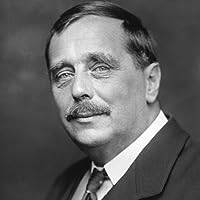
Herbert George Wells was born to a working class family in Kent, England. Young Wells received a spotty education, interrupted by several illnesses and family difficulties, and became a draper's apprentice as a teenager. The headmaster of Midhurst Grammar School, where he had spent a year, arranged for him to return as an "usher," or student teacher. Wells earned a government scholarship in 1884, to study biology under Thomas Henry Huxley at the Normal School of Science. Wells earned his bachelor of science and doctor of science degrees at the University of London. After marrying his cousin, Isabel, Wells began to supplement his teaching salary with short stories and freelance articles, then books, including The Time Machine (1895), The Island of Dr. Moreau (1896), The Invisible Man (1897), and The War of the Worlds (1898). Wells created a mild scandal when he divorced his cousin to marry one of his best students, Amy Catherine Robbins. Although his second marriage was lasting and produced two sons, Wells was an unabashed advocate of free (as opposed to "indiscriminate") love. He continued to openly have extra-marital liaisons, most famously with Margaret Sanger, and a ten-year relationship with the author Rebecca West, who had one of his two out-of-wedlock children. A one-time member of the Fabian Society, Wells sought active change. His 100 books included many novels, as well as nonfiction, such as A Modern Utopia (1905), The Outline of History (1920), A Short History of the World (1922), The Shape of Things to Come (1933), and The Work, Wealth and Happiness of Mankind (1932). One of his booklets was Crux Ansata, An Indictment of the Roman Catholic Church. Although Wells toyed briefly with the idea of a "divine will" in his book, God the Invisible King (1917), it was a temporary aberration. Wells used his international fame to promote his favorite causes, including the prevention of war, and was received by government officials around the world. He is best-remembered as an early writer of science fiction and futurism. He was also an outspoken socialist. Wells and Jules Verne are each sometimes referred to as "The Fathers of Science Fiction". D. 1946. More: http://philosopedia.org/index.php/H.\_... http://www.online-literature.com/well... http://www.hgwellsusa.50megs.com/ http://www.britannica.com/EBchecked/t... http://en.wikipedia.org/wiki/H.\_G.\_Wells

Algernon Blackwood
Algernon Blackwood
Author · 126 books

Blackwood was born in Shooter's Hill (today part of south-east London, but then part of northwest Kent) and educated at Wellington College. His father was a Post Office administrator who, according to Peter Penzoldt, "though not devoid of genuine good-heartedness, had appallingly narrow religious ideas." Blackwood had a varied career, farming in Canada, operating a hotel, as a newspaper reporter in New York City, and, throughout his adult life, an occasional essayist for various periodicals. In his late thirties, he moved back to England and started to write stories of the supernatural. He was very successful, writing at least ten original collections of short stories and eventually appearing on both radio and television to tell them. He also wrote fourteen novels, several children's books, and a number of plays, most of which were produced but not published. He was an avid lover of nature and the outdoors, and many of his stories reflect this. Lovecraft wrote of Blackwood: "He is the one absolute and unquestioned master of weird atmosphere." His powerful story "The Willows," which effectively describes another dimension impinging upon our own, was reckoned by Lovecraft to be not only "foremost of all" Blackwood's tales but the best "weird tale" of all time. Among his thirty-odd books, Blackwood wrote a series of stories and short novels published as John Silence, Physician Extraordinary (1908), which featured a "psychic detective" who combined the skills of a Sherlock Holmes and a psychic medium. Blackwood also wrote light fantasy and juvenile books. The son of a preacher, Blackwood had a life-long interest in the supernatural, the occult, and spiritualism, and firmly believed that humans possess latent psychic powers. The autobiography Episodes Before Thirty (1923) tells of his lean years as a journalist in New York. In the late 1940s, Blackwood had a television program on the BBC on which he read . . . ghost stories!

548 Market St PMB 65688, San Francisco California 94104-5401 USA
© 2026 Paratext Inc. All rights reserved