Margins
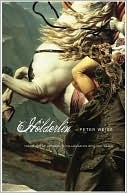
Hölderlin book cover
Hölderlin
A Play in Two Acts
1985
First Published
3.93
Average Rating
212
Number of Pages
The work of German poet Frederich Hölderlin (1770–1843) has inspired countless poets and philosophers from Paul Celan to Rainer Maria Rilke to Martin Heidegger and Friedrich Nietzsche. Yet, despite the international renown and respect his hymns and elegies have since earned for their lyric style and innovative approach to Greek myth, his work was not widely celebrated during his lifetime. Diagnosed with a severe case of hypochondria at a young age, he was beset by mental illness for much of his life, living the final decades in the care of a carpenter. In Hölderlin, distinguished German playwright Peter Weiss brings to the page the life and times of one of Germany’s greatest poets. Like Trotsky in Exile, Hölderlin presents a biography in the form of a two-act drama. Following its opening in 1971 in Stuttgart, the play was staged numerous times in Germany and Switzerland, and as Robert Cohen explains in his introduction, it was “greeted by accolades as well as by intense criticism since Weiss had dared to revise the image of one of the great heroic figures of German Culture.” Weiss explains that he was motivated “to describe something of the conflict that arises in a person who suffers to the point of madness from the injustices, the humiliations in his society, who completely supports the revolutionary upheavals, and yet does not find the praxis with which the misery can be remedied.” The resulting dramatic biography is as captivating and divisive today as it was forty years ago, and it has yet to be matched by any other biographic treatment of Hölderlin. Presented here for the first time in English, Weiss’s play is a lyrical investigation of the intense and influential poems of Hölderlin and the turbulent life behind them.

Avg Rating
3.93
Number of Ratings
42
5 STARS
33%
4 STARS
40%
3 STARS
17%
2 STARS
5%
1 STARS
5%
goodreads

Author

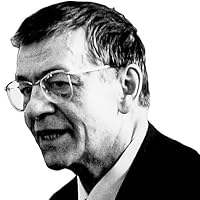
Peter Weiss
Peter Weiss
Author · 12 books

Peter Ulrich Weiss was a German writer, painter, and artist of adopted Swedish nationality. He is particularly known for his play Marat/Sade and his novel The Aesthetics of Resistance. Weiss' first art exhibition took place in 1936. His first produced play was Der Turm in 1950. In 1952 he joined the Swedish Experimental Film Studio, where he made films for several years. During this period, he also taught painting at Stockholm's People's University, and illustrated a Swedish edition of The Book of One Thousand and One Nights. Until the early 1960s, Weiss also wrote prose. His work consists of short and intense novels with Kafkaesque details and feelings, often with autobiographical background. One of the most known films made by Peter Weiss is an experimental one, The Mirage (1959) and the second one - it is very seldom mentioned - is a film Weiss directed in Paris 1960 together with Barbro Boman, titled Play Girls or The Flamboyant Sex (Schwedische Mädchen in Paris or Verlockung in German). Among the short films by Weiss, The Studio of Doctor Faust (1956) shows the extremely strong link of Weiss to a German cultural background. Weiss' best-known work is the play Marat/Sade (1963), first performed in West Berlin in 1964, which brought him widespread international attention. The following year, legendary director Peter Brook staged a famous production in New York City. It studies the power in society through two extreme and extremely different historical persons, Jean-Paul Marat, a brutal hero of the French Revolution, and the Marquis de Sade, for whom sadism was named. In Marat/Sade, Weiss uses a technique which, to quote from the play itself, speaks of the play within a play within itself: "Our play's chief aim has been to take to bits great propositions and their opposites, see how they work, and let them fight it out." The play is considered a classic, and is still performed, although less regularly. Weiss was honored with the Charles Veillon Award, 1963; the Lessing Prize, 1965; the Heinrich Mann Prize, 1966; the Carl Albert Anderson Prize, 1967; the Thomas Dehler Prize, 1978; the Cologne Literature Prize, 1981; the Bremen Literature Prize, 1982; the De Nios Prize, 1982; the Swedish Theatre Critics Prize, 1982; and the Georg Büchner Prize, 1982. A translation of Weiss' L'instruction (Die Ermittlung) was performed at London's Young Vic theater by a Rwandan company in November 2007. The production presented a dramatic contrast between the play's view on the Holocaust and the Rwandan actors' own experience with their nation's genocide. http://literaturkritik.de/public/reze... http://literaturkritik.de/public/reze...

548 Market St PMB 65688, San Francisco California 94104-5401 USA
© 2026 Paratext Inc. All rights reserved