Margins




548 Market St PMB 65688, San Francisco California 94104-5401 USA
© 2026 Paratext Inc. All rights reserved
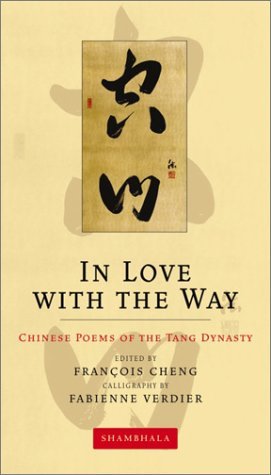
The poetry selected for this volume comes from the Tang Dynasty (618907), an era when the influence of Buddhism was at its strongest in China. The best loved and most influential of all Chinese poems come from this period. Like all books in the Shambhala Calligraphy series, In Love with the Way takes a classic spiritual text that has been a subject for calligraphers for many years—and uses it to showcase a uniquely modern example of the calligrapher's art, bringing the text to life in a striking new way. In Love with the Way is accompanied by François Cheng's introductory essay on poetry of the Tang period, and by a closing essay on the work of the calligrapher, Fabienne Verdier. Calligraphy (from the Greek for "beautiful writing") is an art where word and image meet, where the artist strives to give visual expression to the meaning of words in a way that transcends the text while remaining completely faithful to it. It is a discipline that has been invested with spiritual significance wherever it has arisen—and it has arisen throughout the world in every age, in virtually every language, culture, and religion. The Shambhala Calligraphy series is a collection of books devoted to contemporary expressions of this "art of the word," featuring contemporary calligraphers' striking new interpretations of texts that have been traditional subjects for calligraphic interpretation. Whether in Arabic, Greek, Hebrew, Latin, or Chinese pictographs, the characters, words, and sentences are brought to life anew here in a choreography of mind, hand, and heart by which letter and spirit fuse in a single stroke.