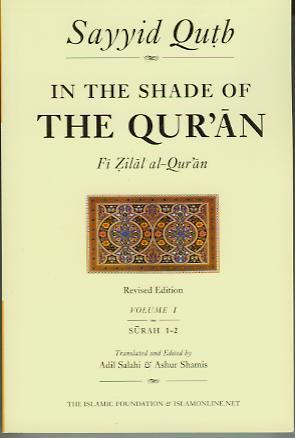
Ever since its revelation 1425 years ago, the Quran has been a book of guidance and inspiration, a reference point, and a rich source of social and moral dymanism for hundreds of millions of people throughout the world who believe it to be the immutable word of God. In the Shade of the Qur'an is more than 'just another' commentary; yet it is not too over-reaching or outlandish to be a completely new interpretation. It is an earnest, sincere, and sober look at man's contemporary achievements and difficulties in the light of the message of the Qur'an. It is an effort to vigorously explore its rich wisdom, and expand its invaluable guidance for the benefit of an increasingly 'sophisticated', yet highly perplexed modern society. The work, which is by far Sayyid Qutb's largest and most profound, spans the whole of the text of the Qur'an. It was written, and party re-written over a period of more than 15 years, most of which the author had spent in Egyptian prisons, during the 1950s and 1960s. In it is embedded Sayyid Qutb's insight, highly esteemed intellectual vigor, and his widely-acclaimed literary prowess. In the Shade of The Quranhas been universally recognised as an outstanding contribution to Islamic thought and scholarship, to which students and scholars, as well as contemporary Islamic revivalist movements all over the world, owe a great deal. Now that it is available in English, it will continue to enlighten and inspire millions more. It will take its rightful place as an indispensable work of reference for a proper understanding of contemporary Islamic thinking.
Author
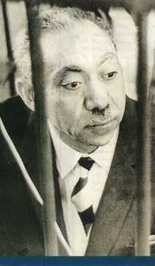
The saying that ‘The pen is mightier than the sword’ accurately describes the life-story of Sayyid Qutb ( سيد قطب ); who was an Egyptian prominent revivalist, ideologue, thinker, and a leading intellectual of the Egyptian Muslim Brotherhood (al 'Ikhwan ul- Muslimun) in the 1950s and 60s. He is best known for his work on redefining the role of Islam in social and political change, particularly in his book Ma'alimu fi-l-Tareeq (Milestones). But the majority of his theory could be found in his extensive Qur'anic commentary(tafseer) : Fi zilal il-Qur'an (In the shade of the Qur'an); the noteworthy multi-volume work for its innovative method of interpretation; which contributed significantly to modern perceptions of Islamic concepts. His early life was spent in an Egyptian village. Then he moved to Cairo where he received his university education between 1929 and 1933, and where he started his career as a teacher. During his early career, Qutb devoted himself to literature as an author and critic. Writing such novels as Ashwak (Thorns) and even elevating Egyptian novelist Naguib Mahfouz from obscurity. In 1939, he became a functionary in Egypt's Ministry of Education (Wizarat ul-Ma'arif ). From 1948 to 1950, he went to the United States on a scholarship to study the educational system, studying at Colorado State College of Education (Now the University of Northern Colorado). It was during this period that Qutb wrote his first major theoretical work of religious social criticism, al-'Adala Tul-Ijtima'iyyatu Fil-Islam (Social Justice in Islam), which was published in 1949, during his time overseas. Though Islam gave him much peace and contentment, he suffered from respiratory and other health problems throughout his life, thus he never married. Qutb was extremely critical of many things in the United States: its materialism, brutal individualism, merciless economic system, unreasonable restrictions on divorce, sick enthusiasm for sports, "animal-like" mixing of the sexes (which went on even in churches), and lack of support for the Palestinian struggle. Qutb discovered -very early- that the major aspects of the American life were primitive and "shocking". His experience in the United States is believed to have formed in part the impetus for his rejection of Western values and his move towards Islam upon returning to Egypt. Resigning from the civil service, he joined the Muslim Brotherhood in the early 1950s and became editor-in-chief of the Brothers' weekly al-'Ikhwan ul-Muslimun, and later head of the propaganda section, as well as an appointed member of the Working Committee and of the Guidance Council, the highest branch. سيد قطب إبراهيم حسين الشاذلي كاتب وأديب ومنظر إسلامي مصري وعضو سابق في مكتب إرشاد جماعة الإخوان المسلمين ورئيس سابق لقسم نشر الدعوة في الجماعة ورئيس تحرير جريدة الإخوان المسلمين. ولد في قرية موشا وهي إحدى قرى محافظة أسيوط بها تلقى تعليمه الأولي وحفظ القرآن الكريم ثم التحق بمدرسة المعلمين الأولية عبد العزيز بالقاهرة ونال شهادتها والتحق بدار العلوم وتخرج عام 1352هـ 1933م. عمل بوزارة المعارف بوظائف تربوية وإدارية وابتعثته الوزارة إلى أمريكا لمدة عامين وعاد عام 1370هـ 1950م. انضم إلى حزب الوفد المصري لسنوات وتركه على أثر خلاف في عام 1361هـ 1942م وفي عام 1370هـ 1950م انضم إلى جماعة الإخوان المسلمين وخاض معهم محنتهم التي بدأت منذ عام 1954م إلى عام 1966م وحوكم بتهمة التآمر على نظام الحكم وصدر الحكم بإعدامه وأعدم عام 1385هـ 1966م. مر سيد قطب بمراحل عديدة في حياته من حيث الطفولة ثم أدب بحت في مدرسة العقاد ثم ضياع فكري ثم توجه للأدب الإسلامي إلى أن صار رائد الفكر الحركي الإسلامي وهذه المرحلة هي التي يعرف الناس اليوم بها سيد. ويعتبر من أكثر الشخصيات تأثيرًا في الحركات الإسلامية التي وجدت في بداية الخمسينيات من القرن الماضي، له العديد من المؤلفات والكتابات حول الحضارة الإسلامية، والفكر الإسلامي. هو الابن الأول لأمه بعد أخت تكبره بثلاث سنوات وأخ من أبيه غير شقيق يكبره بجيل كامل. وكانت أمه تريد منه أن يكون متعلمًا مثل أخواله كما كان أبوه عضوًا في لجنة ا