Margins




548 Market St PMB 65688, San Francisco California 94104-5401 USA
© 2026 Paratext Inc. All rights reserved
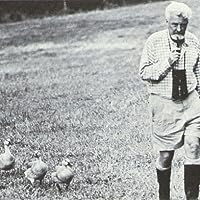
Konrad Zacharias Lorenz was an Austrian zoologist, ethologist, and ornithologist. He shared the 1973 Nobel Prize in Physiology or Medicine with Nikolaas Tinbergen and Karl von Frisch. He is often regarded as one of the founders of modern ethology, developing an approach that began with an earlier generation, including his teacher Oskar Heinroth. Lorenz studied instinctive behavior in animals, especially in greylag geese and jackdaws. Working with geese, he investigated the principle of imprinting, the process by which some nidifugous birds (i.e. birds that leave their nest early) bond instinctively with the first moving object that they see within the first hours of hatching. Although Lorenz did not discover the topic, he became widely known for his descriptions of imprinting as an instinctive bond. In 1936 he met Dutch biologist Nikolaas Tinbergen, and the two collaborated in developing ethology as a separate sub-discipline of biology. A Review of General Psychology survey, published in 2002, ranked Lorenz as the 65th most cited scholar of the 20th century in the technical psychology journals, introductory psychology textbooks, and survey responses.

A search for a natural history of human knowledge
1973

1973
1967
The Behavior of the Greylag Goose
1988
1983

1949
The Man and His Ideas
1975

1949
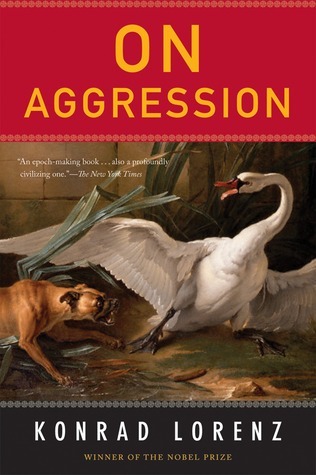
1963
1970
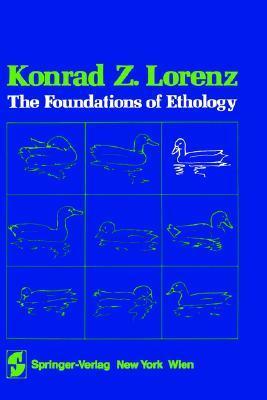
1978
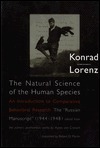
An Introduction to Comparative Behavioral Research: The Russian Manuscript 1944-48
1792
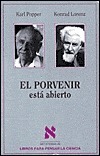
o dicuție la gura sobei
1383