Margins
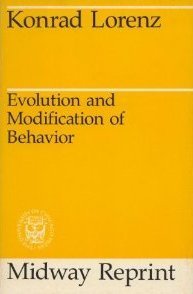
Evolution and Modification of Behavior book cover
Evolution and Modification of Behavior
1967
First Published
4.06
Average Rating
121
Number of Pages
En este libro Lorez emprende un análisis penetrante de los conceptos de lo “innato” y lo “aprendido” en el comportamiento. Ninguno de los dos términos, “innato” o “aprendido” es aplicable a pautas de comportamiento completamente desarrolladas sino sólo a la procedencia de la información que constituye el requisito previo para que el comportamiento se adapte al medio. Tal información entra en el sistema orgánico ya sea a través de la especie, que la ha adquirido por mutación y selección, o a través del individuo, que la ha adquirido en la acción recíproca con su medio ambiente habitual. Por una parte, puede haber pautas de comportamiento que deben el estar adaptadas exclusivamente a información adquirida en la evolución de la especie, en tanto que, por otra parte, todo comportamiento adaptativo presupone necesariamente un mecanismo programado sobre la base de la información filogenéticamente adquirida. Ni el intercambio entre la adaptación filogenética y la modificación adaptativa ni las formas análogas en que ambas extraen información del medio –dice Lorenz- pueden eximir a los psicólogos de distinguir entre dos procesos filogenéticamente diferentes ni de rastrear hasta sus fuentes la información que está en la base de toda adaptación del comportamiento.

Avg Rating
4.06
Number of Ratings
31
5 STARS
35%
4 STARS
42%
3 STARS
19%
2 STARS
0%
1 STARS
3%
goodreads

Author

Konrad Lorenz
Konrad Lorenz
Author · 13 books

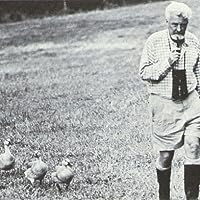
Konrad Zacharias Lorenz was an Austrian zoologist, ethologist, and ornithologist. He shared the 1973 Nobel Prize in Physiology or Medicine with Nikolaas Tinbergen and Karl von Frisch. He is often regarded as one of the founders of modern ethology, developing an approach that began with an earlier generation, including his teacher Oskar Heinroth. Lorenz studied instinctive behavior in animals, especially in greylag geese and jackdaws. Working with geese, he investigated the principle of imprinting, the process by which some nidifugous birds (i.e. birds that leave their nest early) bond instinctively with the first moving object that they see within the first hours of hatching. Although Lorenz did not discover the topic, he became widely known for his descriptions of imprinting as an instinctive bond. In 1936 he met Dutch biologist Nikolaas Tinbergen, and the two collaborated in developing ethology as a separate sub-discipline of biology. A Review of General Psychology survey, published in 2002, ranked Lorenz as the 65th most cited scholar of the 20th century in the technical psychology journals, introductory psychology textbooks, and survey responses.

548 Market St PMB 65688, San Francisco California 94104-5401 USA
© 2026 Paratext Inc. All rights reserved