Margins
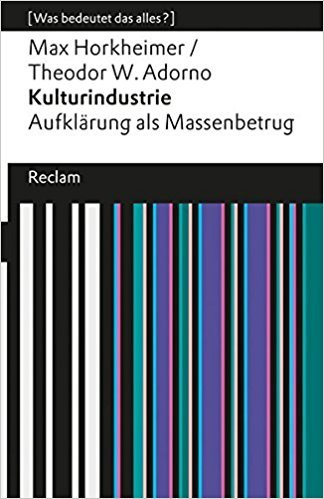
Kulturindustrie book cover
Kulturindustrie
Aufklärung als Massenbetrug
1971
First Published
4.08
Average Rating
95
Number of Pages
Im Zeitalter der Menmedien und Konsumorientierung gewinnen philosophische Überlegungen zur Menkultur neues Gewicht. Theodor W. Adorno und Max Horkheimer sprachen in ihrer Dialektik der Aufklärung bereits 1940 von einer Kulturindustrie‹. Diese deformiere Kultur zu einer weicheren Form totaler Unterdrückung. Es lohnt sich, Kulturindustrie. Aufklärung als Menbetrug, ein zentrales Kapitel der Dialektik der Aufklärung, in diesem Licht neu zu lesen.

Avg Rating
4.08
Number of Ratings
91
5 STARS
29%
4 STARS
53%
3 STARS
16%
2 STARS
2%
1 STARS
0%
goodreads

Authors

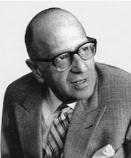
Max Horkheimer
Max Horkheimer
Author · 6 books
Max Horkheimer (1895–1973) was a leader of the so-called “Frankfurt School,” a group of philosophers and social scientists associated with the Institut für Sozialforschung (Institute of Social Research) in Frankfurt am Main. Horkheimer was the director of the Institute and Professor of Social Philosophy at the University of Frankfurt from 1930–1933, and again from 1949–1958. In between those periods he would lead the Institute in exile, primarily in America. As a philosopher he is best known (especially in the Anglophone world), for his work during the 1940s, including Dialectic of Enlightenment, which was co-authored with Theodor Adorno. While deservedly influential, Dialectic of Enlightenment (and other works from that period) should not be separated from the context of Horkheimer's work as a whole. Especially important in this regard are the writings from the 1930s, which were largely responsible for developing the epistemological and methodological orientation of Frankfurt School critical theory. This work both influenced his contemporaries (including Adorno and Herbert Marcuse) and has had an enduring influence on critical theory's later practitioners (including Jürgen Habermas, and the Institute's current director Axel Honneth).
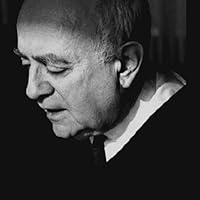
Theodor W. Adorno
Theodor W. Adorno
Author · 51 books

Theodor Wiesengrund Adorno was one of the most important philosophers and social critics in Germany after World War II. Although less well known among anglophone philosophers than his contemporary Hans-Georg Gadamer, Adorno had even greater influence on scholars and intellectuals in postwar Germany. In the 1960s he was the most prominent challenger to both Sir Karl Popper's philosophy of science and Martin Heidegger's philosophy of existence. Jürgen Habermas, Germany's foremost social philosopher after 1970, was Adorno's student and assistant. The scope of Adorno's influence stems from the interdisciplinary character of his research and of the Frankfurt School to which he belonged. It also stems from the thoroughness with which he examined Western philosophical traditions, especially from Kant onward, and the radicalness to his critique of contemporary Western society. He was a seminal social philosopher and a leading member of the first generation of Critical Theory. Unreliable translations hampered the initial reception of Adorno's published work in English speaking countries. Since the 1990s, however, better translations have appeared, along with newly translated lectures and other posthumous works that are still being published. These materials not only facilitate an emerging assessment of his work in epistemology and ethics but also strengthen an already advanced reception of his work in aesthetics and cultural theory.

548 Market St PMB 65688, San Francisco California 94104-5401 USA
© 2026 Paratext Inc. All rights reserved