Dieciséis voces cambian de idioma para explorar la literatura y la vida en contextos distintos Yoko Tawada duerme nueve horas diariamente para reponerse de sus primeras impresiones de Alemania. Dany Laferrière se deleita en el exótico mundo creole antes de tener que abandonarlo. Theodor Kallifatides regresa a Grecia e intenta escribir un libro en su lengua materna. Jhumpa Lahiri renuncia al inglés y comienza a escribir en italiano. Alejandra Kamiya es desterrada del Paraíso por sus padres. Eva Hoffman espera el tren que la llevará a su nuevo hogar canadiense. Mercedes Roffé observa los cambios lingüísticos que el desplazamiento provoca. Cristina Rivera Garza tiene su primer sueño en una lengua extranjera. François Cheng explora las similitudes poéticas entre el chino y el francés. Irma Pineda se enfrenta a la falta de traductores literarios del zapoteco. Edgardo Cozarinsky tiene que dejar la Argentina para comenzar a escribir. Aharon Appelfeld hojea un viejo diario olvidado. Eugène Ionesco imagina su obra más conocida con personajes de un manual de inglés. Sylvia Molloy escucha el teléfono y no sabe en qué lengua atender. J. M. Coetzee ensaya un método para crear un libro sin lengua original. Julien Green se traduce a sí mismo y descubre que está escribiendo una obra distinta. Dieciséis autores que han intercambiado vidas, pensamientos y escrituras entre países se suman a una introspección colectiva sobre las relaciones entre lugar interior y lugar exterior, entre lengua y lenguaje, entre lengua materna y lengua destino. En esos traslados—intelectuales, estéticos, políticos—encontramos profundos rasgos de posibilidad y anhelo, pero también de búsqueda y duda, inseparables de cualquier lenguaje: los rasgos mismos de los que está hecha la literatura. El lenguaje es un mar. Un mar en el que nadamos todos. Como el mar, el lenguaje está en movimiento. Como el mar, le podemos arrancar partes, traerlas a casa, tenerlas en una pecera, sin que el mar en sí transforme por completo su naturaleza. Como el mar, le somos cruciales e indiferentes. El lenguaje es un mar de paradojas. El lenguaje es un mar de metáforas. El lenguaje es un mar de lenguas. Vivimos en un mar de lenguas que nos ahogan en su variedad específica. En un mar de lenguas que nunca encajan. En un mar de lenguas de las que se ha dicho que fueron torre, que son cacofonía, que son irrenunciables. Como en el mar, las lenguas se encuentran y provocan remolinos. —Pablo Duarte, en el prólogo A través de singulares libros polifónicos, la colección Disertaciones de Gris Tormenta explora conceptos con relevancia contemporánea que no siempre pueden definirse—y propone la observación panorámica, quizá utópica, de lo que muchas veces es inobservable. Este es el décimo título de la colección.
Authors

Yōko Tawada (多和田葉子 Tawada Yōko, born March 23, 1960) is a Japanese writer currently living in Berlin, Germany. She writes in both Japanese and German. Tawada was born in Tokyo, received her undergraduate education at Waseda University in 1982 with a major in Russian literature, then studied at Hamburg University where she received a master's degree in contemporary German literature. She received her doctorate in German literature at the University of Zurich. In 1987 she published Nur da wo du bist da ist nichts—Anata no iru tokoro dake nani mo nai (A Void Only Where You Are), a collection of poems in a German and Japanese bilingual edition. Tawada's Missing Heels received the Gunzo Prize for New Writers in 1991, and The Bridegroom Was a Dog received the Akutagawa Prize in 1993. In 1999 she became writer-in-residence at the Massachusetts Institute of Technology for four months. Her Suspect on the Night Train won the Tanizaki Prize and Ito Sei Literary Prize in 2003. Tawada received the Adelbert von Chamisso Prize in 1996, a German award to foreign writers in recognition of their contribution to German culture, and the Goethe Medal in 2005. (from Wikipedia)

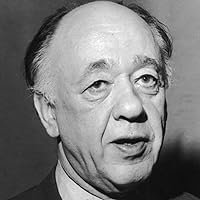
Eugène Ionesco, born Eugen Ionescu, was a Romanian playwright and dramatist; one of the foremost playwrights of the Theatre of the Absurd. Beyond ridiculing the most banal situations, Ionesco's plays depict in a tangible way the solitude and insignificance of human existence. Excerpted from Wikipedia.


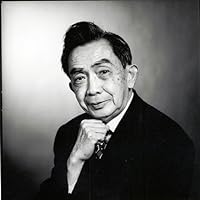
François Cheng is a French academician, writer, poet and calligrapher. He is the author of essays, novels, collections of poetry and books on art written in the French language, and the translator of some of the great French poets into Chinese. Born in China and taking French citizenship in 1973, he was elected to the Académie française in 2002, and was the first person of Asian origin to be a member of the Academy. He was the winner of the 1998 Prix Femina for Le Dit de Tianyi ("The saying of Tianyi") When Cheng arrived in France in 1948, on a study grant, he did not speak a word of the language. He subsequently adapted quickly and profoundly. In his speech to the Académie française, he explained, "I became a Frenchman in law, mind and heart more than thirty years ago [...] especially from that moment when I resolutely went over to the French language, making it the weapon, or the soul, of my creative work. This language, how can I say everything that I owe to it? It is so intimately bound up with the way I live and my inner life that it has proved to be the emblem of my destiny." It took many years before he became a novelist. His first works were on Chinese poetry and painting. Later he began to write works of poetry himself, before finally turning to the writing of novels.

Né à Port-au-Prince en avril 1953, Dany Laferrière a grandi à Petit-Goâve. Il écrit pour le journal Le Petit Samedi soir et fait partie de l’équipe de Radio Haïti. Il quitte son pays natal à la suite de l’assassinat de son collègue et ami, le journaliste Gasner Raymond. Il s’installe au Québec où il occupe plusieurs emplois avant de commencer à écrire. Son premier roman, Comment faire l’amour avec un nègre sans se fatiguer, paraît en 1985 (VLB). Le succès est immédiat et les réactions nombreuses. Laferrière devient alors l’un des principaux représentants d’une nouvelle génération d’écrivains dans le paysage littéraire québécois. Dany Laferrière écrit ensuite Éroshima (1987), puis L’Odeur du café (VLB, 1991), qui est récompensé par le prix Carbet des Caraïbes. En 2000, près de vingt-cinq ans après son arrivée au Québec, il signe Le Cri des oiseaux fous (Lanctôt), roman dans lequel il témoigne des raisons qui l’ont poussé à quitter Haïti et qui remporte le prix Carbet des Lycéens. En 2006, le prix du Gouverneur général du Canada est décerné à son album jeunesse Je suis fou de Vava. Habitant en alternance Montréal, New-York et Miami, l’auteur se considère avant tout comme un citoyen de l’Amérique. C’est dans cet esprit qu’il rédige ce qu’il appellera son Autobiographie américaine, un grand projet regroupant une dizaine de ses titres et qui dresse un portrait de l’Amérique, d’Haïti à Montréal, en passant par les États-Unis. Dany Laferrière mène, parallèlement à ses activités littéraires, une carrière de journaliste et de chroniqueur, tout en faisant quelques apparitions à la télévision et au cinéma. Il a également scénarisé quelques longs-métrages, le plus souvent des adaptations cinématographiques de ses romans. Édités en France chez Grasset, les livres de Dany Laferrière ont été traduits dans une douzaine de langues, dont le coréen et le polonais. Laferrière a publié cinq romans aux Éditions du Boréal. Son plus récent livre, L'Énigme du retour, est en lice pour le prix France Télévision, le prix Wepler et le prix Décembre. En plus, il se trouve déjà en deuxième sélection pour le prix Médicis 2009 ainsi que pour le prix Fémina 2009. Biographie tirée du site Internet des éditions Boréal.

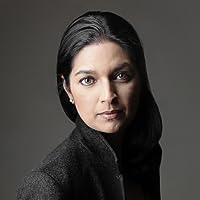
Nilanjana Sudeshna "Jhumpa" Lahiri was born in London and brought up in South Kingstown, Rhode Island. Brought up in America by a mother who wanted to raise her children to be Indian, she learned about her Bengali heritage from an early age. Lahiri graduated from South Kingstown High School and later received her B.A. in English literature from Barnard College in 1989. She then received multiple degrees from Boston University: an M.A. in English, an M.A. in Creative Writing, an M.A. in Comparative Literature and a Ph.D. in Renaissance Studies. She took up a fellowship at Provincetown's Fine Arts Work Center, which lasted for the next two years (1997-1998). In 2001, she married Alberto Vourvoulias-Bush, a journalist who was then Deputy Editor of TIME Latin America Lahiri currently lives in Brooklyn with her husband and two children. She has been a Vice President of the PEN American Center since 2005. Lahiri taught creative writing at Boston University and the Rhode Island School of Design. Much of her short fiction concerns the lives of Indian-Americans, particularly Bengalis. She received the following awards, among others: 1999 - PEN/Hemingway Award (Best Fiction Debut of the Year) for Interpreter of Maladies; 2000 - The New Yorker's Best Debut of the Year for Interpreter of Maladies; 2000 - Pulitzer Prize for Fiction for her debut Interpreter of Maladies


Sylvia Molloy is an Argentine writer and critic who has taught at Princeton, Yale and NYU, from where she retired in 2010. At NYU she held the Albert Schweitzer Chair in the Humanities. She is the author of two novels: En común olvido (2002). She has also written two short prose pieces, Varia imaginación (2003) and Desarticulaciones (2010). Her critical work includes La Diffusion de la littérature hispano-américaine en France au XXe siècle (1972), Las letras de Borges (1979), At Face Value: Autobiographical Writing in Spanish America (1991), Poses de fin de siglo. Desbordes del género en la modernidad (2013), and edited volumes such as Hispanisms and Homosexualities (1998) and Poéticas de la distancia. Adentro y afuera de la literatura argentina (2006). She has been a fellow of the Guggenheim Foundation, the National Endowment for the Humanities, the Social Science Research Council, and the Civitella Ranieri Foundation. She has served as President of the Modern Language Association of America and of the Instituto Internacional de Literatura Iberoamericana and holds an honorary degree in humane letters from Tulane University. In 2007 she created the MFA in Creative Writing in Spanish, with the collaboration of Lila Zemborain and Mariela Dreyfus. The MFA is the first program of its kind in the United States. It is modeled along the lines of the NYU MFA in Creative Writing in English, taking advantage as well of a similar, bilingual Program, at University of Texas at El Paso. Classes and workshops are taught in Spanish and students are mostly Spanish, Latin American or Latino.