Margins
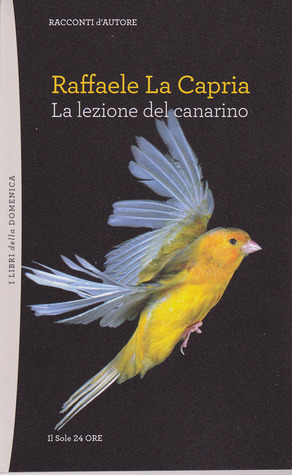
La lezione del canarino book cover
La lezione del canarino
2007
First Published
3.35
Average Rating
79
Number of Pages
"Sento che ognuno degli animali presenti in queste pagine mi somiglia; lo riconosco mio simile in tanti aspetti, e credo che gioisca o patisca, che se ha fame soffra la fame e se viene ferito sanguini, più o meno come ogni essere vivente, me compreso. E sento che ognuno di loro è un concentrato di vita allo stato puro, di desideri di istinti e di impulsi che non dovrebbero lasciare indifferente chi la vita cerca di cogliere nei suoi aspetti più immediati e più vari." Così Raffaele La Capria introduce il gufo reale e la civetta, il ciuchino e il polpo, il gabbiano e l'amato cane Guappo, e tutti gli altri personaggi che popolano questo personalissimo bestiario, una carrellata tenera e malinconica, colma di affetto ed empatia. Solo mettendosi dalla parte degli esseri che non hanno la parola per farsi udire, l'uomo potrà vivere in armonia con le altre creature.

Avg Rating
3.35
Number of Ratings
43
5 STARS
12%
4 STARS
42%
3 STARS
26%
2 STARS
12%
1 STARS
9%
goodreads

Author

Raffaele La Capria
Raffaele La Capria
Author · 8 books

Raffaele La Capria was an Italian writer, known especially for the three novels which were collected as "Tre romanzi di una giornata". La Capria was born in Naples, where he was to spend the formative years of his life. There he graduated in law, before staying in France, England and the United States and then settling in Rome. He contributed to the cultural pages of the Corriere della Sera and was co-director of the literary journal Nuovi Argomenti. A particular interest was English poetry of the 1930s: as well as writing numerous articles he translated works including T. S. Eliot’s Four Quartets. In the 1950s he wrote and produced a number of radio programmes for RAI on foreign contemporary drama. In 1957 he was invited to participate in the International Seminar of Literature at Harvard University. In 1961 his novel Ferito a morte won the prestigious Premio Strega. He worked as co-scriptwriter on a number of Francesco Rosi’s films, including "Le mani sulla città" (1963), Uomini contro (1970) and "Cristo si è fermato a Eboli" (1979). In September 2001 he received a Premio Campiello lifetime achievement award and in 2005 "L'estro quotidiano" was selected as the winner of the Viareggio Prize for fiction. He published his first novel, "Un giorno d'impazienza", in 1952. The second, and best-known novel, "Ferito a morte", came out nearly ten years later in 1961. In 1982 the three Neapolitan novels "Un giorno d'impazienza", "Ferito a morte" and "Amore e psiche" (1973) were re-issued as "Tre romanzi di una giornata". His short stories include "La neve del Vesuvio" and the collection "Fiori giapponesi" (1979). His work as an essayist is represented by "False partenze" (1964), "Il sentimento della letteratura" (1974) and "La mosca e la bottiglia" (1996). An autobiography, "Cinquant'anni di false partenze", was published in 1964.

548 Market St PMB 65688, San Francisco California 94104-5401 USA
© 2026 Paratext Inc. All rights reserved