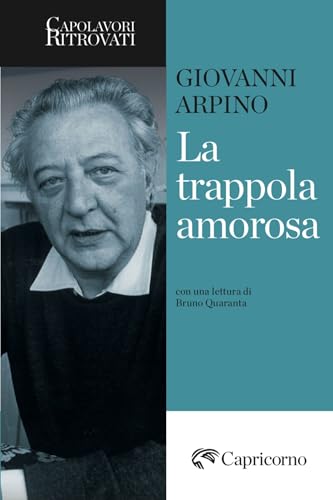
Giacomo Berzia è un attore. Ha quasi sessant'anni e vive un'esistenza stagnante, in lui s'è spento il sacro fuoco giovanile del teatro. Poi, all'improvviso, una donna misteriosa inizia a circuirlo con enigmatiche missive, regali, bizzarri indovinelli, un corteggiamento assiduo che intriga Giacomo e lo spinge a cercar di scoprire chi è l'autrice della tela di ragno che lo sta intrappolando. Storia di un amore maturo, sullo sfondo di una città natalizia (innominata, ma niente è Torino); una trama «gialla» inesorabile fino all'epifania finale. Concluso da Giovanni Arpino poco prima di morire, pubblicato nel febbraio 1988, La trappola amorosa manca dalle librerie da allora. Non si capisce perché, dato che è il capolavoro di un narratore che fino all'ultimo ricerca il senso della scrittura, capace di tenere ben salde le fila del gioco tra i personaggi, e tra questi e il lettore. Un montaggio narrativo serrato, cinematografico. Modernissimo. Sorridente, malinconico eppure colmo d'una tiepida, confortevole speranza, La trappola amorosa è scritto con rara maestria linguistica. Tra Pirandello e Paolo Conte, Gozzano e Hammett. Oppure semplicemente Arpino, prosatore intramontabile anche al passo d'addio. È ora di tornare a leggerlo.
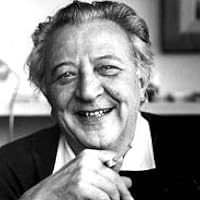
Author

Giovanni Arpino was an Italian writer and journalist. Born in Pula (in Istria, then part of Italy) to Piedmontese parents, Arpino moved to Bra in the Province of Cuneo. Here he married Caterina Brero before moving to Turin, where he would remain for the rest of his life. He graduated in 1951 with a thesis on the Russian poet Sergei Yesenin, and the following year made his literary debut with the novel Sei stato felice, Giovanni, published by Einaudi. He also took up sports journalism, writing for the daily papers La Stampa and Il Giornale; together with Gianni Brera at the La Gazzetta dello Sport he brought a new literary quality to Italian writing on sport. His most important work in this line was the 1977 football novel Azzurro tenebra. Arpino also wrote plays, short stories, epigrams and stories for children. In Italy he got to know the Argentinian writer, and fellow sports enthusiast, Osvaldo Soriano and won the Strega Prize of 1964 with L'ombra delle colline, the Premio Campiello of 1972 with Randagio è l'eroe and the SuperCampiello of 1980 with Il fratello italiano. His novels are characterised by a dry and ironical style. His story Il buio e il miele was made into two films: Dino Risi's Profumo di donna, with Vittorio Gassman, and Martin Brest's Scent of a Woman, which earnt Al Pacino an Academy Award for Best Actor. Arpino died in Turin in 1987. His links to his childhood town of Bra have been maintained by the establishment of a multi-functional cultural centre and of a prize for children's literature.