Margins
La trilogie des jumeaux book cover 1
La trilogie des jumeaux book cover 2
La trilogie des jumeaux book cover 3
La trilogie des jumeaux
Series · 4 books · 1986-1991

Books in series

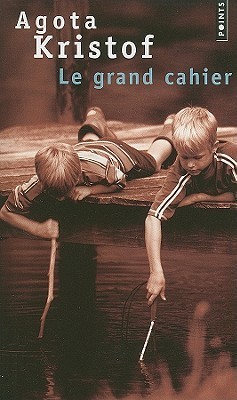
The Big Notebook book cover
#1

The Big Notebook

1986

"With icy dispassion, first novelist Kristof, herself a refugee of war, spins a modern-day fable set in Eastern Europe during WW II. It records, in the form of a notebook written by two small boys, the nightmarish ordeal of twins brought by their mother from the bomb-spattered Big Town to their grandmother's home in Little Town. Grandmother, whom they call the Witch, harbors the boys only because they may prove useful. But they are wilier than she, spying on her through holes in the floor of the attic she can no longer reach, deliberately wounding each other to inure themselves to pain, learning the language of the occupying forces." (amazon)
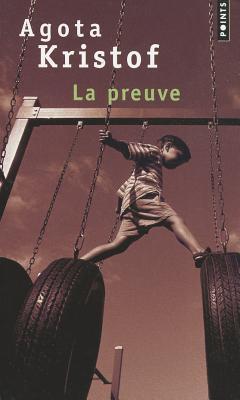
The Proof book cover
#2

The Proof

1988

Em 1993, a ASA publicou na sua colecção "Letras do Mundo" o volume Trilogia da Cidade de K., que agrupava três romances de Agota Kristof—O Caderno Grande, A Prova e A Terceira Mentira. Tal volume encontra-se há muito tempo esgotado, pelo que se decidiu agora reeditar cada um dos romances, separadamente, na colecção "Pequenos Prazeres". Assim aconteceu já com O Caderno Grande, o mesmo acontece agora com A Prova. Apesar de autónomos, os três romances formam um conjunto dotado de uma extrema e paradoxal unidade. Em A Prova, através do destino separado de Lucas e Claus, os gémeos de O Caderno Grande, e mais concretamente através do percurso do primeiro, Agota Kristof vem dizer-nos mais uma vez que, num universo totalitário, a generosidade e a solidariedade são por vezes mais mortíferas do que o crime.
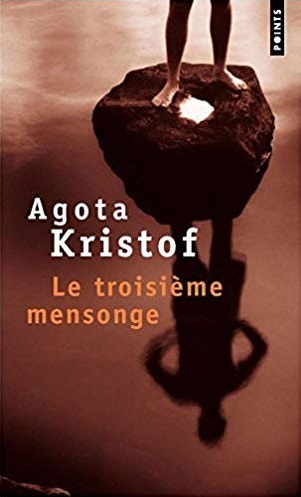
Le troisième mensonge book cover
#3

Le troisième mensonge

1991

In the third volume in a critically acclaimed trilogy that also includes The Proof and The Notebook, Claus lies dying in a prison in the town of his birth, reminiscing about the past and his missing twin and haunted by three lies that have profoundly affected his life.
The Notebook Trilogy book cover
#1-3

The Notebook Trilogy

1991

Claus and Lucas are twins. Their new life begins when they are left with their grandmother, the ‘Witch’, in a village in an occupied country. It’s wartime. All their actions are based on the necessity to survive. They create an exercise regime to toughen up, and record the results in a notebook. Their angelic looks are deceiving. They are implacable, dangerously ethical; their code of life demands that they help a deserter, or blackmail a priest, or come to the aid of a prostitute, or assist in a suicide. What motivates them is a deeply embedded morality of absolute need. The trilogy—The Notebook (1986), The Proof (1988), and The Third Lie (1991)—follows their stories from the Second World War, through the years of communism and into a fractured Europe. In what could be seen as an allegory of post-war Europe, Claus and Lucas, locked in a tortuous bond, become separated and are isolated in different countries. They yearn to be connected again, but perspectives shift, memories diverge, identity becomes unstable. Written in Kristof ’s spare, direct style, The Notebook Trilogy is an exploration of the aftereffects of trauma and of the nature of storytelling. Kristof’s language is both accessible and matter-of-fact, as well as odd and unsettling. The novels explore truth and lies, shaped by a breathtaking artistic vision that is shocking, fascinating and utterly memorable. Ágota Kristóf, born in Csikvánd, Hungary, in 1935, became an exile in French-speaking Switzerland in 1956. Working in a factory, she slowly learned French, the language of her adopted country. Her first novel The Notebook (1986), gained international recognition and was translated into more than thirty languages. It was followed by the sequels in the trilogy, The Proof (1988), and The Third Lie (1991). In 2004 Kristof published a memoir, The Illiterate, about her childhood, her escape from Hungary in 1956, her learning a new language as a refugee, and writing in this new ‘alien’ language, French. She also wrote plays and further novels. She died in 2011. Alan Sheridan, translator of The Notebook, has translated over fifty books, including works by Sartre, Lacan, Foucault and Robbe-Grillet. David Watson is the translator of The Proof. Marc Romano is the translator of The Third Lie. ‘An almost lyrical intensity…A fierce and disturbing novel.’ New York Times ‘I found it profoundly disturbing, incredibly well-written, and extraordinarily brave. And the fact that it was written by a woman—it has a startling brutality and ferocity about the style that I find very inspiring.’ Eimear McBride, Believer ‘At the heart of this acrid trilogy, in all its studied understatement and lack of portentousness, we can feel the author’s slow-burning rage at the wholesale erasure of certainty and continuity in the world of her childhood and adolescence. At the same time we sense Kristof saturninely enjoying this annihilation for its imaginative potential. She will reassemble a shattered world on her own rigorous terms, and watch us wince and shudder in the process.’ Times Literary Supplement ‘The Notebook is a transfixing house of horrors.’ New Statesman ‘A dark study of the human psyche.’ New York Times Book Review

Author

Agóta Kristóf
Agóta Kristóf
Author · 15 books

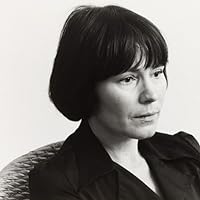
Ágota Kristóf was a Hungarian writer, who lived in Switzerland and wrote in French. Kristof received the European prize for French literature for The Notebook (1986). She won the 2001 Gottfried Keller Award in Switzerland and the Austrian State Prize for European Literature in 2008. Kristof's first steps as a writer were in the realm of poetry and theater (John et Joe, Un rat qui passe), which is a facet of her works that did not have as great an impact as her trilogy. In 1986 Kristof’s first novel, The Notebook appeared. It was the beginning of a moving trilogy. The sequel titled The Proof came 2 years later. The third part was published in 1991 under the title The Third Lie. The most important themes of this trilogy are war and destruction, love and loneliness, promiscuous, desperate, and attention-seeking sexual encounters, desire and loss, truth and fiction. She has received the European prize for French literature for The Notebook. This novel was translated in more than 30 languages. In 1995 she published a new novel, Yesterday. Kristof also wrote a book called L'analphabète (in English The Illiterate) and published in 2004. This is an autobiographical text. It explores her love of reading as a young child, and we travel with her to boarding school, and over the border to Austria, and then to Switzerland. Forced to leave her country due to the failure of the anti-communist rebellion, she hopes for a better life in Zurich. The majority of her works were published by Editions du Seuil in Paris. She has two new short stories published at Mini Zoe collection entitled "Ou es-tu Mathias" and "Line, le temps". The names Mathias and Line are from her previous novels. She died on 27 July 2011 in her Neuchâtel home.

548 Market St PMB 65688, San Francisco California 94104-5401 USA
© 2026 Paratext Inc. All rights reserved