Margins


548 Market St PMB 65688, San Francisco California 94104-5401 USA
© 2026 Paratext Inc. All rights reserved
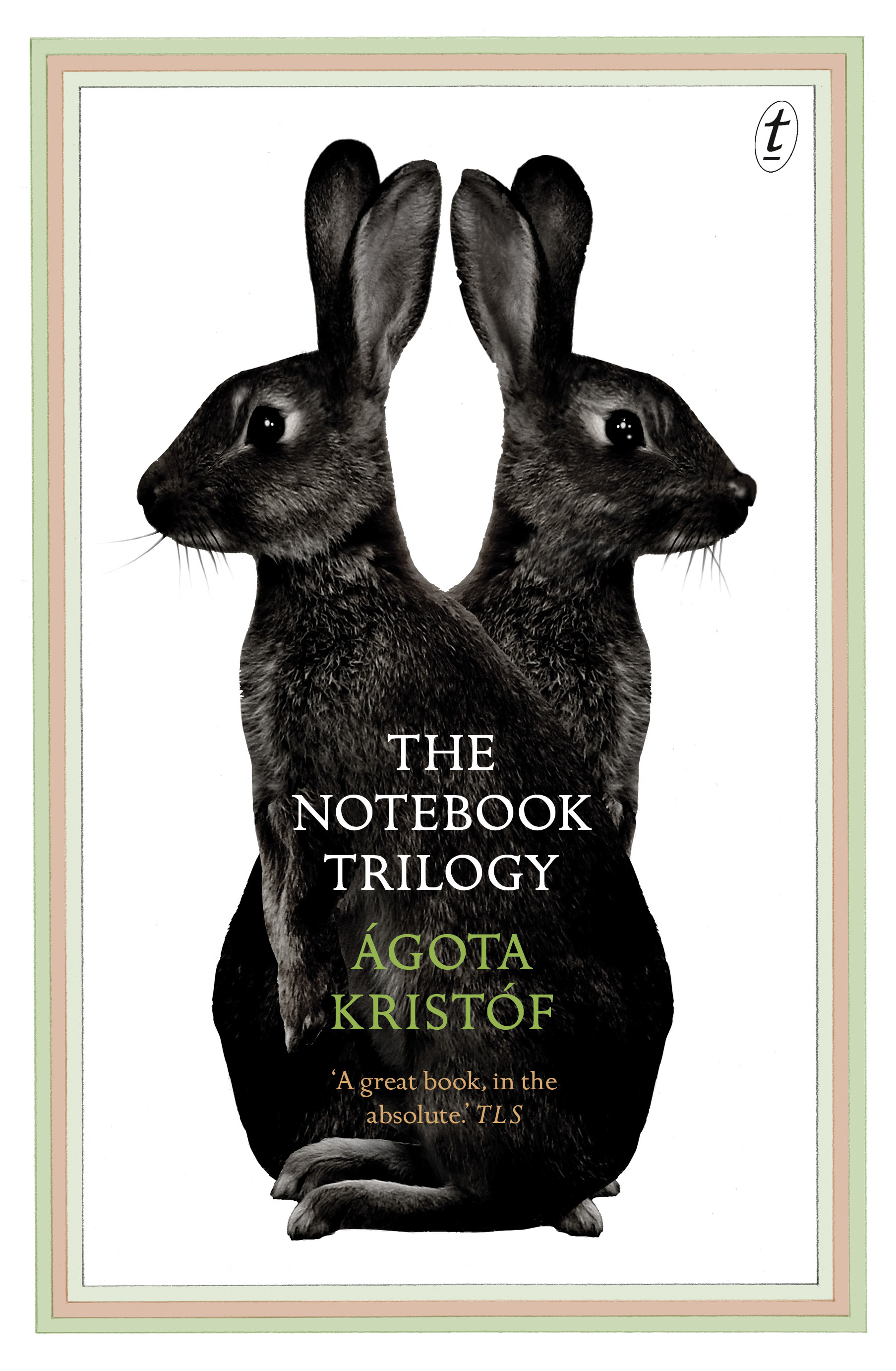
Claus and Lucas are twins. Their new life begins when they are left with their grandmother, the ‘Witch’, in a village in an occupied country. It’s wartime. All their actions are based on the necessity to survive. They create an exercise regime to toughen up, and record the results in a notebook. Their angelic looks are deceiving. They are implacable, dangerously ethical; their code of life demands that they help a deserter, or blackmail a priest, or come to the aid of a prostitute, or assist in a suicide. What motivates them is a deeply embedded morality of absolute need. The trilogy—The Notebook (1986), The Proof (1988), and The Third Lie (1991)—follows their stories from the Second World War, through the years of communism and into a fractured Europe. In what could be seen as an allegory of post-war Europe, Claus and Lucas, locked in a tortuous bond, become separated and are isolated in different countries. They yearn to be connected again, but perspectives shift, memories diverge, identity becomes unstable. Written in Kristof ’s spare, direct style, The Notebook Trilogy is an exploration of the aftereffects of trauma and of the nature of storytelling. Kristof’s language is both accessible and matter-of-fact, as well as odd and unsettling. The novels explore truth and lies, shaped by a breathtaking artistic vision that is shocking, fascinating and utterly memorable. Ágota Kristóf, born in Csikvánd, Hungary, in 1935, became an exile in French-speaking Switzerland in 1956. Working in a factory, she slowly learned French, the language of her adopted country. Her first novel The Notebook (1986), gained international recognition and was translated into more than thirty languages. It was followed by the sequels in the trilogy, The Proof (1988), and The Third Lie (1991). In 2004 Kristof published a memoir, The Illiterate, about her childhood, her escape from Hungary in 1956, her learning a new language as a refugee, and writing in this new ‘alien’ language, French. She also wrote plays and further novels. She died in 2011. Alan Sheridan, translator of The Notebook, has translated over fifty books, including works by Sartre, Lacan, Foucault and Robbe-Grillet. David Watson is the translator of The Proof. Marc Romano is the translator of The Third Lie. ‘An almost lyrical intensity…A fierce and disturbing novel.’ New York Times ‘I found it profoundly disturbing, incredibly well-written, and extraordinarily brave. And the fact that it was written by a woman—it has a startling brutality and ferocity about the style that I find very inspiring.’ Eimear McBride, Believer ‘At the heart of this acrid trilogy, in all its studied understatement and lack of portentousness, we can feel the author’s slow-burning rage at the wholesale erasure of certainty and continuity in the world of her childhood and adolescence. At the same time we sense Kristof saturninely enjoying this annihilation for its imaginative potential. She will reassemble a shattered world on her own rigorous terms, and watch us wince and shudder in the process.’ Times Literary Supplement ‘The Notebook is a transfixing house of horrors.’ New Statesman ‘A dark study of the human psyche.’ New York Times Book Review
Ships within a few days. US addresses only.