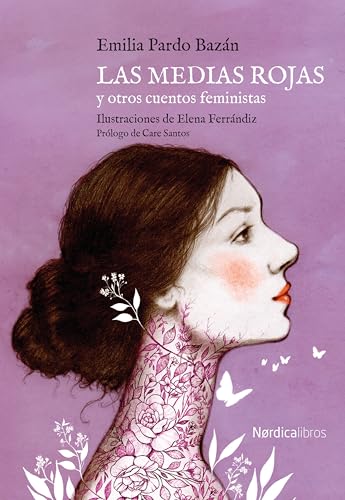
Ha pasado un siglo desde que Emilia Pardo Bazán escribiese sus cuentos, pero la temática de sus obras más cortas continúa estando de brutal actualidad. Los abusos, los malos tratos, la violencia machista o la inferioridad otorgada a la mujer sigue siendo, desgraciadamente, parte de la actualidad diaria. Pardo Bazán fue capaz de señalar el trato vejatorio a la mujer en cada una de sus obras, en las que los personajes masculinos son siempre ruines, violentos o abusones. La escritora gallega aseveró en el Congreso Pedagógico de Madrid (1892) que la mujer tenía una «singularidad propia, independientemente del hombre y de la familia». Este volumen reúne estos cuentos feministas, prologados por Care -El encaje roto -El indulto -Las medias rojas -La camarona -Feminista -La dentadura -La aventura -El revólver -Apólogo -Casi artista
Author

Emilia Pardo Bazán was a Galician author and scholar from Galicia. She is known for bringing naturalism to Spanish literature, for her detailed descriptions of reality, and for her role in feminist literature of her era. Her first novel, Pascual López (1879), is a simple exercise in fantasy of no remarkable promise, though it contains good descriptive passages of romance. It was followed by a more striking story, Un viaje de novios (1881), in which a discreet attempt was made to introduce into Spain the methods of French realism. The book caused a sensation among the literary cliques, and this sensation was increased by the appearance of another naturalistic tale, La tribuna (1885), wherein the influence of Émile Zola is unmistakable. Meanwhile, the writer's reply to her critics was issued under the title of La cuestion palpitante (1883), a clever piece of rhetoric, but of no special value as regards criticism or dialectics. The best of Emilia Pardo Bazán's work is embodied in Los pazos de Ulloa (1886), the painfully exact history of a decadent aristocratic family. A sequel, with the significant title of La madre naturaleza (1887), marks a further advance in the path of naturalism. She was also a journalist, essayist and critic. She died in Madrid.