Margins
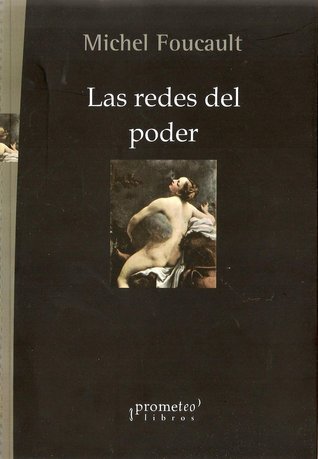
Las Redes del Poder book cover
Las Redes del Poder
2014
First Published
4.07
Average Rating
118
Number of Pages
Los pensamientos de la identidad suelen ser solidarios con las políticas utópicas. Los pensamientos de la multiplicidad, por el contrario, suelen preferir las micropolíticas. Mientras las macropolíticas aspiran a transformar el mundo, las micropolíticas apuntan a conseguir transformaciones a nivel instituciones, relaciones personales, prácticas grupales no piramidales. Se trata de lograr aplicaciones no coercitivas del poder, resistencias creativas, acciones liberadoras mínimas, cotidianas, constantes, personales y sociales. Esta postura militante es coherente con la concepción teórica de Foucault, donde la verdad surge de las prácticas sociales de cada cultura. Esto es, de los dispositivos de poder. Dichos dispositivos semejan redes por las que circula el poder. Poder que no se posee, que se ejerce y que configura un reticulado en el que todos participamos. La trama del poder es densa en algunas zonas y rala en otras. Las ramificaciones de la red funcionan como va

Avg Rating
4.07
Number of Ratings
28
5 STARS
32%
4 STARS
43%
3 STARS
25%
2 STARS
0%
1 STARS
0%
goodreads

Author

Michel Foucault
Michel Foucault
Author · 93 books

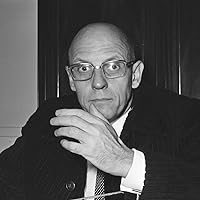
Michel Foucault was a French philosopher, social theorist and historian of ideas. He held a chair at the Collège de France with the title "History of Systems of Thought," but before he was Professor at University of Tunis, Tunisia, and then Professor at University Paris VIII. He lectured at several different Universities over the world as at the University at Buffalo, the University of California, Berkeley and University of São Paulo, University of Rio de Janeiro, Brazil. Foucault is best known for his critical studies of social institutions, most notably psychiatry, medicine, the human sciences and the prison system, as well as for his work on the history of human sexuality. His writings on power, knowledge, and discourse have been widely influential in academic circles. In the 1960s Foucault was associated with structuralism, a movement from which he distanced himself. Foucault also rejected the poststructuralist and postmodernist labels later attributed to him, preferring to classify his thought as a critical history of modernity rooted in Immanuel Kant. Foucault's project was particularly influenced by Nietzsche, his "genealogy of knowledge" being a direct allusion to Nietzsche's "genealogy of morality". In a late interview he definitively stated: "I am a Nietzschean." Foucault was listed as the most cited scholar in the humanities in 2007 by the ISI Web of Science.

548 Market St PMB 65688, San Francisco California 94104-5401 USA
© 2026 Paratext Inc. All rights reserved