Margins
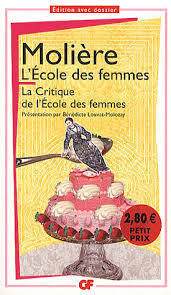
L'�cole Des Femmes book cover
L'�cole Des Femmes
Suivi de la Critique de l'�cole Des Femmes
1989
First Published
3.33
Average Rating
224
Number of Pages
L’École des femmes est une comédie de Molière en cinq actes (comportant respectivement quatre, cinq, cinq, neuf et neuf scènes) et en vers (1779 dont 1737 alexandrins), créée au théâtre du Palais-Royal le 26 décembre 1662. La pièce, novatrice en ce qu'elle mêlait de manière alors inédite les ressources de la farce et de la grande comédie en vers, fut un immense succès, et suscita une série de débats connus sous le nom de « Querelle de L'École des femmes. » Cette querelle, habilement exploitée par Molière, lui donna l'occasion de répondre aux critiques qui lui avaient été adressées et de préciser son projet dramatique dans une comédie intitulée La Critique de l'École des femmes, représentée sur la scène du même théâtre au mois de juin de l'année suivante.

Avg Rating
3.33
Number of Ratings
108
5 STARS
7%
4 STARS
34%
3 STARS
44%
2 STARS
12%
1 STARS
2%
goodreads

Author

Molière
Molière
Author · 69 books

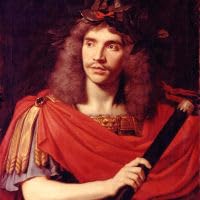
Jean-Baptiste Poquelin, also known by his stage name, Molière, was a French playwright and actor who is considered one of the greatest masters of comedy in Western literature. Among Molière's best-known dramas are Le Misanthrope, (The Misanthrope), L'Ecole des femmes (The School for Wives), Tartuffe ou l'Imposteur, (Tartuffe or the Hypocrite), L'Avare ou l'École du mensonge (The Miser), Le Malade imaginaire (The Imaginary Invalid), and Le Bourgeois Gentilhomme (The Bourgeois Gentleman). From a prosperous family and having studied at the Jesuit Clermont College (now Lycée Louis-le-Grand), Molière was well suited to begin a life in the theatre. Thirteen years as an itinerant actor helped to polish his comic abilities while he also began writing, combining Commedia dell'Arte elements with the more refined French comedy. Through the patronage of a few aristocrats including the brother of Louis XIV, Molière procured a command performance before the King at the Louvre. Performing a classic play by Pierre Corneille and a farce of his own, Le Docteur amoureux (The Doctor in Love), Molière was granted the use of Salle du Petit-Bourbon at the Louvre, a spacious room appointed for theatrical performances. Later, Molière was granted the use of the Palais-Royal. In both locations he found success among the Parisians with plays such as Les Précieuses ridicules (The Affected Ladies), L'École des maris (The School for Husbands) and L'École des femmes (The School for Wives). This royal favour brought a royal pension to his troupe and the title "Troupe du Roi" (The King's Troupe). Molière continued as the official author of court entertainments. Though he received the adulation of the court and Parisians, Molière's satires attracted criticisms from moralists and the Church. Tartuffe ou l'Imposteur (Tartuffe or the Hypocrite) and its attack on religious hypocrisy roundly received condemnations from the Church while Don Juan was banned from performance. Molière's hard work in so many theatrical capacities began to take its toll on his health and, by 1667, he was forced to take a break from the stage. In 1673, during a production of his final play, Le Malade imaginaire (The Imaginary Invalid), Molière, who suffered from pulmonary tuberculosis, was seized by a coughing fit and a haemorrhage while playing the hypochondriac Argan. He finished the performance but collapsed again soon after, and died a few hours later. In his time in Paris, Molière had completely reformed French comedy.

548 Market St PMB 65688, San Francisco California 94104-5401 USA
© 2026 Paratext Inc. All rights reserved