


Margins
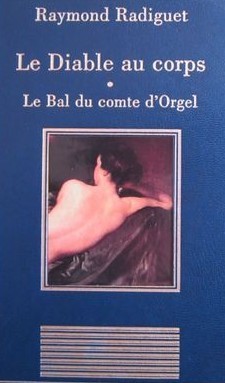
Le Diable au corps & Le bal du Comte d'Orgel book cover
Le Diable au corps & Le bal du Comte d'Orgel
1923
First Published
3.75
Average Rating
269
Number of Pages

Cette édition parfaitement mise en page par l'éditeur pour une lecture sur Kindle regroupe 9 œuvres de Raymond Radiguet : -Le Diable au corps -Le Bal du comte d’Orgel -Incognito -Cote d’Azur -Emploi du temps -Histoire de France -Pigeon Vole -Automne -Le Hamac Vous pourrez aisément naviguer d'une œuvre à une autre grâce à la table des matières interactive.
Avg Rating
3.75
Number of Ratings
256
5 STARS
28%
4 STARS
30%
3 STARS
33%
2 STARS
7%
1 STARS
2%
goodreads

Author

Raymond Radiguet
Raymond Radiguet
Author · 5 books

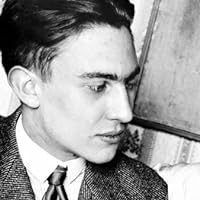
Raymond Radiguet was born in Saint-Maur, Val-de-Marne close to Paris, the son of a caricaturist. In 1917 he moved to the city. Soon he would drop out of the Lycée Charlemagne, where he studied, in order to pursue his interests in journalism and literature. He associated himself with the Modernist set, befriending Picasso, Max Jacob, Jean Hugo, Juan Gris, and especially Jean Cocteau, who became his mentor. Radiguet also had several well-documented relationships with women. An anecdote told by Ernest Hemingway has an enraged Cocteau charging Radiguet (known in the Parisian literary circles as "Monsieur Bébé" – Mister Baby) with decadence for his tryst with a model: "Bébé est vicieuse. Il aime les femmes." ("Baby is depraved. He likes women." [Note the use of the feminine adjective:]). Radiguet, Hemingway implies, employed his sexuality to advance his career, being a writer "who knew how to make his career not only with his pen but with his pencil." In early 1923 Radiguet published his first and most famous novel, Le Diable au corps (The Devil in the Flesh). The story of a young married woman who has an affair with a sixteen-year-old boy while her husband is away fighting at the front provoked scandal in a country that had just been through World War I. Though Radiguet denied it, it was established later that the story was in large part autobiographical. Critics, who initially despised the intense publicity campaign for the book's release (something not normally associated with works of literary merit at the time), were finally won over by the quality of Radiguet's writing and his sober, objective style. His second novel, Le bal du Comte d'Orgel, also dealing with adultery, was only published posthumously in 1924. Radiguet had died the previous year, aged 20, of typhoid fever, which he contracted after a trip he took with Cocteau. In reaction to this death Francis Poulenc wrote, "For two days I was unable to do anything, I was so stunned" (Ivry 1996). Alongside these two novels, Radiguet's works include a few poetry volumes and a play.

548 Market St PMB 65688, San Francisco California 94104-5401 USA
© 2026 Paratext Inc. All rights reserved