Margins
Le Séminaire book cover 1
Le Séminaire book cover 2
Le Séminaire book cover 3
Le Séminaire
Series · 15
books · 1920-2005

Books in series

The Seminar of Jacques Lacan book cover
#1

The Seminar of Jacques Lacan

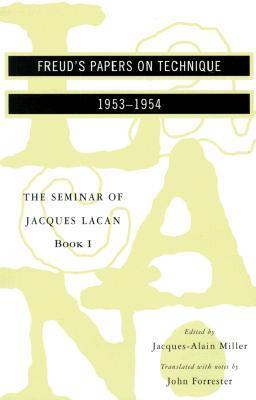
Book 1, Freud's Papers on Technique, 1953-1954

1953

A complete translation of the seminar that Jacques Lacan gave in the course of a year's teaching within the training programme of the Société Française de Psychanalyse. The French text was prepared by Jacques-Alain Miller in consultation with Jacques Lacan, from the transcriptions of the seminar.
The Seminar of Jacques Lacan book cover
#2

The Seminar of Jacques Lacan

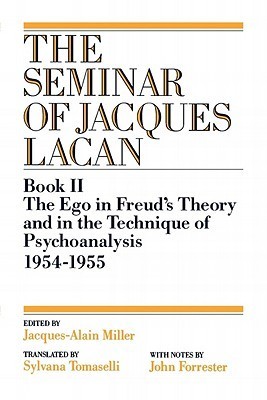
Book 2

1978

A complete translation of the seminar that Jacques Lacan gave in the course of a year's teaching within the training programme of the Société Française de Psychanalyse. The French text was prepared by Jacques-Alain Miller in consultation with Jacques Lacan, from the transcriptions of the seminar. This Seminar, together with Seminar I, which was published simultaneously, was worked on by both translators so as to produce uniformity in both terminology and style. Considerable attention was paid to the practices of previous translators of Lacan, in particular Anthony Wilden, Alan Sheridan, Stuart Schneiderman and Jacqueline Rose, in the hope that some consistency in the English rendition of Lacan can be achieved.
The Psychoses book cover
#3

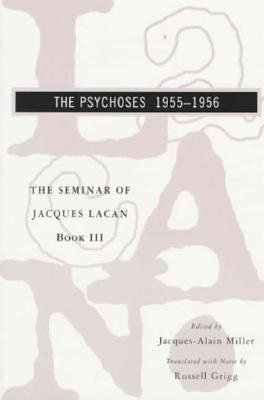
The Psychoses

The Seminar of Jacques Lacan

1920

Taking us into and beyond the realm of Freudian psychoanalysis, Lacan examines the psychoses' inescapable connection to the symbolic process through which signifier is joined with signified. Lacan deftly navigates the ontological levels of the symbolic, the imaginary, and the real to explain psychosis as "foreclosure," or rejection of the primordial signifier. Then, bridging the gap between the theoretical and the practical, Lacan discusses the implications for treatment. In these lectures on the psychoses, Lacan's renowned theory of metaphor and metonymy, along with the concept of the "quilting point," appears for the first time.
Formations of the Unconscious book cover
#5

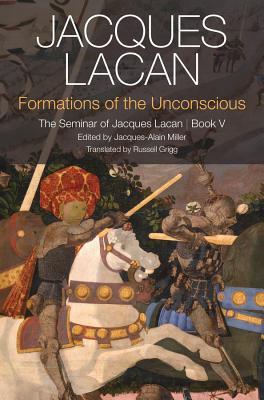
Formations of the Unconscious

The Seminar of Jacques Lacan, Book V

1970

When I decided to explore the question of Witz, or wit, with you this year, I undertook a small enquiry. It will come as no surprise at all that I began by questioning a poet. This is a poet who introduces the dimension of an especially playful wit that runs through his work, as much in his prose as in more poetic forms, and which he brings into play even when he happens to be talking about mathematics, for he is also a mathematician. I am referring to Raymond Queneau. While we were exchanging our first remarks on the matter he told me a joke. It's a joke about exams, about the university entrance exams, if you like. We have a candidate and we have an examiner. - "Tell me," says the examiner, "about the battle of Marengo." The candidate pauses for a moment, with a dreamy air. "The battle of Marengo...? Bodies everywhere! It's terrible... Wounded everywhere! It's horrible..." "But," says the examiner, "Can't you tell me anything more precise about this battle?" The candidate thinks for a moment, then replies, "A horse rears up on its hind legs and whinnies." The examiner, surprised, seeks to test him a little further and says, "In that case, can you tell me about the battle of Fontenoy?" "Oh!" says the candidate, "a horse rears up on its hind legs and whinnies." The examiner, strategically, asked the candidate to talk about the battle of Trafalgar. The candidate replies, "Dead everywhere! A blood bath.... Wounded everywhere! Hundreds of them...." "But my good man, can't you tell me anything more precise about this battle?" "A horse..." "Excuse me, I would have you note that the battle of Trafalgar is a naval battle." "Whoah! Whoah!" says the candidate. "Back up, Neddy!" The value of this joke is, to my mind, that it enables us to decompose, I believe, what is at stake in a witticism. (Extract from Chapter VI)

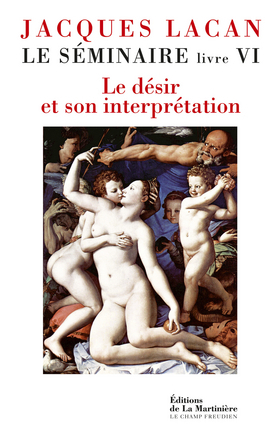
Le Séminaire, Livre VI book cover
#6

Le Séminaire, Livre VI

2002

Que montre Lacan? Que le désir n'est pas une fonction biologique; qu'il n'est pas coordonné à un objet naturel; que son objet est fantasmatique. De ce fait, le désir est extravagant. Il est insaisissable à qui veut le maîtriser. Il vous joue des tours. Mais aussi, s'il n'est pas reconnu, il fabrique du symptôme. Dans une analyse, il s'agit d'interpréter, c'est-à-dire de lire dans le symptôme le message de désir qu'il recèle. Si le désir déroute, il suscite en contrepartie l'invention d'artifices jouant le rôle de boussole., Une espèce animale a sa boussole naturelle, qui est unique. Dans l'espèce humaine, les boussoles sont multiples : ce sont des montages signifiants, des discours. Ils disent ce qu'il faut faire: comment penser, comment jouir, comment se reproduire. Cependant, le fantasme de chacun demeure irréductible aux idéaux communs. Jusqu'à une époque récente, nos boussoles, si diverses qu'elles soient, indiquaient toutes le même nord: le Père. On croyait le patriarcat un invariant anthropologique. Son déclin s'est accéléré avec l'égalité des conditions, la montée en puissance du capitalisme, la domination de la technique. Nous sommes en phase de sortie de l'âge du Père. Un autre discours est en voie de supplanter l'ancien. L'innovation à la place de la tradition. Plutôt que la hiérarchie, le réseau. L'attrait de l'avenir l'emporte sur le poids du passé. Le féminin prend le pas sur le viril. Là où c'était un ordre immuable, des flux transformationnels repoussent incessamment toute limite. Freud est de l'âge du Père. Il a beaucoup fait pour le sauver. L'Église a fini par s'en apercevoir. Lacan a suivi la voie frayée par Freud, mais elle l'a conduit à poser que le Père est un symptôme. Il le montre ici sur l'exemple d'Hamlet. Ce que l'on a retenu de Lacan ? la formalisation de l'?dipe, l'accent mis sur le Nom-du-Père - n'était que son point de départ. Le Séminaire VI déjà le remanie: ]'?dipe n'est pas la solution unique du désir, c'est seulement sa forme normalisée; celle-ci est pathogène; elle n'épuise pas le destin du désir. D'où l'éloge de la perversion qui termine le volume. Lacan lui donne la valeur d'une rébellion contre les identifications assurant le maintien de la routine sociale. Ce Séminaire annonçait « le remaniement des conformismes antérieurement instaurés, voire leur éclatement ». Nous y sommes. Lacan parle de nous. Jacques-Alain Miller (4ème de couverture)
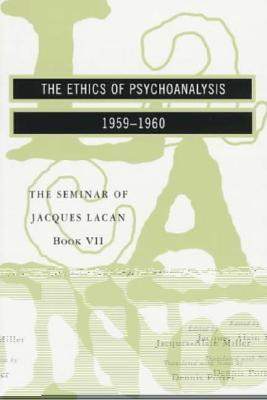
The Ethics of Psychoanalysis 1959-1960 book cover
#7

The Ethics of Psychoanalysis 1959-1960

1986

Lacan dedicates this seventh year of his famous seminar to the problematic role of ethics in psychoanalysis. Delving into the psychoanalyst's inevitable involvement with ethical questions and "the attraction of transgression," Lacan illuminates Freud's psychoanalytic work and its continued influence. Lacan explores the problem of sublimation, the paradox of jouissance, the essence of tragedy (a reading of Sophocle's Antigone), and the tragic dimension of analytic experience. His exploration leads us to startling insights on "the consequence of man's relationship to desire" and the conflicting judgments of ethics and analysis.
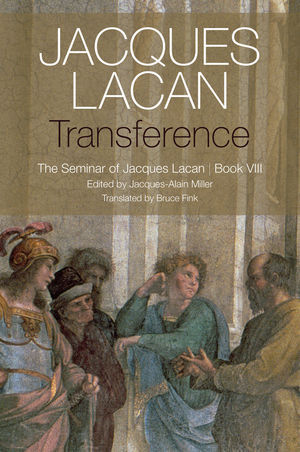
Transference book cover
#8

Transference

The Seminar of Jacques Lacan, Book VIII

2002

"Alcibiades attempted to seduce Socrates, he wanted to make him, and in the most openly avowed way possible, into someone instrumental and subordinate to what? To the object of Alcibiades' desire - Agalma, the good object.I would go even further. How can we analysts fail to recognize what is involved? He says quite clearly: Socrates has the good object in his stomach. Here Socrates is nothing but the envelope in which the object of desire is found.It is in order to clearly emphasize that he is nothing but this envelope that Alcibiades tries to show that Socrates is desire's serf in his relations with Alcibiades, that Socrates is enslaved to Alcibiades by his desire. Although Alcibiades was aware that Socrates desired him, he wanted to see Socrates' desire manifest itself in a sign, in order to know that the other - the object, Agalma - was at his mercy.Now, it is precisely because he failed in this undertaking that Alcibiades disgraces himself, and makes of his confession something that is so affectively laden. The daemon of Αἰδώς (AidOs), Shame, about which I spoke to you before in this context, is what intervenes here. This is what is violated here. The most shocking secret is unveiled before everyone; the ultimate mainspring of desire, which in love relations must always be more or less dissimulated, is revealed - its aim is the fall of the Other, A, into the other, a."Jacques Lacan
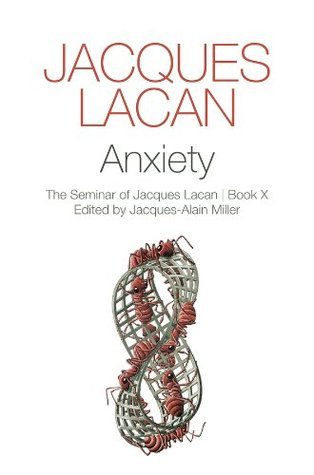
Anxiety book cover
#10

Anxiety

The Seminar of Jacques Lacan, Book X

2002

Jacques Lacan is widely recognized as a key figure in the history of psychoanalysis and one of the most influential thinkers of the 20th Century. In Anxiety, now available for the first time in English, he explores the nature of anxiety, suggesting that it is not nostalgia for the object that causes anxiety but rather its imminence. In what was to be the last of his year-long seminars at Saint-Anne hospital, Lacan's 1962-63 lessons form the keystone to this classic phase of his teaching. Here we meet for the first time the notorious a in its oral, anal, scopic and vociferated guises, alongside Lacan’s exploration of the question of the 'analyst's desire'. Arriving at these concepts from a multitude of angles, Lacan leads his audience with great care through a range of recurring themes such as anxiety between jouissance and desire, counter-transference and interpretation, and the fantasy and its frame. This important volume, which forms Book X of The Seminar of Jacques Lacan, will be of great interest to students and practitioners of psychoanalysis and to students and scholars throughout the humanities and social sciences, from literature and critical theory to sociology, psychology and gender studies.
The Seminar of Jacques Lacan book cover
#11

The Seminar of Jacques Lacan

1973

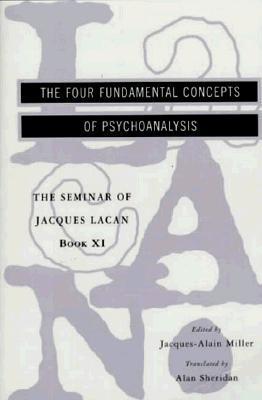
This volume is based on a year's seminar in which Dr. Lacan addressed a larger, less specialized audience than ever before, among whom he could not assume familiarity with his work. For his listeners then, and for his readers now, he wanted to "introduce a certain coherence into the major concepts on which psycho-analysis is based," namely, the unconscious, repetition, the transference, and the drive. Along the way he argues for a structural affinity between psychoanalysis and language, discusses the relation of psychoanalysis to religion, and reveals his particular stance on topics ranging from sexuality and death to alienation and repression. This book constitutes the essence of Dr. Lacan's sensibility.
The Seminar of Jacques Lacan book cover
#17

The Seminar of Jacques Lacan

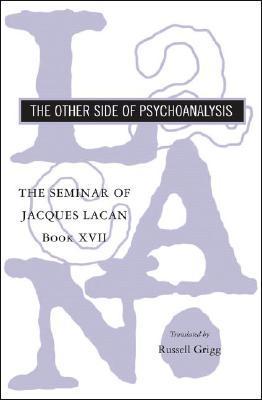
The Other Side of Psychoanalysis

1969

This new translation of Jacques Lacan's deliberation on psychoanalysis and contemporary social order offers welcome, readable access to the brilliant author's seminal thinking on Freud, Marx, and Hegel; patterns of social and sexual behavior; and the nature and function of science and knowledge in the contemporary world.
Seminario 18 book cover
#18

Seminario 18

De un discurso que no fuera del semblante

2002

Il "discorso" di cui si tratta nel seminario del 1970 è è quello della possibile formalizzazione della psicoanalisi, ed è quello della produzione di senso (nell'esperienza della "lettera" o del significante che si fa nell'analisi, e di plus-de-jouir, nell'esperienza comune, in particolare in quella amorosa); tutti temi che riecheggiano sulla pagina come effetto di quegli anni di contestazione e femminismo. Attraverso l'individuazione di quattro posti (agente/verità; altro/produzione) e dei quattro operatori (soggetto sbarrato, significante-padrone, sapere, plus-godimerito), che nella loro combinatoria danno luogo ai quattro discorsi introdotti nel corso del Seminario dell'anno prima (del padrone, dell'isterico, dell'universitario e dell'analista), Lacan cerca di mostrare come solo al discorso analitico riesca di non essere un discorso da "sembiante", ovvero di "finta causa". Solo il discorso analitico, infatti, riesce a disfare le illusioni che si generano dal ritenere, sia pure in forme diverse, che vi sia una realtà prediscorsiva, e che il linguaggio, a sua volta, organizzi un universo entro il quale si genererebbe una relazione fissa e definitiva tra i quattro posti (e gli operatori che li occupano).
…or Worse book cover
#19

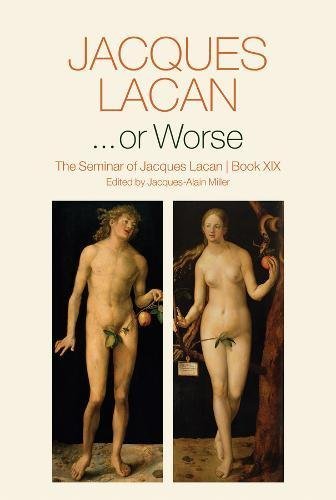
…or Worse

The Seminar of Jacques Lacan, Book XIX

2003

'A chance meeting of a sewing machine and an umbrella. The impossible face-off between a whale and a polar bear. One was devised by LautrEamont; the other punctuated by Freud. Both are memorable. Why so? They certainly tickle something in us. Lacan says what it is. It's about man and woman.There is neither accord nor harmony between man and woman. There's no programme, nothing has been predetermined: every move is a shot in the dark, which in modal logic is called contingency. There's no way out of it. Why is it so inexorable, that is, so necessary? It really has to be reckoned that this stems from an impossibility. Hence the theorem: 'There is no sexual relation.' The formula has become famous.In the place of what thereby punctures a hole in the real, there is a plethora of luring and enchanting images, and there are discourses that prescribe what this relation must be. These discourses are mere semblance, the artifice of which psychoanalysis has made apparent to all. In the twenty-first century, this is beyond dispute. Who still believes that marriage has a natural foundation? Since it's a fact of culture, one devotes oneself to inventing. One cobbles together different constructions from whatever one can. It may be better Eor worse."There is Oneness." At the heart of the present Seminar, this aphorism, which hitherto went unnoticed, complements the "there is no" of sexual relation, stating what there is. It should be heard as One-all-alone. Alone in jouissance (which is fundamentally auto-erotic) and alone in significance (outside any semantics). Here begins Lacan's late teaching. Everything he has already taught you is here, and yet everything is new, overhauled, topsy-turvy.Lacan had taught the primacy of the Other in the order of truth and the order of desire. Here he teaches the primacy of the One in its real dimension. He rejects the Two of sexual relation and that of signifying articulation. He rejects the Big Other, the fulcrum of the dialectic of the subject, disputing its existence which he consigns to fiction. He depreciates desire and promotes jouissance. He rejects Being, which is mere semblance. Henology, the doctrine of the One, here outclasses ontology, the theory of Being. What about the symbolic order? Nothing more than the reiteration of the One in the real. Hence the abandoning of graphs and topological surfaces in favour of knots made of rings of string, each of which is an unlinked One.Recall that Seminar XVIII sighed for a discourse that would not be semblance. Well, with Seminar XIX, we have an attempt at a discourse that would take its point of departure in the real. The radical thought of modern Uni-dividualism.'Jacques-Alain Miller
Feminine Sexuality book cover
#20

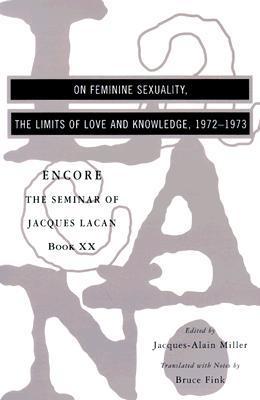
Feminine Sexuality

Jacques Lacan and the école freudienne

1975

A startling psycholinguistic exploration of the boundaries of love and knowledge. Often controversial, always inspired, Jacques Lacan here weighs theories of the relationship between the desire for love and the attainment of knowledge from such thinkers as Aristotle, Marx, and Freud. He leads us through mathematics, philosophy, religion, and, naturally, psychoanalysis into an entirely new way of interpreting the two most fundamental human drives. Long anticipated by English-speaking readers, this annotated translation presents Lacan's most sophisticated work on love and desire.
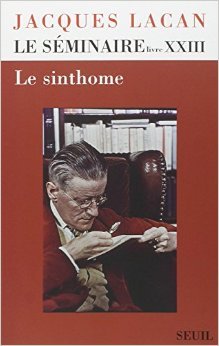
The Sinthome book cover
#23

The Sinthome

The Seminar of Jacques Lacan, Book XXIII

2005

"Ten times, an elderly grey-haired man gets up on the stage. Ten times puffing and sighing. Ten times slowly tracing out strange multi-coloured arabesques that interweave, curling with the meanders of his speech, by turns fluid and uneasy. A whole crowd looks on, transfixed by this enigma-made-man, absorbing the ipse dixit and anticipating some illumination that is taking its time to appear. Non lucet. It’s shady in here, and the Théodores go hunting for their matches. Still, they say, cuicumque in sua arte perito credendum est, whosoever is expert in his art is to be lent credence. At what point is a person mad? The master himself poses the question. That was back in the day. Those were the mysteries of Paris forty years hence. A Dante clasping Virgil’s hand to be led through the circles of the Inferno, Lacan took the hand of James Joyce, the unreadable Irishman, and, in the wake of this slender Commander of the Faithless, made with heavy and faltering step onto the incandescent zone where symptomatic women and ravaging men burn and writhe. An equivocal troupe was in the struggling audience: his son-in-law; a dishevelled writer, young and just as unreadable back then; two dialoguing mathematicians; and a professor from Lyon vouching for the seriousness of the whole affair. A discreet Pasiphaë was being put to work backstage. Smirk then, my good fellows! Be my guest. Make fun of it all! That’s what our comic illusion is for. That way, you shall know nothing of what is happening right before your very eyes: the most carefully considered, the most lucid, and the most intrepid calling into question of the art that Freud invented, better known under its pseudonym: psychoanalysis." ― Jacques-Alain Miller
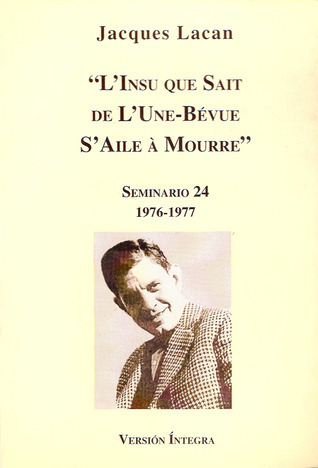
Seminario 24 book cover
#24

Seminario 24

"L'Insu que Sait de L'Une-Bévue S'Aile à Mourre" 1976-1977, Versión íntegra

1977

Authors

Jacques-Alain Miller
Author · 1 book
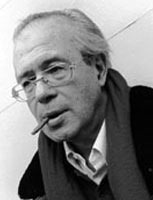
Jacques-Alain Miller is a French Lacanian psychoanalyst.
Jacques Lacan
Jacques Lacan
Author · 30 books

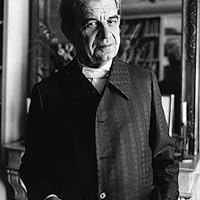
Jacques-Marie-Émile Lacan was a French psychoanalyst, psychiatrist, and doctor, who made prominent contributions to the psychoanalytic movement. His yearly seminars, conducted in Paris from 1953 until his death in 1981, were a major influence in the French intellectual milieu of the 1960s and 1970s, particularly among post-structuralist thinkers. Lacan's ideas centered on Freudian concepts such as the unconscious, the castration complex, the ego, focusing on identifications, and the centrality of language to subjectivity. His work was interdisciplinary, drawing on linguistics, philosophy, mathematics, amongst others. Although a controversial and divisive figure, Lacan is widely read in critical theory, literary studies, and twentieth-century French philosophy, as well as in the living practice of clinical psychoanalysis.

548 Market St PMB 65688, San Francisco California 94104-5401 USA
© 2026 Paratext Inc. All rights reserved