Margins
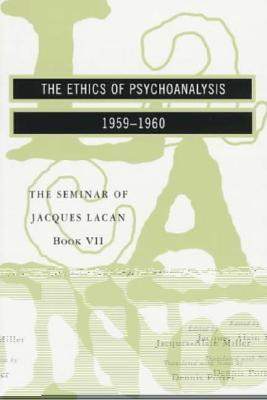
The Ethics of Psychoanalysis 1959-1960 book cover
The Ethics of Psychoanalysis 1959-1960
1986
First Published
4.25
Average Rating
384
Number of Pages

Part of Series

Lacan dedicates this seventh year of his famous seminar to the problematic role of ethics in psychoanalysis. Delving into the psychoanalyst's inevitable involvement with ethical questions and "the attraction of transgression," Lacan illuminates Freud's psychoanalytic work and its continued influence. Lacan explores the problem of sublimation, the paradox of jouissance, the essence of tragedy (a reading of Sophocle's Antigone), and the tragic dimension of analytic experience. His exploration leads us to startling insights on "the consequence of man's relationship to desire" and the conflicting judgments of ethics and analysis.

Avg Rating
4.25
Number of Ratings
512
5 STARS
51%
4 STARS
30%
3 STARS
14%
2 STARS
3%
1 STARS
2%
goodreads

Author

Jacques Lacan
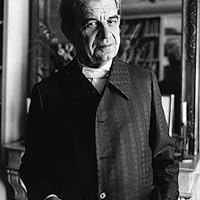
Jacques Lacan
Author · 30 books

Jacques-Marie-Émile Lacan was a French psychoanalyst, psychiatrist, and doctor, who made prominent contributions to the psychoanalytic movement. His yearly seminars, conducted in Paris from 1953 until his death in 1981, were a major influence in the French intellectual milieu of the 1960s and 1970s, particularly among post-structuralist thinkers. Lacan's ideas centered on Freudian concepts such as the unconscious, the castration complex, the ego, focusing on identifications, and the centrality of language to subjectivity. His work was interdisciplinary, drawing on linguistics, philosophy, mathematics, amongst others. Although a controversial and divisive figure, Lacan is widely read in critical theory, literary studies, and twentieth-century French philosophy, as well as in the living practice of clinical psychoanalysis.

548 Market St PMB 65688, San Francisco California 94104-5401 USA
© 2026 Paratext Inc. All rights reserved