Margins
Le wagon plombé book cover
Le wagon plombé
Suivi de Voyage en Russie et de Sur Maxime Gorki
2017
First Published
3.61
Average Rating
167
Number of Pages
Ce wagon plombé qui fera « voler en éclat l'ordre du monde », c'est bien sûr le récit du fameux retour de Lénine en Russie, fin mars-début avril 2017, raconté ici par Zweig à la fois comme « un passionnant roman d'espionnage » et comme l'un des moments clés de l'histoire mondiale. Ce récit est suivi de « Voyage en Russie », où Zweig relate son voyage de 1928. Pour lui, la Russie est d'une importance cruciale ? moins politique et plus littéraire que, par exemple, chez Walter Benjamin, qui, exactement au même moment, séjourne à Moscou (voir son Journal de Moscou). Le livre comprend également « La plus belle tombe du monde » (sur Tolstoï, pages figurant notamment dans Le Monde d'hier), ainsi que « Sur Maxim Gorki » (1931), inédit en français.

Avg Rating
3.61
Number of Ratings
54
5 STARS
11%
4 STARS
50%
3 STARS
30%
2 STARS
7%
1 STARS
2%
goodreads

Author

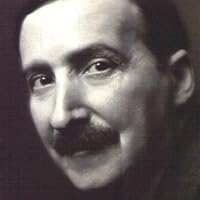
Stefan Zweig
Stefan Zweig
Author · 230 books

Stefan Zweig was one of the world's most famous writers during the 1920s and 1930s, especially in the U.S., South America, and Europe. He produced novels, plays, biographies, and journalist pieces. Among his most famous works are Beware of Pity, Letter from an Unknown Woman, and Mary, Queen of Scotland and the Isles. He and his second wife committed suicide in 1942. Zweig studied in Austria, France, and Germany before settling in Salzburg in 1913. In 1934, driven into exile by the Nazis, he emigrated to England and then, in 1940, to Brazil by way of New York. Finding only growing loneliness and disillusionment in their new surroundings, he and his second wife committed suicide. Zweig's interest in psychology and the teachings of Sigmund Freud led to his most characteristic work, the subtle portrayal of character. Zweig's essays include studies of Honoré de Balzac, Charles Dickens, and Fyodor Dostoevsky (Drei Meister, 1920; Three Masters) and of Friedrich Hölderlin, Heinrich von Kleist, and Friedrich Nietzsche (Der Kampf mit dem Dämon, 1925; Master Builders). He achieved popularity with Sternstunden der Menschheit (1928; The Tide of Fortune), five historical portraits in miniature. He wrote full-scale, intuitive rather than objective, biographies of the French statesman Joseph Fouché (1929), Mary Stuart (1935), and others. His stories include those in Verwirrung der Gefühle (1925; Conflicts). He also wrote a psychological novel, Ungeduld des Herzens (1938; Beware of Pity), and translated works of Charles Baudelaire, Paul Verlaine, and Emile Verhaeren. Most recently, his works provided the inspiration for 2014 film The Grand Budapest Hotel.

548 Market St PMB 65688, San Francisco California 94104-5401 USA
© 2026 Paratext Inc. All rights reserved