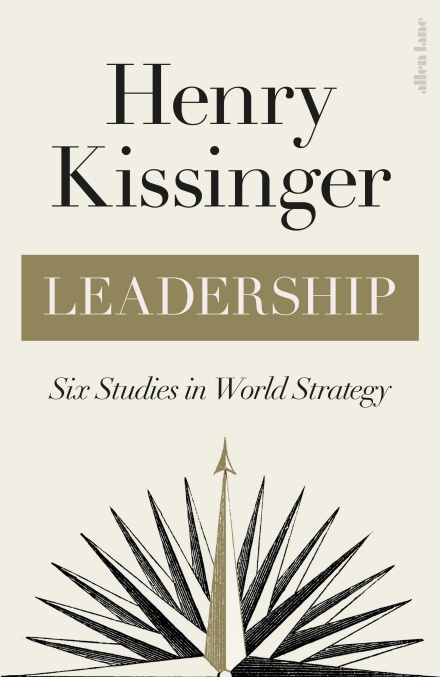
Henry Kissinger analyses how six extraordinary leaders he has known have shaped their countries and the world 'Leaders,' writes Henry Kissinger in this compelling book, 'think and act at the intersection of two axes: the first, between the past and the future; the second between the abiding values and aspirations of those they lead. They must balance what they know, which is necessarily drawn from the past, with what they intuit about the future, which is inherently conjectural and uncertain. It is this intuitive grasp of direction that enables leaders to set objectives and lay down a strategy.' In Leadership, Kissinger analyses the lives of six extraordinary leaders through the distinctive strategies of statecraft which he believes they embodied. After the Second World War, Konrad Adenauer brought defeated and morally bankrupt Germany back into the community of nations by what Kissinger calls 'the strategy of humility'. Charles de Gaulle set France beside the victorious Allies and renewed its historic grandeur by 'the strategy of will'. During the Cold War, Richard Nixon gave geostrategic advantage to the United States by 'the strategy of equilibrium'. After twenty-five years of conflict, Anwar Sadat brought a vision of peace to the Middle East by a 'strategy of transcendence'. Against the odds, Lee Kwan Yew created a powerhouse city-state, Singapore, by 'the strategy of excellence'. Although when she came to power Britain was known as 'the sick man of Europe', Margaret Thatcher renewed her country's morale and international position by 'the strategy of conviction'. To each of these studies, Kissinger brings historical perception, public experience and - because he knew each of their subjects, and participated in many of the events he describes - personal knowledge. The book is enriched by insights and judgements such as only he could make, and concludes with his reflections on world order and the indispensability of leadership today.
Author
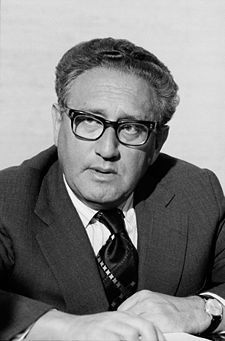
Henry Alfred Kissinger (born Heinz Alfred Kissinger) is a German-born American bureaucrat, diplomat, and 1973 Nobel Peace Prize laureate. He served as National Security Advisor and later concurrently as Secretary of State in the Richard Nixon administration. Kissinger emerged unscathed from the Watergate scandal, and maintained his powerful position when Gerald Ford became President. A proponent of Realpolitik, Kissinger played a dominant role in United States foreign policy between 1969 and 1977. During this period, he pioneered the policy of détente. During his time in the Nixon and Ford administrations he cut a flamboyant figure, appearing at social occasions with many celebrities. His foreign policy record made him a nemesis to the anti-war left and the anti-communist right alike.