Margins




548 Market St PMB 65688, San Francisco California 94104-5401 USA
© 2026 Paratext Inc. All rights reserved
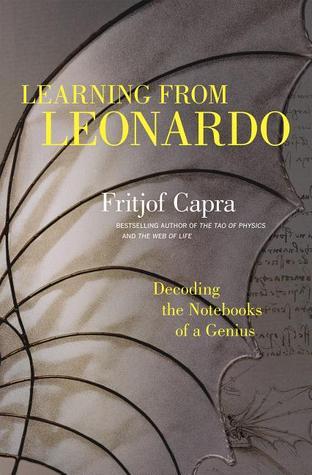
Leonardo da Vinci was a brilliant artist, scientist, engineer, mathematician, architect, inventor, and even musician—the archetypal Renaissance man. But he was also a profoundly modern man. Not only did Leonardo invent the empirical scientific method over a century before Galileo and Francis Bacon, but Capra’s decade-long study of Leonardo’s fabled notebooks reveals that he was a systems thinker centuries before the term was coined. At the very core of Leonardo’s science, Capra argues, lies his persistent quest for understanding the nature of life. His science is a science of living forms, of qualities and patterns, radically different from the mechanistic science that emerged 200 years later. Because he saw the world as an integrated whole, Leonardo always applied concepts from one area to illuminate problems in another. His studies of the movement of water informed his ideas about how landscapes are shaped, how sap rises in plants, how air moves over a bird’s wing, and how blood flows in the human body. His observations of nature enhanced his art, his drawings were integral to his scientific studies, and he brought art, science, and technology together in his beautiful and elegant mechanical and architectural designs. Capra describes seven defining characteristics of Leonardo da Vinci’s genius and includes a list of over forty discoveries he made that weren’t rediscovered until centuries later. Capra follows the organizational scheme Leonardo himself intended to use if he ever published his notebooks. So in a sense, this is Leonardo’s science as he himself would have presented it. Obviously, we can’t all be geniuses on the scale of Leonardo da Vinci. But his persistent endeavor to put life at the very center of his art, science, and design and his recognition that all natural phenomena are fundamentally interconnected and interdependent are important lessons we can learn from. By exploring the mind of the preeminent Renaissance genius, we can gain profound insights into how to address the complex challenges of the 21st century.