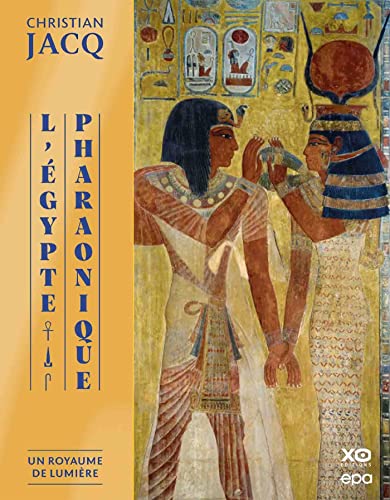



Pourquoi l’Égypte ? Comment est-elle née ? Quelles furent ses valeurs intangibles ? Pourquoi n’a-t-elle connu aucune guerre de religion ? Pourquoi s’est-elle fondée sur des rites initiatiques, et quels sont leurs contenus ? Comment le secret de l’éternité a-t-il été percé ? Issu de plus d'un demi-siècle de recherches, cet ouvrage, illustré de documents remarquables, dont beaucoup rares et peu connus, tente de comprendre comment L'Égypte pharaonique a façonné l'âme du monde et accompli l'impossible mariage entre l'esprit et la matière. Avec son incroyable talent de narrateur, Christian Jacq redonne vie à cet univers qui parle à tous les êtres et continue, à travers les siècles, à transmettre des valeurs fondamentales, sans lesquelles une société cède au chaos et à la violence. Un passionnant voyage dans le temps pour découvrir les clés de cette civilisation de lumière : l'univers spirituel (dieux et les divinités), la politique (fonctionnement de l'état pharaonique), l'économie, la vie quotidienne et sa sacralisation.

Author

Christian Jacq is a French author and Egyptologist. He has written several novels about ancient Egypt, notably a five book suite about pharaoh Ramses II, a character whom Jacq admires greatly. Jacq's interest in Egyptology began when he was thirteen, and read History of Ancient Egyptian Civilization by Jacques Pirenne. This inspired him to write his first novel. He first visited Egypt when he was seventeen, went on to study Egyptology and archaeology at the Sorbonne, and is now one of the world's leading Egyptologists. By the time he was eighteen, he had written eight books. His first commercially successful book was Champollion the Egyptian, published in 1987. As of 2004 he has written over fifty books, including several non-fiction books on the subject of Egyptology. He and his wife later founded the Ramses Institute, which is dedicated to creating a photographic description of Egypt for the preservation of endangered archaeological sites. Between 1995-1997, he published his best selling five book suite Ramsès, which is today published in over twenty-five countries. Each volume encompasses one aspect of Ramesses' known historical life, woven into a fictional tapestry of the ancient world for an epic tale of love, life and deceit. Jacq's series describes a vision of the life of the pharaoh: he has two vile power-hungry siblings, Shanaar, his decadent older brother, and Dolora, his corrupted older sister who married his teacher. In his marital life, he first has Isetnofret (Iset) as a mistress (second Great Wife), meets his true love Nefertari (first Great Wife) and after their death, gets married to Maetnefrure in his old age. Jacq gives Ramesses only three biological children: Kha'emweset, Meritamen (she being the only child of Nefertari, the two others being from Iset) and Merneptah. The other "children" are only young officials trained for government and who are nicknamed "sons of the pharaoh".