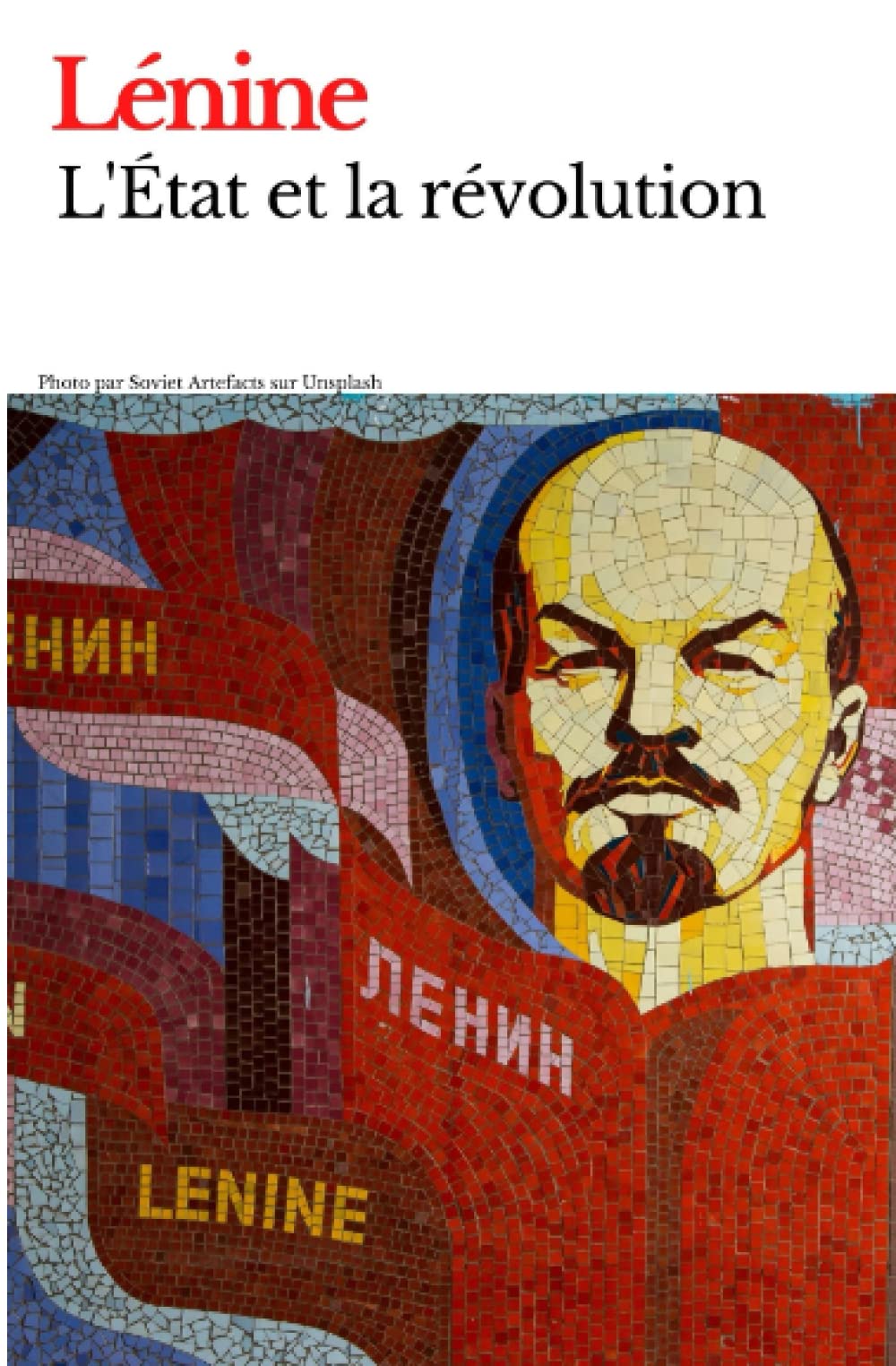



L'État et la révolution est considéré comme l'ouvrage le plus important de Lénine sur l'État et a été appelé par Lucio Colletti "la plus grande contribution de Lénine à la théorie politique". Selon le marxologue David McLellan, "le livre trouve son origine dans la dispute entre Lénine et Boukharine, durant l'été 1916, sur l'existence de l'État après une révolution prolétarienne. Boukharine avait mis l'accent sur l'aspect "dépérissement", tandis que Lénine insistait sur la nécessité de la machine étatique pour exproprier les expropriateurs. En fait, c'est Lénine qui a changé d'avis, et beaucoup des idées d'État et Révolution, composé à l'été 1917 - en particulier le thème anti-étatiste - étaient celles de Boukharine". La définition directe et simple que Lénine donne de l'État est la suivante : "L'État est une organisation spéciale de la force : c'est une organisation de la violence pour la suppression d'une classe quelconque", d'où son dénigrement même de la démocratie parlementaire, qui était influencée par ce que Lénine considérait comme l'augmentation récente des influences bureaucratiques et militaires : "Décider une fois tous les quelques ans quel membre de la classe dominante doit réprimer et écraser le peuple par le biais du parlement - telle est la véritable essence du parlementarisme bourgeois, non seulement dans les monarchies parlementaires-constitutionnelles, mais aussi dans les républiques les plus démocratiques." Citant Friedrich Engels et Karl Marx, Lénine examine des questions théoriques sur l'existence de l'État après la révolution prolétarienne, répondant aux arguments des anti-autoritaires, des anarchistes, des sociaux-démocrates et des réformistes, en décrivant les étapes progressives du changement sociétal - la révolution, établissant "l'étape inférieure de la société communiste" (la commune socialiste), et "l'étape supérieure de la société communiste" qui donnera lieu à une société stable où la liberté personnelle pourra s'exprimer pleinement. "Tant que l'État existe, il n'y a pas de liberté. Quand il y aura la liberté, il n'y aura plus d'État." (Citation de Lénine, L'État et la révolution, 1917)
Author

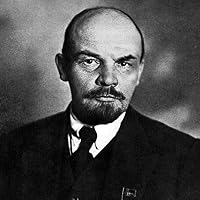
Lenin, Vladimir Ilyich Ulyanov (1870-1924) -one of the leaders of the Bolshevik party since its formation in 1903- led the Bolsheviks to power in October, 1917. Elected to the head of the Soviet government until 1922, when he retired due to ill health. Lenin, born in 1870, was committed to revolutionary struggle from an early age - his elder brother was hanged for the attempted assassination of Czar Alexander III. In 1891 Lenin passed his Law exam with high honors, whereupon he took to representing the poorest peasantry in Samara. After moving to St. Petersburg in 1893, Lenin's experience with the oppression of the peasantry in Russia, coupled with the revolutionary teachings of G V Plekhanov, guided Lenin to meet with revolutionary groups. In April 1895, his comrades helped send Lenin abroad to get up to speed with the revolutionary movement in Europe, and in particular, to meet the Emancipation of Labour Group, of which Plekhanov head. After five months abroad, traveling from Switzerland to France to Germany, working at libraries and newspapers to make his way, Lenin returned to Russia, carrying a brief case with a false bottom, full of Marxist literature. On returning to Russia, Lenin and Martov created the League for the Struggle for the Emancipation of the Working Class, uniting the Marxist circles in Petrograd at the time. The group supported strikes and union activity, distributed Marxist literature, and taught in workers education groups. In St. Petersburg Lenin begins a relationship with Nadezhda Krupskaya. In the night of December 8, 1895, Lenin and the members of the party are arrested; Lenin sentenced to 15 months in prison. By 1897, when the prison sentence expired, the autocracy appended an additional three year sentence, due to Lenin's continual writing and organising while in prison. Lenin is exiled to the village of Shushenskoye, in Siberia, where he becomes a leading member of the peasant community. Krupskaya is soon also sent into exile for revolutionary activities, and together they work on party organising, the monumental work: The Development of Capitalism in Russia, and the translating of Sidney and Beatrice Webb's Industrial Democracy. After his term of exile ends, Lenin emigrates to Münich, and is soon joined by Krupskaya. Lenin creates Iskra, in efforts to bring together the Russian Social Democratic Labour Party, which had been scattered after the police persecution of the first congress of the party in 1898. [...:] After leading the October Revolution, Lenin served as the first and only chairman of the R.S.F.S.R.. In 1919 Lenin founded the Communist International. In 1921 Lenin instituted the NEP. During 1922 Lenin suffered a series of strokes that prevented active work in government. While in his final year – late 1922 to 1923 – Lenin wrote his last articles where he outlined a programme to fight against the bureaucratization of the Commmunist Party and the Soviet state. Lenin died on January 21, 1924, as a result of multiple strokes.