Margins
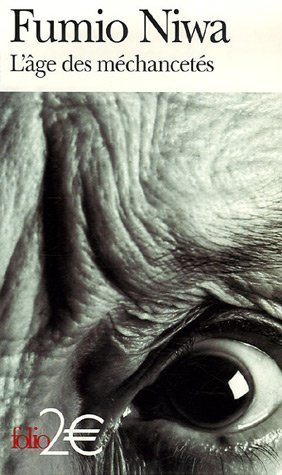
L'âge des méchancetés book cover
L'âge des méchancetés
2006
First Published
3.03
Average Rating
112
Number of Pages
Comment se débarrasser de la grand-mère de sa femme qui empoisonne la vie de tous les habitants de la maison ? Exaspéré, Itami décide d'envoyer la vieille dame chez un autre membre de la famille ; attachée sur le dos de sa petite-fille qui la porte comme un sac, la voilà en route ! Mais on ne se débarrasse pas impunément de ses aïeuls... Un texte féroce et dérangeant sur la vieillesse.

Avg Rating
3.03
Number of Ratings
29
5 STARS
3%
4 STARS
34%
3 STARS
34%
2 STARS
17%
1 STARS
10%
goodreads

Author

Fumio Niwa
Fumio Niwa
Author · 5 books

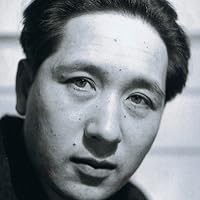
Fumio Niwa (丹羽文雄 Niwa Fumio, born on November 22, 1904 in Mie Prefecture, Japan, died April 20, 2005 in Musashino, Tokyo) was a Japanese novelist with a long list of works, the most famous in the West being his novel The Buddha Tree (Japanese Bodaiju, 1956). The eldest son of a priest in the Pure Land sect of Buddhism, Niwa grew up at Sogenji, a temple in Yokkaichi near Nagoya. After his graduation from Waseda University, he reluctantly entered the hereditary priesthood at Sogenji but quit two years later, at the age of 29, in order to become a writer, walking out of the temple grounds on 10 April 1932 and heading back to Tokyo. He was supported by his girlfriend until his marriage in 1935. During this time he published Sweetfish (Japanese Ayu), serialised in Bungei Shinju, and the novel Superfluous Flesh (Japanese Zeiniku). Niwa's work was controversial and during World War II a couple of his novels were banned for immorality; he worked as a war correspondent in China and New Guinea; he accompanied Rear Admiral Gunichi Mikawa's Eighth Fleet and was on board the flagship Chōkai during the Battle of Savo Island on 9 August 1942. He was wounded at Tulagi. These experiences inspired Naval Engagement (Japanese Kaisen) and Lost Company (Kaeranu Chutai), both censored. After the war Niwa became the extremely prolific author of more than 80 novels, 100 volumes of short stories, and 10 volumes of essays. His most celebrated short story was The Hateful Age (Japanese Iyagarase no Nenrei, 1947), about a family terrorised by a senile grandmother, which became so famous that the phrase "the hateful age" entered the language for a time. The novel The Buddha Tree uses his unhappy childhood at Sogenji as a backdrop. When he was eight years old his mother eloped with an actor from the Kansai Kabuki company, an event that greatly traumatised him; in this novel the story is elaborated fictionally. Later works include, from 1969, a five-volume biography of Shinran (1173-1262), the founder of the Pure Land sect, and in 1983 an eight-volume work on Rennyo, a 15th Century monk who died on a pilgrimage to India. In 1965 Niwa was elected a member of the Art Academy of Japan, and the following year he was elected as the chief director of the Japanese Writers' Association, a position he held for many years. Niwa encouraged fellow members to play golf, organised health insurance, and bought land for a writers' graveyard. He was awarded the Order of Culture in 1977. (from Wikipedia)

548 Market St PMB 65688, San Francisco California 94104-5401 USA
© 2026 Paratext Inc. All rights reserved