Margins
Margins
548 Market St PMB 65688, San Francisco California 94104-5401 USA
hello@margins.app
·
+1 (650) 223-5283
Privacy Policy
·
Terms of Use
© 2026 Paratext Inc. All rights reserved
Lives
Lives
Series · 3 books · 100-120
By
Plutarch
Books in series
#1
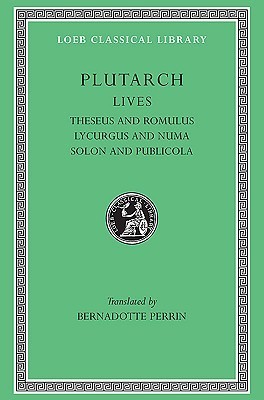
Lives, Volume I
100
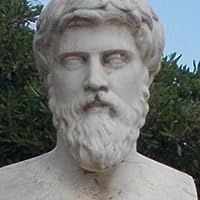
Plutarch (Plutarchus), ca. 45–120 CE, was born at Chaeronea in Boeotia in central Greece, studied philosophy at Athens, and, after coming to Rome as a teacher in philosophy, was given consular rank by the emperor Trajan and a procuratorship in Greece by Hadrian. He was married and the father of one daughter and four sons. He appears as a man of kindly character and independent thought, studious and learned. Plutarch wrote on many subjects. Most popular have always been the 46 Parallel Lives, biographies planned to be ethical examples in pairs (in each pair, one Greek figure and one similar Roman), though the last four lives are single. All are invaluable sources of our knowledge of the lives and characters of Greek and Roman statesmen, soldiers and orators. Plutarch's many other varied extant works, about 60 in number, are known as Moralia or Moral Essays. They are of high literary value, besides being of great use to people interested in philosophy, ethics and religion. The Loeb Classical Library edition of the Lives is in eleven volumes.
#4
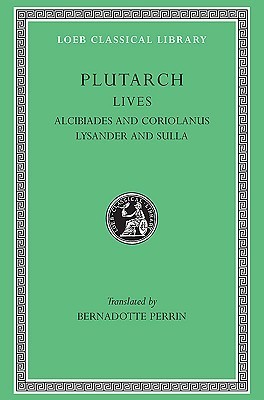
Lives, Volume IV
120
Plutarch (Plutarchus), ca. 45–120 CE, was born at Chaeronea in Boeotia in central Greece, studied philosophy at Athens, and, after coming to Rome as a teacher in philosophy, was given consular rank by the emperor Trajan and a procuratorship in Greece by Hadrian. He was married and the father of one daughter and four sons. He appears as a man of kindly character and independent thought, studious and learned. Plutarch wrote on many subjects. Most popular have always been the 46 Parallel Lives, biographies planned to be ethical examples in pairs (in each pair, one Greek figure and one similar Roman), though the last four lives are single. All are invaluable sources of our knowledge of the lives and characters of Greek and Roman statesmen, soldiers and orators. Plutarch’s many other varied extant works, about 60 in number, are known as Moralia or Moral Essays. They are of high literary value, besides being of great use to people interested in philosophy, ethics, and religion. The Loeb Classical Library edition of the Lives is in eleven volumes.
#7
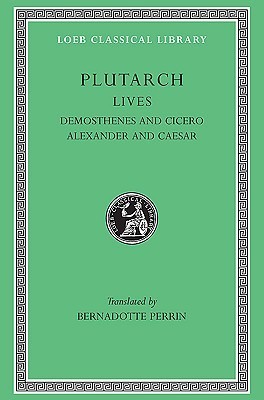
Demosthenes and Cicero. Alexander and Caesar
100
Plutarch (Plutarchus), ca. 45–120 CE, was born at Chaeronea in Boeotia in central Greece, studied philosophy at Athens, and, after coming to Rome as a teacher in philosophy, was given consular rank by the emperor Trajan and a procuratorship in Greece by Hadrian. He was married and the father of one daughter and four sons. He appears as a man of kindly character and independent thought, studious and learned. Plutarch wrote on many subjects. Most popular have always been the 46 Parallel Lives, biographies planned to be ethical examples in pairs (in each pair, one Greek figure and one similar Roman), though the last four lives are single. All are invaluable sources of our knowledge of the lives and characters of Greek and Roman statesmen, soldiers and orators. Plutarch’s many other varied extant works, about 60 in number, are known as Moralia or Moral Essays. They are of high literary value, besides being of great use to people interested in philosophy, ethics, and religion. The Loeb Classical Library edition of the Lives is in eleven volumes.
Author
Plutarch
Author · 123 books