


Part of Series
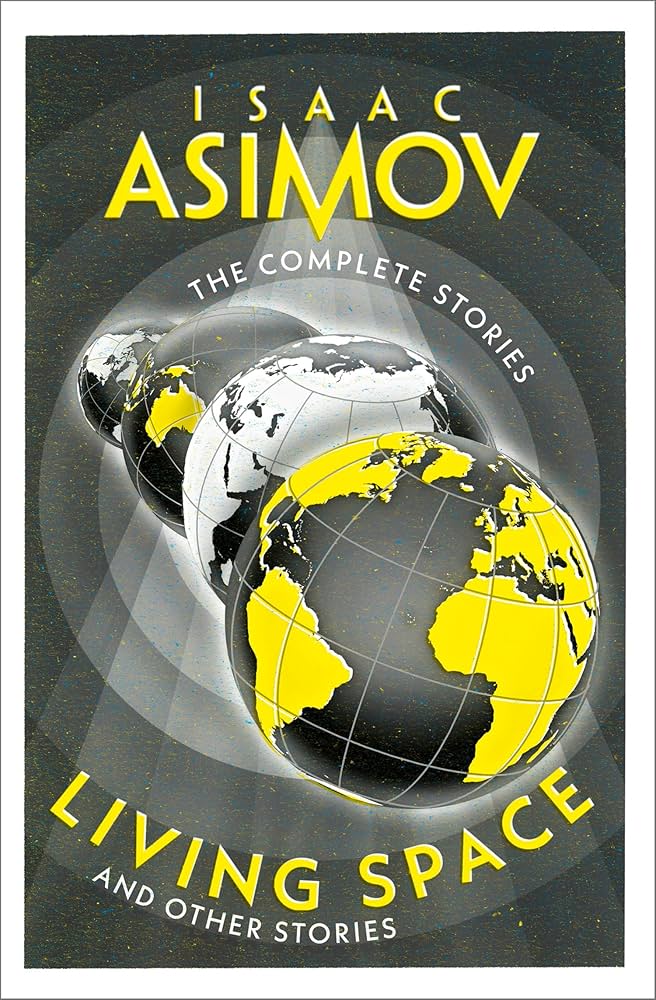
Twenty-five of the finest science fiction short stories from one of the genre’s greatest writers, Isaac Asimov. Isaac Asimov was the Grand Master of the Science Fiction Writers of America, the founder of robot ethics, and one of the world’s most prolific authors of fiction and non-fiction. Asimov’s short fiction has been enjoyed by millions for more than half a century. Many of the stories in this collection are classics of the genre, including ‘Living Space’, which looks at the consequences of the existence of parallel universes and what would happen if life on Earth never developed. Always entertaining and thought provoking, these stories display Asimov’s mastery of the short story form. He remains supreme as the thinking person’s science fiction writer. These stories were originally published as the first half of "The Complete Stories: Volume One" (1994).
Author

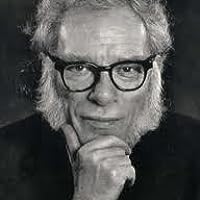
Isaac Asimov was a Russian-born, American author, a professor of biochemistry, and a highly successful writer, best known for his works of science fiction and for his popular science books. Professor Asimov is generally considered one of the most prolific writers of all time, having written or edited more than 500 books and an estimated 90,000 letters and postcards. He has works published in nine of the ten major categories of the Dewey Decimal System (lacking only an entry in the 100s category of Philosophy). Asimov is widely considered a master of the science-fiction genre and, along with Robert A. Heinlein and Arthur C. Clarke, was considered one of the "Big Three" science-fiction writers during his lifetime. Asimov's most famous work is the Foundation Series; his other major series are the Galactic Empire series and the Robot series, both of which he later tied into the same fictional universe as the Foundation Series to create a unified "future history" for his stories much like those pioneered by Robert A. Heinlein and previously produced by Cordwainer Smith and Poul Anderson. He penned numerous short stories, among them "Nightfall", which in 1964 was voted by the Science Fiction Writers of America the best short science fiction story of all time, a title many still honor. He also wrote mysteries and fantasy, as well as a great amount of nonfiction. Asimov wrote the Lucky Starr series of juvenile science-fiction novels using the pen name Paul French. Most of Asimov's popularized science books explain scientific concepts in a historical way, going as far back as possible to a time when the science in question was at its simplest stage. He often provides nationalities, birth dates, and death dates for the scientists he mentions, as well as etymologies and pronunciation guides for technical terms. Examples include his Guide to Science, the three volume set Understanding Physics, and Asimov's Chronology of Science and Discovery. Asimov was a long-time member and Vice President of Mensa International, albeit reluctantly; he described some members of that organization as "brain-proud and aggressive about their IQs" He took more joy in being president of the American Humanist Association. The asteroid 5020 Asimov, the magazine Asimov's Science Fiction, a Brooklyn, NY elementary school, and two different Isaac Asimov Awards are named in his honor.