Authors

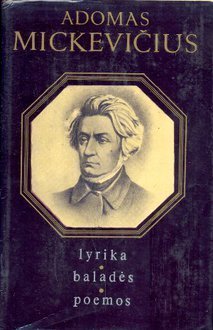
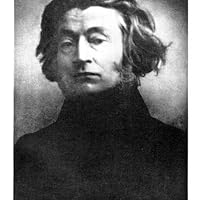
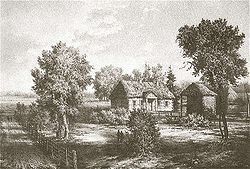
Mickevičius was born in Zavosse near Naugarduko (modern day Belarus; at the time in Lithuania)and died in 1855. November 26. Constantinople, Turkey). A. Mickevičius comes from an old Lithuanian nobility Rimvydai - Mickevičiai tribe that lived in the outskirts of the same ethnographic Lithuania - Rodūnės surroundings, in the seventeenth century. At the end of the XVII century moved to the Naugardukas region in Lithuania. The Mickevičių family like all polonized nobility at the time wrote and spoke Polish, but considered themselves to be Lithuanian nobles. Mickevičius was a poet and a teacher whose works are highly regarded by Lithuanians, Belorussians and the Poles.His most famous works include: „Krymo sonetai“ (1826) „Vėlinės“ (1832) „Ponas Tadas“ (1834) The poet entered the world of literature as combative romantic : hot defended the nation and the right to personal liberty, protest against serfdom, called to fight against the mighty fortress then the reaction - the authority. He cherished the love of his native land and its history. Like others of that time, romantically, saying he was " gente Lithuania, natione Polonia (Lithuanian nationality, Polish citizenship). Historical poem "Gražina," " Conrad Valenrodas " exalted Lithuanians who fought against the Crusaders and their strong will, patriotism . They, like most famous poem "Ponas Tadas" poeticized Lithuanian nature created many vivid lyrical Lithuanian landscape paintings, epic old Lithuanian household, daily life images . Works, especially historical poem, promoted Lithuanian national movement, nation- building, had an impact on Lithuanian literature. From the rally at the monument of Mickevičius in Vilnius Lithuanian resurgence actually began for independence and freedom. A. Mickevicčius invented a feminine name Gražina (from the word 'graži' - meaning beautiful in Lithuanian), the name is widespread in Lithuania and Poland. Another of his invented names is - Živilė - spread in Lithuania .

To a Pole, the name Adam Mickiewicz is emblematic of Polishness and greatness. What Homer is to the Greeks, or Shakespeare to the English, Mickiewicz is to the Poles. He is a cultural icon, a name inextricably connected with Polish literature and history, and one mentioned with pride. Mickiewicz stands out in the consciousness of Poles both as a man of letters and a political leader. Despite his unquestionable status and fame, however, much of Mickiewicz's biography is shrouded in mystery. Even the generally accepted date of his birth, December 24. 1798, is uncertain, since it hasn't been determined whether it refers to the Gregorian or the Julian calendar. Nor has it been established conclusively whether Mickiewicz was born in Nowogrodek or at Zaosie, a mile or so apart. Many biographical facts, particularly those pertaining to his relationships with women, were deliberately obscured to preserve a flawless public image of the poet. Likewise, his interest in mysticism and involvement in mystical cults tended to be minimized, especially during the years of Communist rule in Poland when the official line was to shun spirituality of any kind, not to expose the poet to ridicule. Mickiewicz's son. Władysław, can be held partially responsible for this state of affairs, but he is not the only one. Having gained control of his father's papers after the poet's death, Władysław Mickiewicz destroyed various documents which might have potentially tarnished his father's public image. Likewise, many critics and scholars tended to overlook significant facts in the poet's biography, as well as significant themes and issues in his writing, to sustain the idealized view of Mickiewicz as a Polish national bard. This tendency to carefully "whitewash" Mickiewicz is hardly surprising. Born three years after the final partition of Poland, Mickiewicz became a spiritual leader of the Polish nation. An ardent patriot, he animated the Polish national spirit through his poetic, dramatic and political writings, providing hope and spiritual sustenance to Poles under the Russian, Prussian and Austrian rule, as well as to the many exiles, particularly the emigré circles in Paris, where he settled in 1832. Given the history of Poland and the long streak of political oppression and subjugation, the need for heroes and the idealization of Mickiewicz as a leader are perfectly understandable. Yet already in the 1930s, there were critical voices against the bowdlerization of Mickiewicz's work (since some editions of his works eliminated the more racy passages) and objections were raised against the cover-up in renditions of his biography. The prominent critic, Tadeusz Boy-Źieleński, for instance, in his work "Brązownicy" objected to the distortions of facts and the "sins of omission" in critical writings on Mickiewicz. In recent years, a much more vast and thorough re-examination of Mickiewicz' life and oeuvre has occurred. This is partially due to the overall re-examination of Polish history and Polish literary tradition after the collapse of Communism and, generally. a much greater openness in discussions of various issues previously relegated to the sphere of national taboos. Thus, much has been written lately about the white spots in Mickiewicz's biography. particularly about his mystical leanings and the Jewish origin of his mother. The evidence of Mickiewicz's fascination with mysticism is overwhelming, and there is some basis for the allegation of his mother's Jewishness. (quoted from Regina Grol's piece posted on InfoPolan, University of Buffalo's website; for continuation see link below)