


Margins
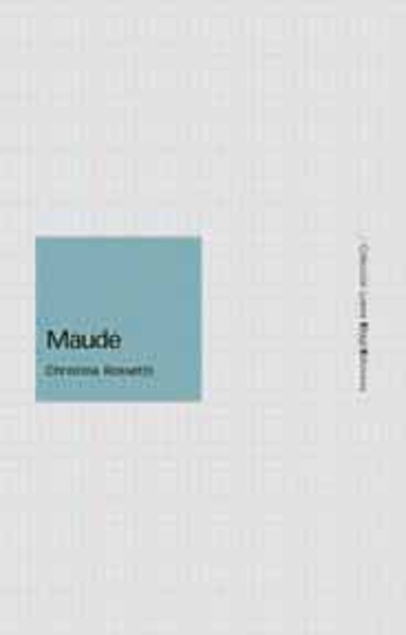
Maude book cover
Maude
Prose and Verse
1679
First Published
3.29
Average Rating
128
Number of Pages

This work has been selected by scholars as being culturally important, and is part of the knowledge base of civilization as we know it. This work was reproduced from the original artifact, and remains as true to the original work as possible. Therefore, you will see the original copyright references, library stamps (as most of these works have been housed in our most important libraries around the world), and other notations in the work. This work is in the public domain in the United States of America, and possibly other nations. Within the United States, you may freely copy and distribute this work, as no entity (individual or corporate) has a copyright on the body of the work. As a reproduction of a historical artifact, this work may contain missing or blurred pages, poor pictures, errant marks, etc. Scholars believe, and we concur, that this work is important enough to be preserved, reproduced, and made generally available to the public. We appreciate your support of the preservation process, and thank you for being an important part of keeping this knowledge alive and relevant.
Avg Rating
3.29
Number of Ratings
49
5 STARS
14%
4 STARS
18%
3 STARS
49%
2 STARS
18%
1 STARS
0%
goodreads

Author

Christina Rossetti
Christina Rossetti
Author · 40 books

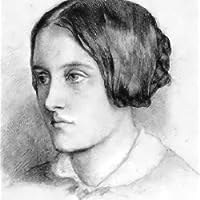
Christina Georgina Rossetti, sister of Dante Gabriel Rossetti, wrote lyrical religious works and ballads, such as "Up-hill" (1861). Frances Polidori Rossetti bore this most important women poet writing in nineteenth-century England to Gabriele Rossetti. Despite her fundamentally religious temperament, closer to that of her mother, this youngest member of a remarkable family of poets, artists, and critics inherited many of her artistic tendencies from her father. Dante made seemingly quite attractive if not beautiful but somewhat idealized sketches of Christina as a teenager. In 1848, James Collinson, one of the minor pre-Raphaelite brethren, engaged her but reverted to Roman Catholicism and afterward ended the engagement. When failing health and eyesight forced the professor into retirement in 1853, Christina and her mother started a day school, attempting to support the family, but after a year or so, gave it away. Thereafter, a recurring illness, diagnosed as sometimes angina and sometimes tuberculosis, interrupted a very retiring life that she led. From the early 1860s, she in love with Charles Cayley, but according to her brother William, refused to marry him because "she enquired into his creed and found he was not a Christian." Milk-and-water Anglicanism was not to her taste. Lona Mosk Packer argues that her poems conceal a love for the painter William Bell Scott, but there is no other evidence for this theory, and the most respected scholar of the Pre-Raphaelite movement disputes the dates on which Packer thinks some of the more revealing poems were written. All three Rossetti women, at first devout members of the evangelical branch of the Church of England, were drawn toward the Tractarians in the 1840s. They nevertheless retained their evangelical seriousness: Maria eventually became an Anglican nun, and Christina's religious scruples remind one of Dorothea Brooke in George Eliot's Middlemarch : as Eliot's heroine looked forward to giving up riding because she enjoyed it so much, so Christina gave up chess because she found she enjoyed winning; pasted paper strips over the antireligious parts of Swinburne's Atalanta in Calydon (which allowed her to enjoy the poem very much); objected to nudity in painting, especially if the artist was a woman; and refused even to go see Wagner's Parsifal, because it celebrated a pagan mythology. After rejecting Cayley in 1866, according one biographer, Christina (like many Victorian spinsters) lived vicariously in the lives of other people. Although pretty much a stay-at-home, her circle included her brothers' friends, like Whistler, Swinburne, F.M. Brown, and Charles Dodgson (Lewis Carroll). She continued to write and in the 1870s to work for the Society for Promoting Christian Knowledge. She was troubled physically by neuralgia and emotionally by Dante's breakdown in 1872. The last 12 years of her life, after his death in 1882, were quiet ones. She died of cancer.

548 Market St PMB 65688, San Francisco California 94104-5401 USA
© 2026 Paratext Inc. All rights reserved