Margins
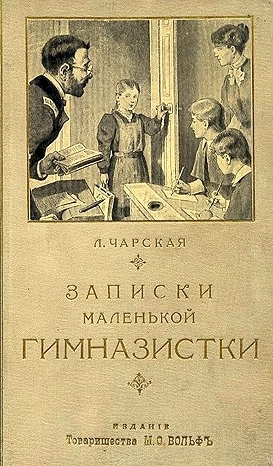
Memoirs of a Schoolgirl book cover
Memoirs of a Schoolgirl
2017
First Published
4.45
Average Rating
148
Number of Pages
Повесть Лидии Алексеевны Чарской (1875—1937), впервые опубликованная в 1908 году. «Тук-тук! Тук-тук! Тук-тук! — стучат колеса, и поезд быстро мчится все вперед и вперед. Мне слышатся в этом однообразном шуме одни и те же слова, повторяемые десятки, сотни, тысячи раз. Я чутко прислушиваюсь, и мне кажется, что колеса выстукивают одно и то же, без счета, без конца: вот так-так! вот так-так! вот так-так! Колеса стучат, а поезд мчится и мчится без оглядки, как вихрь, как стрела…».

Avg Rating
4.45
Number of Ratings
85
5 STARS
67%
4 STARS
18%
3 STARS
11%
2 STARS
2%
1 STARS
2%
goodreads

Author

Lidia Charskaya
Lidia Charskaya
Author · 9 books

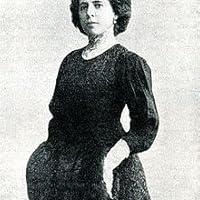
Lidia Alekseyevna Charskaya (Russian: Лидия Алексеевна Чарская) was a Russian writer and actress. Charskaya was her pseudonym; her real last name was Churilova. Charskaya worked as an actress at the Alexandrinsky Theatre from 1898 to 1924. From 1901 to 1916 she published about eighty books, several of which became bestsellers. Her most popular work was the novel Princess Dzhavakha (1903).[1] In the 1940s, when Boris Pasternak was writing his novel Doctor Zhivago, he said that he was "writing almost like Charskaya", because he wanted to be accessible and dreamed that his prose would be gulped down "even by a seamstress, even by a dishwasher." Her novels fall into four general categories: stories that take place in boarding schools for elite girls; historical novels about women; autobiographical novels that follow the heroine from boarding school to a career; and detective and adventure stories. The main theme of most of her works is friendship among girls. The protagonists are usually independent girls and women who look for adventure or some kind of diversion from the everyday routine. Critics have commented that these characteristics account in large part for the wide popularity of Charskaya's works among young girls in early 20th century Russia. Charskaya's reputation began to fade in 1912 after the critic Korney Chukovsky published an article in which he wrote that her books were formulaic, repetitious, and excessive with respect to female emotions. She stopped publishing in 1916, and in 1920 her works were banned. From 1924 until her death in 1938 she lived in poverty, supported mostly by friends. Throughout the Soviet period her work was lowly regarded, although there is plenty of evidence that young girls continued secretly to read her works, at least through the 1930s. In the late 1980s and 1990s Charskaya's works were revived in Russia, as several of her works appeared in new editions.

548 Market St PMB 65688, San Francisco California 94104-5401 USA
© 2026 Paratext Inc. All rights reserved