Margins




548 Market St PMB 65688, San Francisco California 94104-5401 USA
© 2026 Paratext Inc. All rights reserved
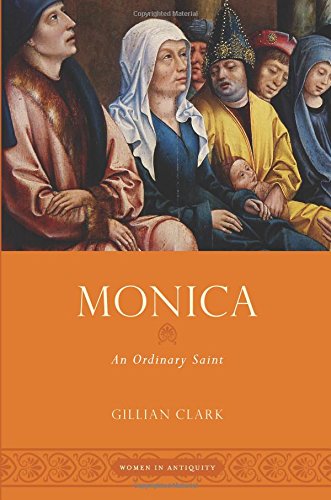
Rarely did ancient authors write about the lives of women; even more rarely did they write about the lives of ordinary not queens or heroines who influenced war or politics, not sensational examples of virtue or vice, not Christian martyrs or ascetics, but women of moderate status, who experienced everyday joys and sorrows and had everyday merits and failings. Such a woman was Monica—now Saint Monica because of her relationship with her son Augustine, who wrote about her in the Confessions and elsewhere. Despite her rather unremarkable life, Saint Monica has inspired a robust controversy in academia, the Church, and the Augustine-reading public some agree with Ambrose, bishop of Milan, who knew Monica, that Augustine was exceptionally blessed in having such a mother, while others think that Monica is a classic example of the manipulative mother who lives through her son, using religion to repress his sexual life and to control him even when he seems to escape. In An Ordinary Saint, Gillian Clark reconciles these competing images of Monica's life and legacy, arriving at a woman who was shrewd and enterprising, but also meek and gentle. Weighing Augustine's discussion of his mother against other evidence of women's lives in late antiquity, Clark achieves portraits both of Monica individually, and of the many women like her. Augustine did not claim that his mother was a saint, but he did think that the challenges of everyday life required courage and commitment to Christian principle. Monica's ordinary life, as both he and Clark tell it, showed both. An Ordinary Saint illuminates Monica, wife and mother, in the context of the societal expectations and burdens that shaped her and all ordinary women.