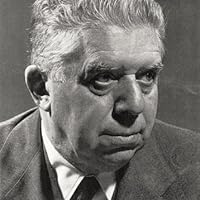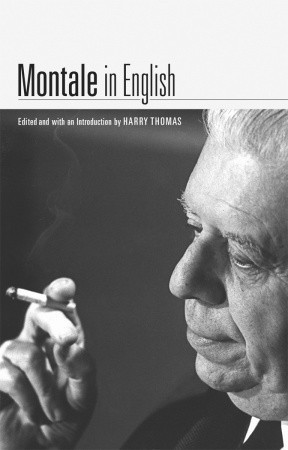
Then out of nowhere after years of silence the words we used, our unobstructed accents, will well up from the dark of childhood, and once more on our lips we'll taste Greek salt. -from "Salt," translated by Jamie McKendrick Eugenio Montale (1896 - 1981) was the greatest Italian poet since Leopardi, perhaps since Petrarch, and is generally acknowledged as one of the preeminent European poets of the last century. His lyrical, mysterious poems abound in natural images—the high cliffs and inlets of the Ligurian coast, golden sunflowers, scolding blackbirds, and sun-scorched landscapes. Indeed, in the view of James Merrill, whose superb translations of several of Montale's poems appear in this volume, Montale was "the twentieth-century nature poet," in whose lines "any word can lead you from the kitchen garden into really inhuman depths." Also full of mythological and literary resonance, Montale's poems poignantly explore the connection between nature, the individual, and the divine. Montale in English draws on the poet's eight major collections, bringing together translations, adaptations, and homages by fifty-eight American, English, Scottish, Australian, and Italian poets and scholars, including Samuel Beckett, David Ferry, Jonathan Galassi, Jorie Graham, Robert Lowell, Edwin Morgan, and Charles Wright. The editor's introduction gives a precise account of the history of Montale's reception in English, and by providing an analysis of four translations of a single poem, contributes to the controversial issue of poetic translation.