By the bestselling author of Cutting for Stone, a story of medicine in the American heartland, and confronting one's deepest prejudices and fears. Nestled in the Smoky Mountains of eastern Tennessee, the town of Johnson City had always seemed exempt from the anxieties of modern American life. But when the local hospital treated its first AIDS patient, a crisis that had once seemed an urban problem had arrived in the town to stay. Working in Johnson City was Abraham Verghese, a young Indian doctor specializing in infectious diseases. Dr. Verghese became by necessity the local AIDS expert, soon besieged by a shocking number of male and female patients whose stories came to occupy his mind, and even take over his life. Verghese brought a singular perspective to Johnson City: as a doctor unique in his abilities; as an outsider who could talk to people suspicious of local practitioners; above all, as a writer of grace and compassion who saw that what was happening in this conservative community was both a medical and a spiritual emergency."
Author
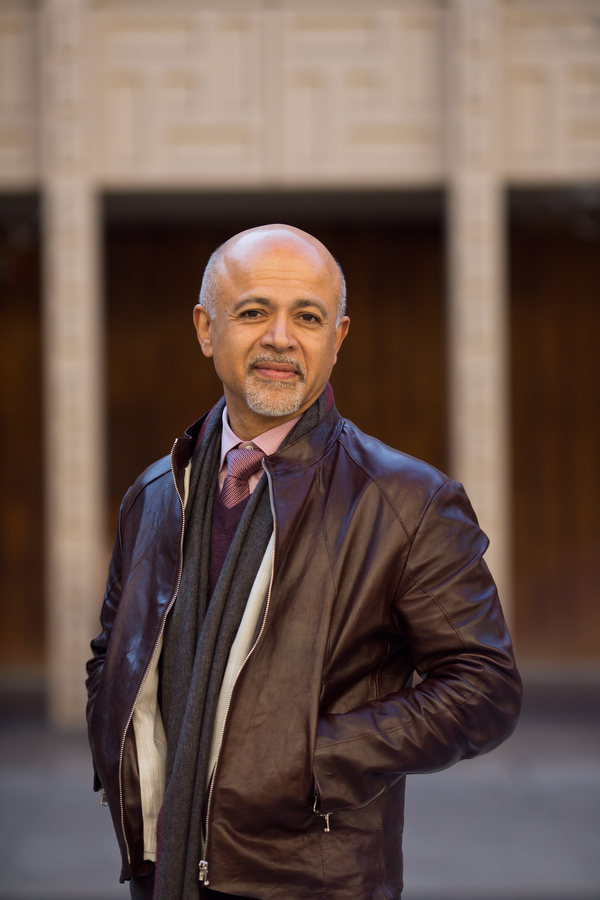
Abraham Verghese, MD, MACP, is Professor for the Theory and Practice of Medicine at the Stanford University School of Medicine and Senior Associate Chair of the Department of Internal Medicine. Born of Indian parents who were teachers in Ethiopia, he grew up near Addis Ababa and began his medical training there. When Emperor Haile Selassie was deposed, he completed his training at Madras Medical College and went to the United States for his residency as one of many foreign medical graduates. Like many others, he found only the less popular hospitals and communities open to him, an experience he described in one of his early New Yorker articles, The Cowpath to America. From Johnson City, Tennessee, where he was a resident from 1980 to 1983, he did his fellowship at Boston University School of Medicine, working at Boston City Hospital for two years. It was here that he first saw the early signs of the HIV epidemic and later, when he returned to Johnson City as an assistant professor of medicine, he saw the second epidemic, rural AIDS, and his life took the turn for which he is most well known ? his caring for numerous AIDS patients in an era when little could be done and helping them through their early and painful deaths was often the most a physician could do. His work with terminal patients and the insights he gained from the deep relationships he formed and the suffering he saw were intensely transformative; they became the basis for his first book, My Own Country : A Doctor's Story, written later during his years in El Paso, Texas. Such was his interest in writing that he decided to take some time away from medicine to study at the Iowa Writers Workshop at the University of Iowa, where he earned a Master of Fine Arts degree in 1991. Since then, his writing has appeared in The New Yorker, Texas Monthly, Atlantic, The New York Times, The New York Times Magazine, Granta, Forbes.com, and The Wall Street Journal, among others. Following Iowa, he became professor of medicine and chief of the Division of Infectious Diseases at Texas Tech Health Sciences Center in El Paso, Texas, where he lived for the next 11 years. In addition to writing his first book, which was one of five chosen as Best Book of the Year by Time magazine and later made into a Mira Nair movie, he also wrote a second best-selling book, The Tennis Partner : A Story of Friendship and Loss, about his friend and tennis partner?s struggle with addiction. This was a New York Times' Notable Book.