Margins




548 Market St PMB 65688, San Francisco California 94104-5401 USA
© 2026 Paratext Inc. All rights reserved
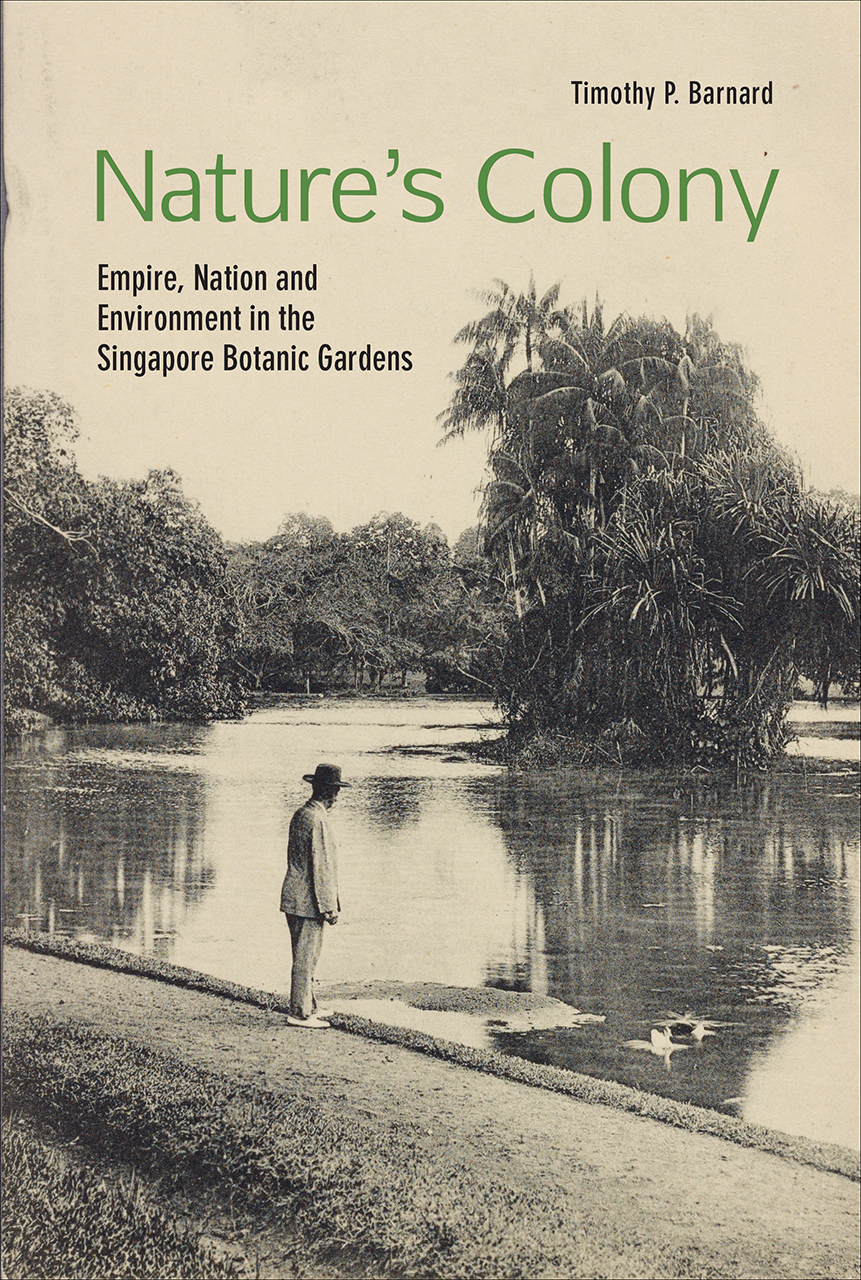
Established in 1859, the Singapore Botanic Gardens are arguably the most important colonial botanic gardens in the world. Not only have the Gardens been important as a park for Singaporeans and visitors, they have had a significant role as a scientific institution and as a testing ground for tropical plantation agriculture implemented around the world. As Timothy P. Barnard shows in Nature’s Colony, underlying each of these uses is a broader story of the Botanic Gardens as an arena where power and the natural world meet and interact. Initially conceived to exploit nature for the benefit of empire, the Gardens were part of a symbolic struggle by administrators, scientists, and gardeners to assert dominance within Southeast Asia’s tropical landscape, reflecting shifting understandings of power, science, and nature among local administrators and distant mentors in Britain. Consequently, as an outpost of imperial science, the Gardens were instrumental in the development of plantation crops, such as rubber and oil palm, which went on to shape landscapes across the globe. Since the independence of Singapore, the Gardens have played a role in the “greening” of the country and have been named as Singapore’s first World Heritage Site. Setting the Gardens alongside the Royal Botanic Gardens, Kew, and botanic gardens in India, Ceylon, Mauritius, and the West Indies, Nature’s Colony provide the first in-depth look at the history of this influential institution.