Margins
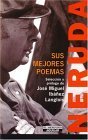
Neruda book cover
Neruda
Sus mejores poemas
1985
First Published
4.24
Average Rating
154
Number of Pages
The selection of poems included here follows a criterion of strict quality. It responds exactly to the title: Neruda's best poems, the most powerful, most intense, and overwhelming, the ones that are full of meaning with experience and language, without any regards for their origins, time frame, or circumstances: only the splendor of its beauty. This is a feast of good poetry as we celebrate the 100th anniversary of Neruda's birth this July.

Avg Rating
4.24
Number of Ratings
34
5 STARS
47%
4 STARS
38%
3 STARS
9%
2 STARS
3%
1 STARS
3%
goodreads

Author

Pablo Neruda
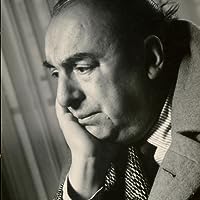
Pablo Neruda
Author · 114 books

Pablo Neruda was the pen name and, later, legal name of the Chilean writer and politician Neftalí Ricardo Reyes Basoalto. Neruda assumed his pen name as a teenager, partly because it was in vogue, partly to hide his poetry from his father, a rigid man who wanted his son to have a "practical" occupation. Neruda's pen name was derived from Czech writer and poet Jan Neruda; Pablo is thought to be from Paul Verlaine. With his works translated into many languages, Pablo Neruda is considered one of the greatest and most influential poets of the 20th century. Neruda was accomplished in a variety of styles, ranging from erotically charged love poems like his collection Twenty Poems of Love and a Song of Despair, surrealist poems, historical epics, and overtly political manifestos. In 1971 Neruda won the Nobel Prize for Literature, a controversial award because of his political activism. Colombian novelist Gabriel García Márquez once called him "the greatest poet of the 20th century in any language." On July 15, 1945, at Pacaembu Stadium in São Paulo, Brazil, he read to 100,000 people in honor of Communist revolutionary leader Luís Carlos Prestes. When Neruda returned to Chile after his Nobel Prize acceptance speech, Salvador Allende invited him to read at the Estadio Nacional before 70,000 people. During his lifetime, Neruda occupied many diplomatic posts and served a stint as a senator for the Chilean Communist Party. When Conservative Chilean President González Videla outlawed communism in Chile, a warrant was issued for Neruda's arrest. Friends hid him for months in a house basement in the Chilean port of Valparaíso. Later, Neruda escaped into exile through a mountain pass near Maihue Lake into Argentina. Years later, Neruda was a close collaborator to socialist President Salvador Allende. Neruda was hospitalized with cancer at the time of the Chilean coup d'état led by Augusto Pinochet. Three days after being hospitalized, Neruda died of heart failure. Already a legend in life, Neruda's death reverberated around the world. Pinochet had denied permission to transform Neruda's funeral into a public event. However, thousands of grieving Chileans disobeyed the curfew and crowded the streets to pay their respects. Neruda's funeral became the first public protest against the Chilean military dictatorship.

548 Market St PMB 65688, San Francisco California 94104-5401 USA
© 2026 Paratext Inc. All rights reserved