Margins




548 Market St PMB 65688, San Francisco California 94104-5401 USA
© 2026 Paratext Inc. All rights reserved
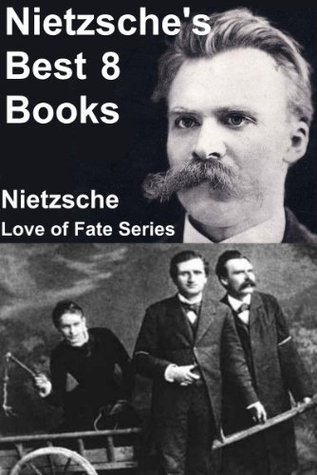
Although the works in this Nietzsche collection are based on early 1900's public domain translations, the texts have been modernized. Words such as "fain, hitherto, thee, wouldst, therefrom, nigh, ye and forsooth", have been replaced with present-day English equivalents. Unique Features of this Special Kindle An Original Essay on Nietzsche's Fundamental Idea of Eternal Recurrence A New Introduction to Nietzsche's Life and Writings by the Editor An New Extensive Timeline Biography A Section with Nietzsche's Comments on Each of his Books. Selected Excerpts from His Other Works "An Ebook to Search the Spirit of Friedrich Nietzsche" "Nietzsche's Best 8 Books" contains the complete and unabridged texts 1.The Gay Science 2.Ecce Homo 3.Thus Spoke Zarathustra 4.The Dawn 5.Twilight of the Idols 6.The Antichrist 7.Beyond Good and Evil 8.On the Genealogy of Morals Unique among philosophers Nietzsche wrote mostly aphorisms. Within a book aphorisms hop around from subject to subject. A particular subject can reappear in many of his books. With this ebook the reader can search 8 books at once to explore a theme or subject. From the Introduction by the "University philosophers, especially from America and England, have always been bewildered and irritated by Nietzsche. He doesn't fit anywhere. His influence has been outside university culture - among artists, dancers, poets, writers, novelists, psychologists, playwrights. Some of the most famous who publicly acknowledged being strongly influenced by Nietzsche were Picasso, Isadora Duncan, Martha Graham, William Butler Yeats, Rainer Rilke, Allen Ginsberg, Khalil Gibran, Martin Buber, H.L. Mencken, Emma Goldman, Jacques Derrida, Michel Foucault, Thomas Mann, Hermann Hesse, Jack London, Franz Kafka, Jean-Paul Sartre, Albert Camus, Sigmund Freud, Carl Jung, Karl Jaspers, Alfred Adler, Fritz Perls, Eugene O'Neill and George Bernard Shaw... Explore Nietzsche yourself. He mostly wrote directly and clearly, without scholarly jargon. See if he brings out the artist or psychologist or dancer in you."