


Margins
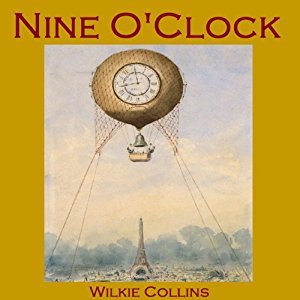
Nine O'Clock book cover
Nine O'Clock
1852
First Published
3.63
Average Rating
24
Number of Pages

On the night before their execution during the French Revolution, 21 condemned prisoners and their friends are permitted a last banquet before their trip to the guillotine on the morrow. While they feast and jest on their last night alive, they begin to speculate about the hour of the execution the next day. Only one prisoner, Duprat, is quiet on the subject. His friend Marginy questions him on the subject, and Duprat asserts than he knows the exact time at which he will die on the next day. He relates a strange story about a series of dreadful and supernatual prophecies about his family, of which his death at the exact moment of nine o'clock will be the culmination.
Avg Rating
3.63
Number of Ratings
16
5 STARS
25%
4 STARS
25%
3 STARS
38%
2 STARS
13%
1 STARS
0%
goodreads

Author

Wilkie Collins
Wilkie Collins
Author · 88 books

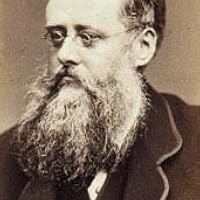
A close friend of Charles Dickens from their meeting in March 1851 until Dickens' death in June 1870, William Wilkie Collins was one of the best known, best loved, and, for a time, best paid of Victorian fiction writers. But after his death, his reputation declined as Dickens' bloomed. Now, Collins is being given more critical and popular attention than he has received for 50 years. Most of his books are in print, and all are now in e-text. He is studied widely; new film, television, and radio versions of some of his books have been made; and all of his letters have been published. However, there is still much to be discovered about this superstar of Victorian fiction. Born in Marylebone, London in 1824, Collins' family enrolled him at the Maida Hill Academy in 1835, but then took him to France and Italy with them between 1836 and 1838. Returning to England, Collins attended Cole's boarding school, and completed his education in 1841, after which he was apprenticed to the tea merchants Antrobus & Co. in the Strand. In 1846, Collins became a law student at Lincoln's Inn, and was called to the bar in 1851, although he never practised. It was in 1848, a year after the death of his father, that he published his first book, 'The Memoirs of the Life of William Collins, Esq., R.A'., to good reviews. The 1860s saw Collins' creative high-point, and it was during this decade that he achieved fame and critical acclaim, with his four major novels, 'The Woman in White' (1860), 'No Name' (1862), 'Armadale' (1866) and 'The Moonstone' (1868). 'The Moonstone', is seen by many as the first true detective novel T. S. Eliot called it "the first, the longest, and the best of modern English detective novels ..." in a genre invented by Collins and not by Poe.

548 Market St PMB 65688, San Francisco California 94104-5401 USA
© 2025 Paratext Inc. All rights reserved