Margins
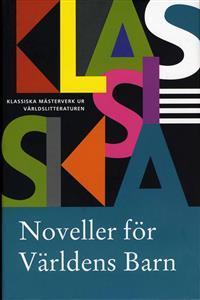
Noveller för Världens Barn book cover 1
Noveller för Världens Barn
Series · 1 book · 2007

Books in series

Authors

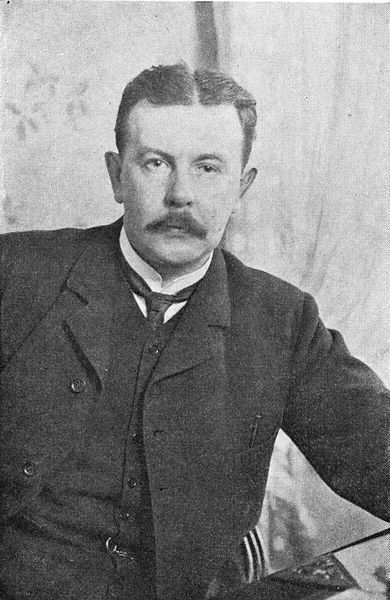
Hjalmar Soderberg
Hjalmar Soderberg
Author · 15 books
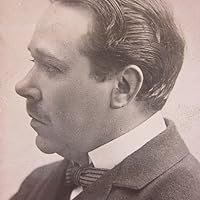
Hjalmar Emil Fredrik Söderberg was a Swedish novelist, playwright, poet and journalist. His works often deal with melancholy and lovelorn characters, and offer a rich portrayal of contemporary Stockholm through the eyes of the flaneur. Söderberg is greatly appreciated in his native country, and is sometimes considered to be the equal of August Strindberg, Sweden's national author.
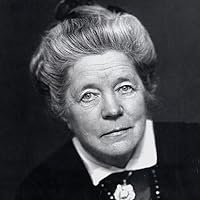
Selma Lagerlof
Selma Lagerlof
Author · 73 books

Selma Ottilia Lovisa Lagerlöf (1858-1940) was a Swedish author. In 1909 she became the first woman to ever receive the Nobel Prize in Literature, "in appreciation of the lofty idealism, vivid imagination and spiritual perception that characterize her writings". She later also became the first female member of the Swedish Academy. Born in the forested countryside of Sweden she was told many of the classic Swedish fairytales, which she would later use as inspiration in her magic realist writings. Since she for some of her early years had problems with her legs (she was born with a faulty hip) she would also spend a lot of time reading books such as the Bible. As a young woman she was a teacher in the southern parts of Sweden for ten years before her first novel Gösta Berling's Saga was published. As her writer career progressed she would keep up a correspondance with some of her former female collegues for almost her entire life. Lagerlöf never married and was almost certainly a lesbian (she never officially stated that she was, but most later researchers believe this to be the case). For many years her constant companion was fellow writer Sophie Elkan, with whom she traveled to Italy and the Middle East. Her visit to Palestine and a colony of Christians there, would inspire her to write Jerusalem, her story of Swedish farmers converting into a evangelical Christian group and travelling to "The American Colony" in Jerusalem. Lagerlöf was involved in both women issues as well as politics. She would among other things help the Jewish writer Nelly Sachs to come to Sweden and donated her Nobel medal to the Finnish war effort against the Soviet union. Outside of Sweden she's perhaps most widely known for her children's book Nils Holgerssons underbara resa genom Sverige (The Wonderful Adventures of Nils).

Franz Kafka
Franz Kafka
Author · 370 books

Prague-born writer Franz Kafka wrote in German, and his stories, such as " The Metamorphosis " (1916), and posthumously published novels, including The Trial (1925), concern troubled individuals in a nightmarishly impersonal world. Jewish middle-class family of this major fiction writer of the 20th century spoke German. People consider his unique body of much incomplete writing, mainly published posthumously, among the most influential in European literature. His stories include "The Metamorphosis" (1912) and " In the Penal Colony " (1914), whereas his posthumous novels include The Trial (1925), The Castle (1926) and Amerika (1927). Despite first language, Kafka also spoke fluent Czech. Later, Kafka acquired some knowledge of the French language and culture from Flaubert, one of his favorite authors. Kafka first studied chemistry at the Charles-Ferdinand University of Prague but after two weeks switched to law. This study offered a range of career possibilities, which pleased his father, and required a longer course of study that gave Kafka time to take classes in German studies and art history. At the university, he joined a student club, named Lese- und Redehalle der Deutschen Studenten, which organized literary events, readings, and other activities. In the end of his first year of studies, he met Max Brod, a close friend of his throughout his life, together with the journalist Felix Weltsch, who also studied law. Kafka obtained the degree of doctor of law on 18 June 1906 and performed an obligatory year of unpaid service as law clerk for the civil and criminal courts. Writing of Kafka attracted little attention before his death. During his lifetime, he published only a few short stories and never finished any of his novels except the very short "The Metamorphosis." Kafka wrote to Max Brod, his friend and literary executor: "Dearest Max, my last request: Everything I leave behind me ... in the way of diaries, manuscripts, letters (my own and others'), sketches, and so on, [is] to be burned unread." Brod told Kafka that he intended not to honor these wishes, but Kafka, so knowing, nevertheless consequently gave these directions specifically to Brod, who, so reasoning, overrode these wishes. Brod in fact oversaw the publication of most of work of Kafka in his possession; these works quickly began to attract attention and high critical regard. Max Brod encountered significant difficulty in compiling notebooks of Kafka into any chronological order as Kafka started writing in the middle of notebooks, from the last towards the first, et cetera. Kafka wrote all his published works in German except several letters in Czech to Milena Jesenská.

Agnes von Krusenstjerna
Author · 8 books
Agnes Julie Fredrika von Krusenstjerna was a Swedish writer and noble. She was a controversial writer whose books challenged the moral standards of the day and was the center of a great literary controversy of the freedom of speech.
Anton Tjechov
Author · 3 books
Swedish variant name form for Anton Chekhov
Göran Tunström
Göran Tunström
Author · 10 books
Göran Tunström was a Swedish novelist best known for Juloratoriet (The Christmas Oratorio).
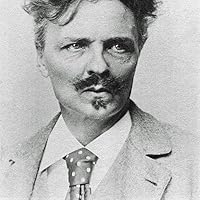
August Strindberg
August Strindberg
Author · 80 books
Johan August Strindberg was a Swedish writer, playwright, and painter. Along with Henrik Ibsen, Søren Kierkegaard, Selma Lagerlöf and Hans Christian Andersen he is arguably the most influential and famous of all Scandinavian authors. Strindberg is known as one of the fathers of modern theatre. His work falls into two major literary movements, Naturalism and Expressionism. He is widely read in Sweden and internationally to this day.
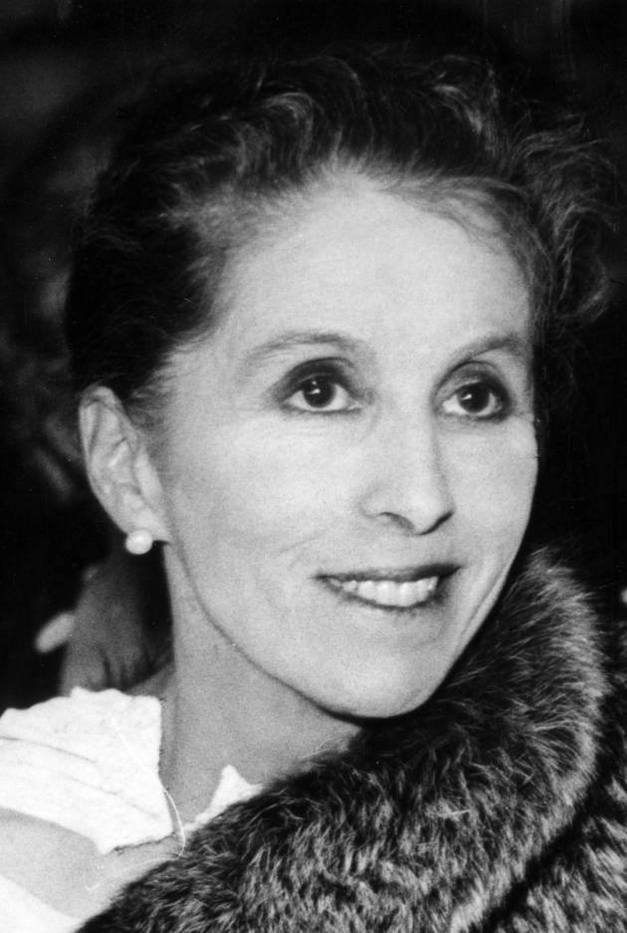
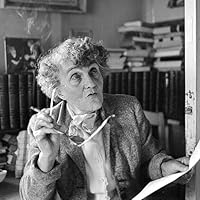
Karen Blixen
Karen Blixen
Author · 10 books

Karen Christentze Dinesen, Baroness Blixen-Finecke - wrote as Isak Dinesen, Pierre Andrézel, other pseudonyms: Tania Blixen, Osceola, etc. A Danish writer, who mixed in her work supernatural elements, aestheticism, and erotic undertones with an aristocratic view of life, Blixen always emphasized that she was a storyteller in the traditional, oral sense of the word. She drew her inspiration from the Bible, the Arabian Nights, the works of Homer, the Icelandic Sagas, and the fairy tales of Hans Christian Andersen, who was her great fellow countryman. She wrote in English and in Danish. Baroness Karen Blixen was born in Rungsted, Denmark, into a well-to-do patrician family. She was the daughter of Ingeborg Westenholz Dinesen, and the writer and army officer Wilhelm Dinesen, whose adventuresome spirit and storytelling talents influenced deeply Blixen's imagination. She spent her childhood on the family estate in Rungsted. Throughout her life Blixen's outlook and manner were unabashedly aristocratic.

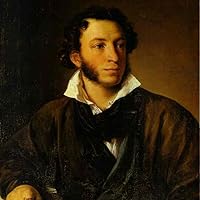
Alexander Pushkin
Alexander Pushkin
Author · 131 books

Works of Russian writer Aleksandr Sergeyevich Pushkin include the verse novel Eugene Onegin (1831), the play Boris Godunov (1831), and many narrative and lyrical poems and short stories. See also: Russian: Александр Сергеевич Пушкин French: Alexandre Pouchkine Norwegian: Aleksander Pusjkin Spanish:Aleksandr Pushkin People consider this author the greatest poet and the founder of modern literature. Pushkin pioneered the use of vernacular speech in his poems, creating a style of storytelling—mixing drama, romance, and satire—associated ever with greatly influential later literature. Pushkin published his first poem at the age of 15 years in 1814, and the literary establishment widely recognized him before the time of his graduation from the imperial lyceum in Tsarskoe Selo. Social reform gradually committed Pushkin, who emerged as a spokesman for literary radicals and in the early 1820s clashed with the government, which sent him into exile in southern Russia. Under the strict surveillance of government censors and unable to travel or publish at will, he wrote his most famous drama but ably published it not until years later. People published his verse serially from 1825 to 1832. Pushkin and his wife Natalya Goncharova, whom he married in 1831, later became regulars of court society. In 1837, while falling into ever greater debt amidst rumors that his wife started conducting a scandalous affair, Pushkin challenged her alleged lover, Georges d'Anthès, to a duel. Pushkin was mortally wounded and died two days later. Because of his liberal political views and influence on generations of Russian rebels, Pushkin was portrayed by Bolsheviks as an opponent to bourgeois literature and culture and a predecessor of Soviet literature and poetry. Tsarskoe Selo was renamed after him.

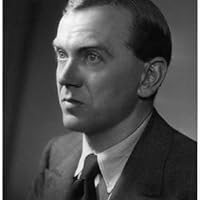
Graham Greene
Graham Greene
Author · 80 books

Particularly known novels, such as The Power and the Glory (1940), of British writer Henry Graham Greene reflect his ardent Catholic beliefs. The Order of Merit and the Companions of Honour inducted this English novelist, short story writer, playwright, screenplay writer, travel writer, and critic. His works explore the ambivalent moral and political issues of the modern world. Greene combined serious literary acclaim with wide popularity. Greene objected strongly to description as a “Catholic novelist” despite Catholic religious themes at the root of much of his writing, especially the four major Catholic novels: Brighton Rock , The Heart of the Matter , The End of the Affair , and The Power and the Glory . Other works, such as The Quiet American , Our Man in Havana , and The Human Factor , also show an avid interest in the workings of international politics and espionage. (Adapted from Wikipedia)

F. Scott Fitzgerald
F. Scott Fitzgerald
Author · 240 books
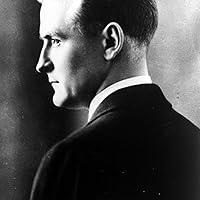
Francis Scott Key Fitzgerald was an American writer of novels and short stories, whose works have been seen as evocative of the Jazz Age, a term he himself allegedly coined. He is regarded as one of the greatest twentieth century writers. Fitzgerald was of the self-styled "Lost Generation," Americans born in the 1890s who came of age during World War I. He finished four novels, left a fifth unfinished, and wrote dozens of short stories that treat themes of youth, despair, and age. He was married to Zelda Fitzgerald.
Par Lagerkvist
Par Lagerkvist
Author · 21 books

Lagerkvist was born in 1891 in southern Sweden. In 1910 he went to Uppsala as a student and in 1913 he left for Paris, where he was exposed to the work of Pablo Picasso. He studied Middle Age Art, as well as Indian and Chinese literature, to prepare himself for becoming a poet. His first collection of poetry was published in 1916. In 1940 Lagerkvist was chosen as one of the "aderton" (the eighteen) of the Swedish Academy. Lagerkvist wrote poetry, novels, plays, short stories and essays. He was awarded the Nobel Prize in Literature in 1951 "for the artistic vigour and true independence of mind with which he endeavours in his poetry to find answers to the eternal questions confronting mankind."

Heinrich Böll
Heinrich Böll
Author · 44 books

Der deutsche Schriftsteller und Übersetzer gilt als einer der bedeutendsten deutschen Autoren der Nachkriegszeit. Er schrieb Gedichte, Kurzgeschichten und Romane, von denen auch einige verfilmt wurden. Dabei setzte er sich kritisch mit der jungen Bundesrepublik auseinander. Zu seinen erfolgreichsten Werken zählen "Billard um halbzehn", "Ansichten eines Clowns" und "Gruppenbild mit Dame". Den Nobelpreis für Literatur bekam Heinrich Böll 1972; er war nach 43 Jahren der erste deutsche Schriftsteller, dem diese Auszeichnung zuteil wurde. 1974 erschien sein wohl populärstes Werk, "Die verlorene Ehre der Katharina Blum". Durch sein politisches Engagement wirkte er, gemeinsam mit seinem Freund Lew Kopelew, auf die europäische Literatur der Nachkriegszeit. Darüber hinaus arbeitete Böll gemeinsam mit seiner Frau Annemarie als Herausgeber und Übersetzer englischsprachiger Werke ins Deutsche... Heinrich Böll became a full-time writer at the age of 30. His first novel, Der Zug war pünktlich (The Train Was on Time), was published in 1949. Many other novels, short stories, radio plays, and essay collections followed. In 1972 he received the Nobel Prize for Literature "for his writing which through its combination of a broad perspective on his time and a sensitive skill in characterization has contributed to a renewal of German literature." He was the first German-born author to receive the Nobel Prize since Hermann Hesse in 1946. His work has been translated into more than 30 languages, and he is one of Germany's most widely read authors.

Moa Martinson
Moa Martinson
Author · 9 books

Helga Maria Swarts, known as Moa Martinson, (2 November 1890, Vårdnäs - 5 August 1964) was a Swedish author. Helga's ambitions as a writer was to change the society and with her authorship portray the conditions of the working-class but also the personal development of women. In her work she wrote about: motherhood, love, poverty, politic, religion, urbanization and the hard living conditions of the working class woman.

Guy de Maupassant
Guy de Maupassant
Author · 325 books
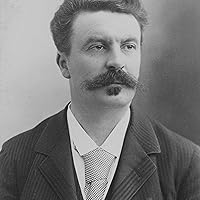
Henri René Albert Guy de Maupassant was a popular 19th-century French writer. He is one of the fathers of the modern short story. A protege of Flaubert, Maupassant's short stories are characterized by their economy of style and their efficient effortless dénouement. He also wrote six short novels. A number of his stories often denote the futility of war and the innocent civilians who get crushed in it - many are set during the Franco-Prussian War of the 1870s.
Fyodor Dostoevsky
Fyodor Dostoevsky
Author · 312 books

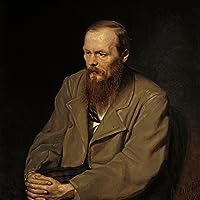
Fyodor Mikhailovich Dostoevsky was a Russian novelist, short story writer, essayist, and journalist. His literary works explore human psychology in the troubled political, social, and spiritual atmospheres of 19th-century Russia, and engage with a variety of philosophical and religious themes. His most acclaimed novels include Crime and Punishment (1866), The Idiot (1869), Demons (1872), and The Brothers Karamazov (1880). Many literary critics rate him as one of the greatest novelists in all of world literature, as multiple of his works are considered highly influential masterpieces. His 1864 novella Notes from Underground is considered to be one of the first works of existentialist literature. As such, he is also looked upon as a philosopher and theologian as well. (Russian: Фёдор Михайлович Достоевский) (see also Fiodor Dostoïevski)

Harry Martinson
Harry Martinson
Author · 9 books

Harry Martinson (May 6, 1904 – February 11, 1978) was a Swedish sailor, author and poet. In 1949 he was elected into the Swedish Academy. He was awarded a joint Nobel Prize in Literature in 1974, "for writings that catch the dewdrop and reflect the cosmos.", together with fellow Swede Eyvind Johnson. The choice was very controversial, as both Martinson and Johnson were members of the academy and had partaken in endorsing themselves as laureates. He has been called "the great reformer of 20th century Swedish poetry, the most original of the writers called 'proletarian'." Detailed Biography: http://authorscalendar.info/harrymar.htm

Frans G. Bengtsson
Frans G. Bengtsson
Author · 7 books

Frans G. Bengtsson (1894–1954) was born and raised in the southern Swedish province of Skåne, the son of an estate manager. His early writings, including a doctoral thesis on Geoffrey Chaucer and two volumes of poetry written in what were considered antiquated verse forms, revealed a career-long interest in historical literary modes and themes. Bengtsson was a prolific translator (of Paradise Lost, The Song of Roland, and Walden), essayist (he published five collections of his writings, mostly on literary and military topics), and biographer (his two-volume biography of Charles XII (Karl XII:s levnad) won the Swedish Academy’s annual prize in 1938). In 1941 he published Röde Orm: Sjöfarare i västerled (Red Orm at Home and on the Western Way), followed, in 1945, by Röde Orm: Hemma och i österled (Red Orm at Home and on the Eastern Way). The two books were published in a single volume in the United States and England in 1954 as The Long Ships. During the Second World War, Bengtsson was outspoken in his opposition to the Nazis, refusing to allow for a Norwegian translation of The Long Ships while the country was still under German occupation. Bengtsson married Gerda Fineman in 1939. He studied at the University of Lund from 1912, receiving his licentiate in philosophy in 1930. He died in 1954 after a long illness.

Ernest Hemingway
Ernest Hemingway
Author · 203 books

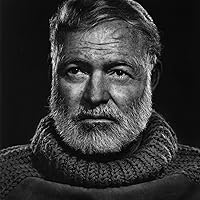
Terse literary style of Ernest Miller Hemingway, an American writer, ambulance driver of World War I, journalist, and expatriate in Paris during the 1920s, marks short stories and novels, such as The Sun Also Rises (1926) and The Old Man and the Sea (1952), which concern courageous, lonely characters, and he won the Nobel Prize of 1954 for literature. Economical and understated style of Hemingway strongly influenced 20th-century fiction, whereas his life of adventure and his public image influenced later generations. Hemingway produced most of his work between the mid-1920s and the mid-1950s. He published seven novels, six short story collections and two nonfiction works. Survivors published posthumously three novels, four collections of short stories, and three nonfiction works. People consider many of these classics. After high school, Hemingway reported for a few months for the Kansas City Star before leaving for the Italian front to enlist. In 1918, someone seriously wounded him, who returned home. His wartime experiences formed the basis for his novel A Farewell to Arms . In 1922, he married Hadley Richardson, the first of his four wives. The couple moved, and he worked as a foreign correspondent and fell under the influence of the modernist writers and artists of the expatriate community of the "lost generation" of 1920s. After his divorce of 1927 from Hadley Richardson, Hemingway married Pauline Pfeiffer. At the Spanish civil war, he acted as a journalist; afterward, they divorced, and he wrote For Whom the Bell Tolls . Hemingway maintained permanent residences in Key West, Florida, and Cuba during the 1930s and 1940s. Martha Gellhorn served as third wife of Hemingway in 1940. When he met Mary Welsh in London during World War II, they separated; he presently witnessed at the Normandy landings and liberation of Paris. Shortly after 1952, Hemingway went on safari to Africa, where two plane crashes almost killed him and left him in pain and ill health for much of the rest of his life. Nevertheless, in 1959, he moved from Cuba to Ketchum, Idaho, where he committed suicide in the summer of 1961.

Virginia Woolf
Virginia Woolf
Author · 297 books

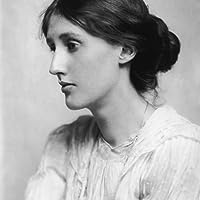
(Adeline) Virginia Woolf was an English novelist and essayist regarded as one of the foremost modernist literary figures of the twentieth century. During the interwar period, Woolf was a significant figure in London literary society and a member of the Bloomsbury Group. Her most famous works include the novels Mrs. Dalloway (1925), To the Lighthouse (1927), and Orlando (1928), and the book-length essay A Room of One's Own (1929) with its famous dictum, "a woman must have money and a room of her own if she is to write fiction."

Stig Dagerman
Stig Dagerman
Author · 19 books

Stig Dagerman was one of the most prominent Swedish authors during the 1940s. In the course of five years, 1945-49, he enjoyed phenomenal success with four novels, a collection of short stories, a book about postwar Germany, five plays, hundreds of poems and satirical verses, several essays of note and a large amount of journalism. Then, with apparent suddenness, he fell silent. In the fall of 1954, Sweden was stunned to learn that Stig Dagerman, the epitome of his generation of writers, had been found dead in his car: he had closed the doors of the garage and run the engine. Dagerman's works deal with universal problems of morality and conscience, of sexuality and social philosophy, of love, compassion and justice. He plunges into the painful realities of human existence, dissecting feelings of fear, guilt and loneliness. Despite the somber content, he also displays a wry sense of humor that occasionally turns his writing into burlesque or satire.

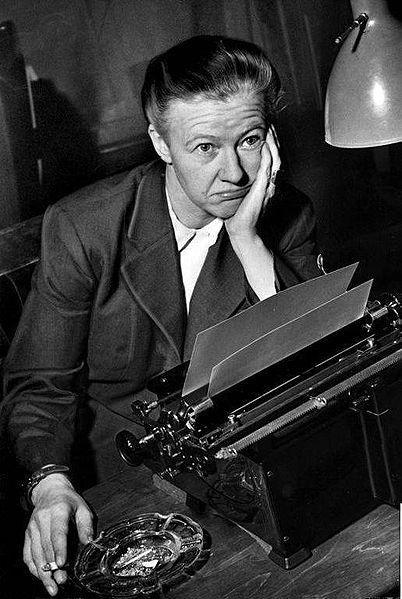
Barbro Alving
Barbro Alving
Author · 1 book
Barbro Alving (12 January 1909 – 22 January 1987) was a Swedish journalist and writer, a pacifist and feminist. She is widely known for writing under her pseudonym Bang. She wrote for, among others, the Swedish newspaper Dagens Nyheter and the magazines Idun and Vecko-Journalen. She reported from various scenes during the Spanish Civil War, World War II and the Cold War.
Luigi Pirandello
Luigi Pirandello
Author · 111 books

Luigi Pirandello; Agrigento (28 June 1867 – Rome 10 December 1936) was an Italian dramatist, novelist, poet, and short story writer whose greatest contributions were his plays. He was awarded the 1934 Nobel Prize in Literature for "his almost magical power to turn psychological analysis into good theatre. Pirandello's works include novels, hundreds of short stories, and about 40 plays, some of which are written in Sicilian. Pirandello's tragic farces are often seen as forerunners of the Theatre of the Absurd.

Tennessee Williams
Tennessee Williams
Author · 113 books

Thomas Lanier Williams III, better known by the nickname Tennessee Williams, was a major American playwright of the twentieth century who received many of the top theatrical awards for his work. He moved to New Orleans in 1939 and changed his name to "Tennessee," the state of his father's birth. Raised in St. Louis, Missouri, after years of obscurity, at age 33 he became famous with the success of The Glass Menagerie (1944) in New York City. This play closely reflected his own unhappy family background. It was the first of a string of successes, including A Streetcar Named Desire (1947), Cat on a Hot Tin Roof (1955), Sweet Bird of Youth (1959), and The Night of the Iguana (1961). With his later work, he attempted a new style that did not appeal to audiences. His drama A Streetcar Named Desire is often numbered on short lists of the finest American plays of the 20th century, alongside Eugene O'Neill's Long Day's Journey into Night and Arthur Miller's Death of a Salesman. Much of Williams' most acclaimed work has been adapted for the cinema. He also wrote short stories, poetry, essays and a volume of memoirs. In 1979, four years before his death, Williams was inducted into the American Theater Hall of Fame. From Wikipedia

Tage Danielsson
Tage Danielsson
Author · 5 books

Tage Danielsson was a Swedish author, actor, poet and film director. He is best known for his collaboration with Hans Alfredson in the comedy-duo Hasseåtage. Danielsson matriculated at the University of Uppsala in 1949, where he got involved in student theatre of Östgöta Nation and became a member of the Juvenalorden, as well as serving as vice president of the Uppsala Student Union. After graduation, Tage Danielsson found work at Sveriges Radio in 1955. From 1959 to 1962 he was the manager for its entertainment department. At his work he came in contact with Hans Alfredson. They started the entertainment production company AB Svenska Ord together in 1961. Svenska Ord in general, and Danielsson in particular, excelled in making scorching comments on current events in an illusorily naive and outward-lookingly friendly way that often succeeded to endear even political opponents to his particular brand of humorist humanism. He was also a constant campaigner behind the scene for causes ranging from Anti-Apartheid to Anti-Nuclear to social solidarity, and a regular contributor to the anarcho-syndicalist newspaper Arbetaren. In 1980 he received an honorary doctorate at Linköping University.

548 Market St PMB 65688, San Francisco California 94104-5401 USA
© 2026 Paratext Inc. All rights reserved