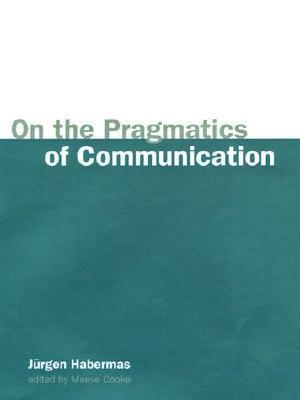
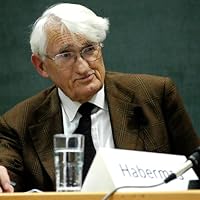
This anthology brings together for the first time, in revised or new translation, ten essays that present the main concerns of Jürgen Habermas' program in formal pragmatics.Jürgen Habermas' program in formal pragmatics fulfills two main functions. First, it serves as the theoretical underpinning for his theory of communicative action, a crucial element in his theory of society. Second, it contributes to ongoing philosophical discussion of problems concerning meaning, truth, rationality, and action. By the "pragmatic" dimensions of language, Habermas means those pertaining specifically to the employment of sentences in utterances. He makes clear that "formal" is to be understood in a tolerant sense to refer to the rational reconstruction of general intuitions or competences. Formal pragmatics, then, aims at a systematic reconstruction of the intuitive linguistic knowledge of competent subjects as it is used in everyday communicative practices. His program may thus be distinguished from empirical pragmatics―for example, sociolinguistics―which looks primarily at particular situations of use.This anthology brings together for the first time, in revised or new translation, ten essays that present the main concerns of Habermas' program in formal pragmatics. Its aim is to convey a sense of the overall purpose of his linguistic investigations while introducing the reader to their specific details, in particular to his theories of meaning, truth, rationality, and action.