On Truth and Lies in a Nonmoral Sense
1873
First Published
4.22
Average Rating
60
Number of Pages
"On Truth and Lie in an Extra-Moral Sense") is an (initially) unpublished work of Friedrich Nietzsche written in 1873, one year after The Birth of Tragedy. It deals largely with epistemological questions of truth and language, including the formation of concepts. Every word immediately becomes a concept, inasmuch as it is not intended to serve as a reminder of the unique and wholly individualized original experience to which it owes its birth, but must at the same time fit innumerable, more or less similar cases—which means, strictly speaking, never equal—in other words, a lot of unequal cases. Every concept originates through our equating what is unequal. According to Paul F. Glenn, Nietzsche is arguing that "concepts are metaphors which do not correspond to reality." Although all concepts are human inventions (created by common agreement to facilitate ease of communication), human beings forget this fact after inventing them, and come to believe that they are "true" and do correspond to reality. Thus Nietzsche argues that "truth" is actually: A mobile army of metaphors, metonyms, and anthropomorphisms—in short, a sum of human relations which have been enhanced, transposed, and embellished poetically and rhetorically, and which after long use seem firm, canonical, and obligatory to a people: truths are illusions about which one has forgotten that this is what they are; metaphors which are worn out and without sensuous power; coins which have lost their pictures and now matter only as metal, no longer as coins. These ideas about truth and its relation to human language have been particularly influential among postmodern theorists, and "On Truth and Lies in a Nonmoral Sense" is one of the works most responsible for Nietzsche's reputation (albeit a contentious one) as "the godfather of postmodernism."
Avg Rating
4.22
Number of Ratings
2,598
5 STARS
46%
4 STARS
36%
3 STARS
14%
2 STARS
3%
1 STARS
1%
goodreads
Author
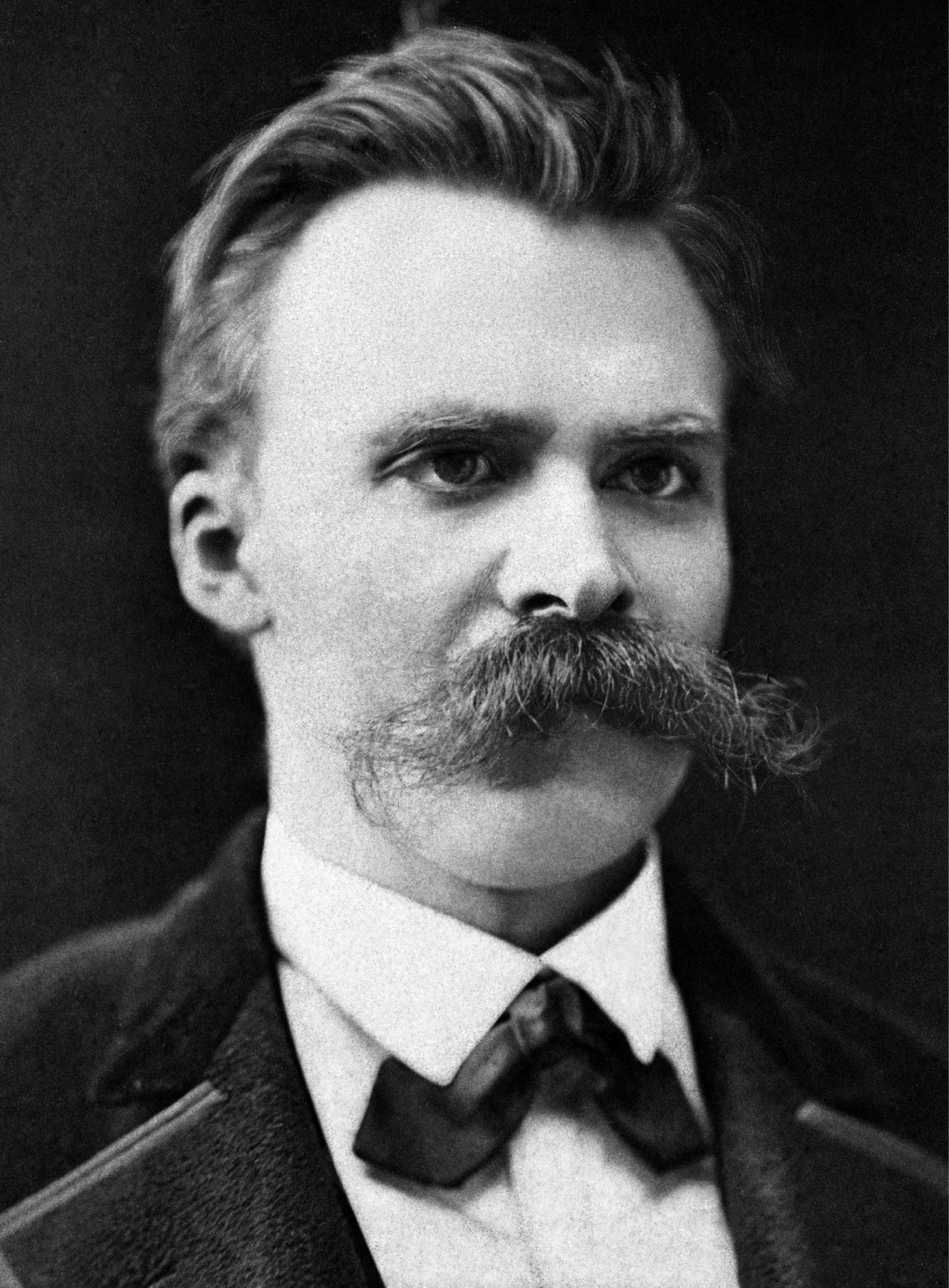
Friedrich Nietzsche
Author · 143 books
Friedrich Wilhelm Nietzsche (Ph.D., Philology, Leipzig University, 1869) was a German philosopher of the late 19th century who challenged the foundations of Christianity and traditional morality. He was interested in the enhancement of individual and cultural health, and believed in life, creativity, power, and the realities of the world we live in, rather than those situated in a world beyond. Central to his philosophy is the idea of “life-affirmation,” which involves a questioning of all doctrines that drain life's expansive energies, however socially prevalent those views might be. Often referred to as one of the first existentialist philosophers along with Søren Kierkegaard (1813–1855). From the Stanford Encyclopedia of Philosophy