Margins




548 Market St PMB 65688, San Francisco California 94104-5401 USA
© 2026 Paratext Inc. All rights reserved
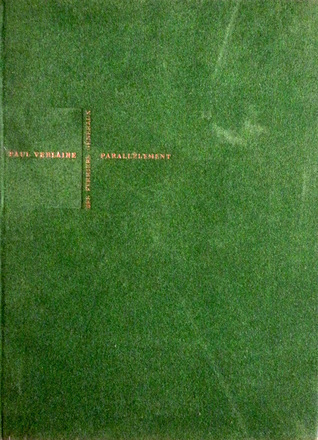
In 1889 Verlaine published Parallèlement (Parallelism), a series of erotic and religious poems in which he draws a parallel between his debauched life and the innocence of religious life. In his preface*** to the first edition (1889), Verlaine explains the title as part of a vaster poetic project, in "parallel" to Sagesse, Amour, and Bonheur, which expressed his earlier mystical aspirations to a Christian spirituality of religious faith and moral values. Parallèlement is however grounded in the other "infernal" side of human nature, notably taken up with the flesh rather than the spirit, the exaltation of erotic desires and polysexuality (e.g., Les Amies, in praise of lesbian love, or Filles, in which Verlaine takes up the theme of the brothel and his multiple affairs). Illustrated by Pierre Bonnard. Bonnard worked fervently on the project, mainly drawing inspiration from his own resources to capture the sensual intimacy of the poetry: many of his paintings from the late 1890s were quite attuned to Verlaine's vision, in particular the nude portraits of Marthe, his companion, and would serve as the groundwork for a number of the lithographs. Using a portable Kodak camera, he further realized a series of nude photographs** of Marthe in his apartment, rue de Douai, capturing in a casual snapshot style, with informal framing, what would become the sketchy freedom of the Parallèlement illustrations.