


Margins
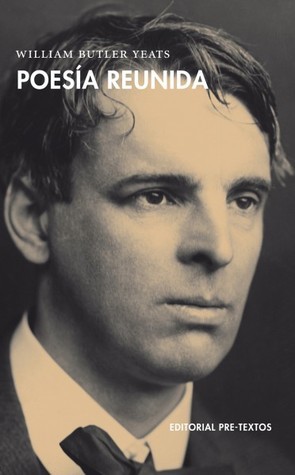
Poesía reunida book cover
Poesía reunida
2010
First Published
3.91
Average Rating
828
Number of Pages

Hijo y hermano de pintores, perteneciente a la minoría protestante de su patria representada por la Iglesia de Irlanda, William Butler Yeats (1865-1939) abrazó durante un tiempo la causa del nacionalismo irlandés y, en raro maridaje, unió a sus preocupaciones por la mitología de su país la inclinación por otras imaginerías y mitos, antiguos pero remodelados a su antojo, que llevó a la intrincada multiplicidad de temas y sentidos por la que se caracteriza su extensa obra. En él, como escribió Luis Cernuda, nos hallamos en presencia de un gran poeta. “Y no sólo de un gran poeta, sino de un hombre excepcional cuya actividad, tanto en la vida como en la poesía, resulta ejemplar y puede por lo tanto, y debe, ser guía para otros.” Yeats, proteico y en continua evolución, ofrece una obra coherente y tan variada como única: lo popular y lo elevado, lo íntimo y lo colectivo, lo sobrenatural y lo político, las raíces y la mirada al futuro, lo atemporal y la historia se unen en esas espirales que el poeta integró en su cosmovisión. La traducción que aquí se presenta es el resultado de muchos años de trabajo y también –esperamos que el lector pueda apreciarlo– de una intensidad de esfuerzo que el mero transcurso temporal es incapaz de medir. Nunca hasta la fecha se había abordado la traducción completa de la poesía de Yeats a nuestra lengua.
Avg Rating
3.91
Number of Ratings
23
5 STARS
26%
4 STARS
43%
3 STARS
26%
2 STARS
4%
1 STARS
0%
goodreads

Author

W.B. Yeats
W.B. Yeats
Author · 149 books

William Butler Yeats was an Irish poet and dramatist, and one of the foremost figures of 20th century literature. A pillar of both the Irish and British literary establishments, in his later years Yeats served as an Irish Senator for two terms. He was a driving force behind the Irish Literary Revival, and along with Lady Gregory and Edward Martyn founded the Abbey Theatre, serving as its chief during its early years. In 1923 he was awarded the Nobel Prize in Literature for what the Nobel Committee described as "inspired poetry, which in a highly artistic form gives expression to the spirit of a whole nation." He was the first Irishman so honored. Yeats is generally considered one of the few writers who completed their greatest works after being awarded the Nobel Prize; such works include The Tower (1928) and The Winding Stair and Other Poems (1929). Yeats was born and educated in Dublin but spent his childhood in County Sligo. He studied poetry in his youth, and from an early age was fascinated by both Irish legends and the occult. Those topics feature in the first phase of his work, which lasted roughly until the turn of the century. His earliest volume of verse was published in 1889, and those slow paced and lyrical poems display debts to Edmund Spenser and Percy Bysshe Shelley, as well as to the Pre-Raphaelite poets. From 1900, Yeats' poetry grew more physical and realistic. He largely renounced the transcendental beliefs of his youth, though he remained preoccupied with physical and spiritual masks, as well as with cyclical theories of life. —from Wikipedia

548 Market St PMB 65688, San Francisco California 94104-5401 USA
© 2026 Paratext Inc. All rights reserved