Authors

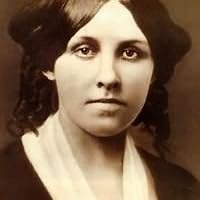
People best know American writer Louisa May Alcott for Little Women (1868), her largely autobiographical novel. As A.M. Barnard: Behind a Mask, or a Woman's Power (1866) The Abbot's Ghost, or Maurice Treherne's Temptation (1867) A Long Fatal Love Chase (1866 – first published 1995) First published anonymously: A Modern Mephistopheles (1877) Philosopher-teacher Amos Bronson Alcott, educated his four daughters, Anna, Louisa, Elizabeth and May and Abigail May, wife of Amos, reared them on her practical Christianity. Louisa spent her childhood in Boston and Concord, Massachusetts, where visits to library of Ralph Waldo Emerson, excursions into nature with Henry David Thoreau, and theatricals in the barn at Hillside (now "Wayside") of Nathaniel Hawthorne enlightened her days. Like Jo March, her character in Little Women, young Louisa, a tomboy, claimed: "No boy could be my friend till I had beaten him in a race, ... and no girl if she refused to climb trees, leap fences...." Louisa wrote early with a passion. She and her sisters often acted out her melodramatic stories of her rich imagination for friends. Louisa preferred to play the "lurid" parts in these plays, "the villains, ghosts, bandits, and disdainful queens." At 15 years of age in 1847, the poverty that plagued her family troubled her, who vowed: "I will do something by and by. Don’t care what, teach, sew, act, write, anything to help the family; and I’ll be rich and famous and happy before I die, see if I won’t!" Confronting a society that offered little opportunity to women, seeking employment, Louisa determined "...I will make a battering-ram of my head and make my way through this rough and tumble world." Whether as a teacher, seamstress, governess, or household servant, Louisa ably found work for many years. Career of Louisa as an author began with poetry and short stories in popular magazines. In 1854, people published Flower Fables, her first book, at 22 years of age. From her post as a nurse in Washington, District of Columbia, during the Civil War, she wrote home letters that based Hospital Sketches (1863), a milestone along her literary path. Thomas Niles, a publisher in Boston, asked 35-year-old Louisa in 1867 to write "a book for girls." She wrote Little Women at Orchard House from May to July 1868. Louisa and her sisters came of age in the novel, set in New England during Civil War. From her own individuality, Jo March, the first such American juvenile heroine, acted as a living, breathing person rather than the idealized stereotype that then prevailed in fiction of children. Louisa published more than thirty books and collections of stories. Only two days after her father predeceased her, she died, and survivors buried her body in Sleepy Hollow cemetery in Concord.

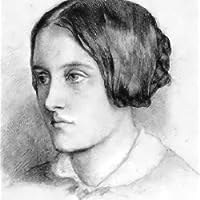
Christina Georgina Rossetti, sister of Dante Gabriel Rossetti, wrote lyrical religious works and ballads, such as "Up-hill" (1861). Frances Polidori Rossetti bore this most important women poet writing in nineteenth-century England to Gabriele Rossetti. Despite her fundamentally religious temperament, closer to that of her mother, this youngest member of a remarkable family of poets, artists, and critics inherited many of her artistic tendencies from her father. Dante made seemingly quite attractive if not beautiful but somewhat idealized sketches of Christina as a teenager. In 1848, James Collinson, one of the minor pre-Raphaelite brethren, engaged her but reverted to Roman Catholicism and afterward ended the engagement. When failing health and eyesight forced the professor into retirement in 1853, Christina and her mother started a day school, attempting to support the family, but after a year or so, gave it away. Thereafter, a recurring illness, diagnosed as sometimes angina and sometimes tuberculosis, interrupted a very retiring life that she led. From the early 1860s, she in love with Charles Cayley, but according to her brother William, refused to marry him because "she enquired into his creed and found he was not a Christian." Milk-and-water Anglicanism was not to her taste. Lona Mosk Packer argues that her poems conceal a love for the painter William Bell Scott, but there is no other evidence for this theory, and the most respected scholar of the Pre-Raphaelite movement disputes the dates on which Packer thinks some of the more revealing poems were written. All three Rossetti women, at first devout members of the evangelical branch of the Church of England, were drawn toward the Tractarians in the 1840s. They nevertheless retained their evangelical seriousness: Maria eventually became an Anglican nun, and Christina's religious scruples remind one of Dorothea Brooke in George Eliot's Middlemarch : as Eliot's heroine looked forward to giving up riding because she enjoyed it so much, so Christina gave up chess because she found she enjoyed winning; pasted paper strips over the antireligious parts of Swinburne's Atalanta in Calydon (which allowed her to enjoy the poem very much); objected to nudity in painting, especially if the artist was a woman; and refused even to go see Wagner's Parsifal, because it celebrated a pagan mythology. After rejecting Cayley in 1866, according one biographer, Christina (like many Victorian spinsters) lived vicariously in the lives of other people. Although pretty much a stay-at-home, her circle included her brothers' friends, like Whistler, Swinburne, F.M. Brown, and Charles Dodgson (Lewis Carroll). She continued to write and in the 1870s to work for the Society for Promoting Christian Knowledge. She was troubled physically by neuralgia and emotionally by Dante's breakdown in 1872. The last 12 years of her life, after his death in 1882, were quiet ones. She died of cancer.

Clement Clarke Moore, (July 15, 1779 – July 10, 1863), is best known as the credited author of A Visit From St. Nicholas (more commonly known today as Twas the Night Before Christmas). Clement C. Moore was more famous in his own day as a professor of Oriental and Greek literature at Columbia College (now Columbia University) and at General Theological Seminary, who compiled a two volume Hebrew dictionary. He was the only son of Benjamin Moore, a president of Columbia College and bishop of the Episcopal Diocese of New York, and his wife Charity Clarke. Clement Clarke Moore was a graduate of Columbia College (1798), where he earned both his B.A. and his M.A.. He was made professor of Biblical learning in the General Theological Seminary in New York (1821), a post that he held until 1850. The ground on which the seminary now stands was his gift. [1] From 1840 to 1850, he was a board member of The New York Institution for the Blind at 34th Street and 9th Avenue (now The New York Institute for Special Education). He compiled a Hebrew and English Lexicon (1809), and published a collection of poems (1844). Upon his death in 1863 at his summer residence in Newport, Rhode Island, his funeral was held in Trinity Church, Newport, where he had owned a pew. Then his body was interred in the cemetery at St. Luke's Episcopal Church on Hudson St., in New York City. On November 29, 1899, his body was reinterred in Trinity Churchyard Cemetery in New York. The Moore house, Chelsea, at the time a country estate, gave its name to the surrounding neighborhood of Chelsea, Manhattan, and Moore's land in the area is noted today by Clement Clark Moore Park, located at 10th Avenue and 22nd Street. The playground there opened November 22, 1968, and it was named in memory of Clement Clarke Moore by local law during the following year. The 1995 renovations to Clement Clarke Moore Park included a new perimeter fence, modular play equipment, safety surfacing, pavements and transplanted trees. This park is a popular playground area for local residents, who gather there the last Sunday of Advent for a reading of Twas the Night Before Christmas. [2] Much of the neighborhood was once the property of Maj. Thomas Clarke, Clement's maternal grandfather and a retired British veteran of the French and Indian War. Clarke named his house for a hospital in London that served war veterans. 'Chelsea' was later inherited by Thomas Clarke's daughter, Charity Clarke Moore, and ultimately by grandson Clement and his family. Clement Clarke Moore's wife, Catharine Elizabeth Taylor, was of English and Dutch descent being a direct descendant of the Van Cortlandt family, once the major landholders in the lower Hudson Valley of New York. As a girl, Moore's mother, Charity Clarke, wrote letters to her English cousins that are preserved at Columbia University and show her disdain for the policies of the English Monarchy and her growing sense of patriotism in pre-revolutionary days. The Moore children have several living descendants among them members of the Ogden family. In 1855, one of Clement's daughters, Mary C. Moore Ogden painted 'illuminations' to go with her father's celebrated verse. A book with her paintings as illustrations is A Visit from St. Nicholas (Twas the Night Before Christmas). Copyright 1995 by International Resourcing Services, Inc., 60 Revere Drive, Suite 725, Northbrook, Illinois, 60062.

Emily Dickinson was an American poet who, despite the fact that less than a dozen of her nearly eighteen hundred poems were published during her lifetime, is widely considered one of the most original and influential poets of the 19th century. Dickinson was born to a successful family with strong community ties, she lived a mostly introverted and reclusive life. After she studied at the Amherst Academy for seven years in her youth, she spent a short time at Mount Holyoke Female Seminary before returning to her family's house in Amherst. Thought of as an eccentric by the locals, she became known for her penchant for white clothing and her reluctance to greet guests or, later in life, even leave her room. Most of her friendships were therefore carried out by correspondence. Although Dickinson was a prolific private poet, fewer than a dozen of her nearly eighteen hundred poems were published during her lifetime.The work that was published during her lifetime was usually altered significantly by the publishers to fit the conventional poetic rules of the time. Dickinson's poems are unique for the era in which she wrote; they contain short lines, typically lack titles, and often use slant rhyme as well as unconventional capitalization and punctuation.Many of her poems deal with themes of death and immortality, two recurring topics in letters to her friends. Although most of her acquaintances were probably aware of Dickinson's writing, it was not until after her death in 1886—when Lavinia, Emily's younger sister, discovered her cache of poems—that the breadth of Dickinson's work became apparent. Her first collection of poetry was published in 1890 by personal acquaintances Thomas Wentworth Higginson and Mabel Loomis Todd, both of whom heavily edited the content. A complete and mostly unaltered collection of her poetry became available for the first time in 1955 when The Poems of Emily Dickinson was published by scholar Thomas H. Johnson. Despite unfavorable reviews and skepticism of her literary prowess during the late 19th and early 20th century, critics now consider Dickinson to be a major American poet. For more information, please see http://www.answers.com/topic/emily-di...

Edward Estlin Cummings was born in Cambridge, Massachusetts, on October 14, 1894. He began writing poems as early as 1904 and studied Latin and Greek at the Cambridge Latin High School. He received his BA in 1915 and his MA in 1916, both from Harvard University. His studies there introduced him to the poetry of avant-garde writers, such as Gertrude Stein and Ezra Pound. In 1917, Cummings published an early selection of poems in the anthology Eight Harvard Poets. The same year, Cummings left the United States for France as a volunteer ambulance driver in World War I. Five months after his assignment, however, he and a friend were interned in a prison camp by the French authorities on suspicion of espionage (an experience recounted in his novel, The Enormous Room) for his outspoken anti-war convictions. After the war, he settled into a life divided between houses in rural Connecticut and Greenwich Village, with frequent visits to Paris. He also traveled throughout Europe, meeting poets and artists, including Pablo Picasso, whose work he particularly admired. In 1920, The Dial published seven poems by Cummings, including "Buffalo Bill ’s.” Serving as Cummings’ debut to a wider American audience, these “experiments” foreshadowed the synthetic cubist strategy Cummings would explore in the next few years. In his work, Cummings experimented radically with form, punctuation, spelling, and syntax, abandoning traditional techniques and structures to create a new, highly idiosyncratic means of poetic expression. Later in his career, he was often criticized for settling into his signature style and not pressing his work toward further evolution. Nevertheless, he attained great popularity, especially among young readers, for the simplicity of his language, his playful mode and his attention to subjects such as war and sex. The poet and critic Randall Jarrell once noted that Cummings is “one of the most individual poets who ever lived—and, though it sometimes seems so, it is not just his vices and exaggerations, the defects of his qualities, that make a writer popular. But, primarily, Mr. Cummings’s poems are loved because they are full of sentimentally, of sex, of more or less improper jokes, of elementary lyric insistence.” During his lifetime, Cummings received a number of honors, including an Academy of American Poets Fellowship, two Guggenheim Fellowships, the Charles Eliot Norton Professorship at Harvard, the Bollingen Prize in Poetry in 1958, and a Ford Foundation grant. At the time of his death, September 3, 1962, he was the second most widely read poet in the United States, after Robert Frost. He is buried in Forest Hills Cemetery in Boston, Massachusetts. source: http://www.poets.org/poetsorg/poet/e-...