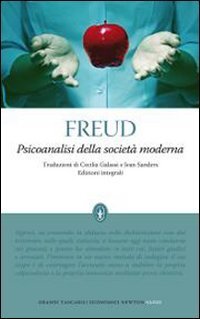



Traduzioni di Cecilia Galassi e Jean Sanders Edizioni integrali Da Considerazioni attuali sulla guerra e sulla morte a Psicologia collettiva e analisi dell’Io, da La morale sessuale «civile» e il nervosismo moderno a Contributo a una discussione sul suicidio, gli studi e le ricerche contenuti in questo volume indagano la psicologia della vita collettiva. Essa è considerata positivamente, perché la vita sociale consente l’ampliamento della coscienza umana, e negativamente, perché impone condizionamenti e repressioni. Freud fornisce quindi la sua interpretazione dei grandi problemi sociali su cui si interroga l’uomo la guerra, il condizionamento dell’individuo all’interno del gruppo, l’intolleranza per i diversi, il rapporto tra la morale pubblica e quella privata. «Signori, va crescendo la sfiducia nelle dichiarazioni rese dai testimoni, sulle quali, tuttavia, si basano oggi tante condanne nei processi e questo ha stimolato in tutti voi, futuri giudici e avvocati, l’interesse in un nuovo metodo di indagine il cui scopo è di costringere l’accusato stesso a stabilire la propria colpevolezza o la propria innocenza mediante prove obiettive.» Sigmund Freud padre della psicoanalisi, nacque a Freiberg, in Moravia, nel 1856. Autore di opere di capitale importanza (tra le quali citeremo soltanto L’interpretazione dei sogni, Tre saggi sulla sessualità, Totem e tabù, Psicopatologia della vita quotidiana, Al di là del principio del piacere), insegnò all’università di Vienna dal 1920 fino al 1938, quando fu costretto dai nazisti ad abbandonare l’Austria. Morì l’anno seguente a Londra, dove si era rifugiato insieme con la famiglia. Di Freud la Newton Compton ha pubblicato molti saggi in volumi singoli e la raccolta Opere 1886/1921.
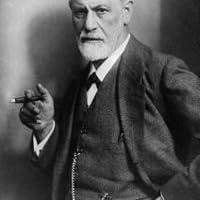
Author

Dr. Sigismund Freud (later changed to Sigmund) was a neurologist and the founder of psychoanalysis, who created an entirely new approach to the understanding of the human personality. He is regarded as one of the most influential—and controversial—minds of the 20th century. In 1873, Freud began to study medicine at the University of Vienna. After graduating, he worked at the Vienna General Hospital. He collaborated with Josef Breuer in treating hysteria by the recall of painful experiences under hypnosis. In 1885, Freud went to Paris as a student of the neurologist Jean Charcot. On his return to Vienna the following year, Freud set up in private practice, specialising in nervous and brain disorders. The same year he married Martha Bernays, with whom he had six children. Freud developed the theory that humans have an unconscious in which sexual and aggressive impulses are in perpetual conflict for supremacy with the defences against them. In 1897, he began an intensive analysis of himself. In 1900, his major work 'The Interpretation of Dreams' was published in which Freud analysed dreams in terms of unconscious desires and experiences. In 1902, Freud was appointed Professor of Neuropathology at the University of Vienna, a post he held until 1938. Although the medical establishment disagreed with many of his theories, a group of pupils and followers began to gather around Freud. In 1910, the International Psychoanalytic Association was founded with Carl Jung, a close associate of Freud's, as the president. Jung later broke with Freud and developed his own theories. After World War One, Freud spent less time in clinical observation and concentrated on the application of his theories to history, art, literature and anthropology. In 1923, he published 'The Ego and the Id', which suggested a new structural model of the mind, divided into the 'id, the 'ego' and the 'superego'. In 1933, the Nazis publicly burnt a number of Freud's books. In 1938, shortly after the Nazis annexed Austria, Freud left Vienna for London with his wife and daughter Anna. Freud had been diagnosed with cancer of the jaw in 1923, and underwent more than 30 operations. He died of cancer on 23 September 1939.