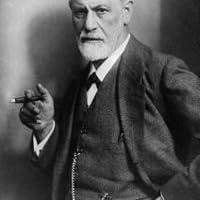
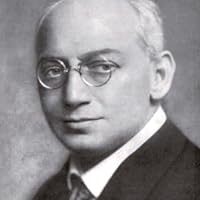
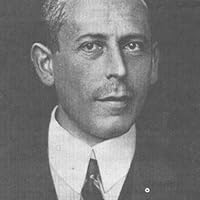
Authors

Dr. Sigismund Freud (later changed to Sigmund) was a neurologist and the founder of psychoanalysis, who created an entirely new approach to the understanding of the human personality. He is regarded as one of the most influential—and controversial—minds of the 20th century. In 1873, Freud began to study medicine at the University of Vienna. After graduating, he worked at the Vienna General Hospital. He collaborated with Josef Breuer in treating hysteria by the recall of painful experiences under hypnosis. In 1885, Freud went to Paris as a student of the neurologist Jean Charcot. On his return to Vienna the following year, Freud set up in private practice, specialising in nervous and brain disorders. The same year he married Martha Bernays, with whom he had six children. Freud developed the theory that humans have an unconscious in which sexual and aggressive impulses are in perpetual conflict for supremacy with the defences against them. In 1897, he began an intensive analysis of himself. In 1900, his major work 'The Interpretation of Dreams' was published in which Freud analysed dreams in terms of unconscious desires and experiences. In 1902, Freud was appointed Professor of Neuropathology at the University of Vienna, a post he held until 1938. Although the medical establishment disagreed with many of his theories, a group of pupils and followers began to gather around Freud. In 1910, the International Psychoanalytic Association was founded with Carl Jung, a close associate of Freud's, as the president. Jung later broke with Freud and developed his own theories. After World War One, Freud spent less time in clinical observation and concentrated on the application of his theories to history, art, literature and anthropology. In 1923, he published 'The Ego and the Id', which suggested a new structural model of the mind, divided into the 'id, the 'ego' and the 'superego'. In 1933, the Nazis publicly burnt a number of Freud's books. In 1938, shortly after the Nazis annexed Austria, Freud left Vienna for London with his wife and daughter Anna. Freud had been diagnosed with cancer of the jaw in 1923, and underwent more than 30 operations. He died of cancer on 23 September 1939.

Karl Abraham was an early important and influential German psychoanalyst, and a collaborator of Sigmund Freud, who called him his 'best pupil'. In 1907, he had his first contact with Freud, with whom he developed a lifetime relationship. Returning to Germany, he founded the Berliner Society of Psychoanalysis in 1910. He was the president of the International Psychoanalytical Association from 1914 to 1918 and again in 1925. Abraham collaborated with Freud on the understanding of manic-depressive illness, leading to Freud's paper on 'Mourning and Melancholia' in 1917. He was the analyst of Melanie Klein during 1924-1925, and of a number of other British psychoanalysts, including Edward Glover, James Glover, and Alix Strachey. He was a mentor for an influential group of German analysts, including Karen Horney, Helene Deutsch, and Franz Alexander. In the oral stage of development, the first relationships children have with objects (caretakers) determine their subsequent relationship to reality. Oral satisfaction can result in self-assurance and optimism, whereas oral fixation can lead to pessimism and depression. Moreover, a person with an oral fixation will present a disinclination to take care of him/herself and will require others to look after him/her. This may be expressed through extreme passivity (corresponding to the oral benign suckling substage) or through a highly active oral-sadistic behaviour (corresponding to the later sadistic biting substage). In the anal stage, when the training in cleanliness starts too early, conflicts may result between a conscious attitude of obedience and an unconscious desire for resistance. This can lead to traits such as frugality, orderliness and obstinacy, as well as to obsessional neurosis as a result of anal fixation (Abraham, 1921). In addition, Abraham based his understanding of manic-depressive illness on the study of the painter Giovanni Segantini: an actual event of loss is not itself sufficient to bring the psychological disturbance involved in melancholic depression. This disturbance is linked with disappointing incidents of early childhood; in the case of men always with the mother. This concept of the prooedipal “bad” mother was a new development in contrast to Freud’s oedipal mother and paved the way for the theories of Melanie Klein (May-Tolzmann, 1997). Another important contribution is his work “A short study of the Development of the Libido” (1924b), where he elaborated on Sigmund Freud’s “Mourning and Melancholia” (1917) and demonstrated the vicissitudes of normal and pathological object relations and reactions to object loss. Abraham (1920) also showed interest in cultural issues. He analyzed various myths suggesting their relation to dreams (1909) and wrote an interpretation of the spiritual activities of the Egyptian monotheistic Pharaoh Amenhotep IV (1912). Abraham died on 25 December 1925 from complications of a lung infection and may have suffered from lung cancer.