Margins




548 Market St PMB 65688, San Francisco California 94104-5401 USA
© 2026 Paratext Inc. All rights reserved
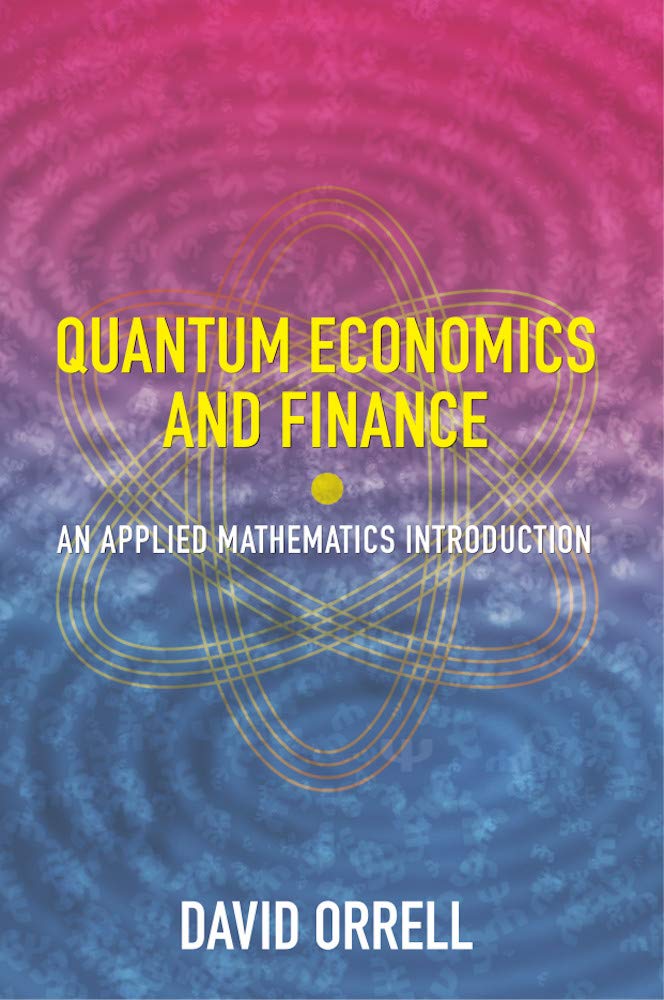
Written in clear and accessible language, this book covers the essential mathematics behind economic and finance topics such as quantum cognition, option pricing, and quantum game theory, and delves into the nuts and bolts of quantum mechanics, the principles of quantum economic modelling, and the basics of quantum computer logic. The word "quantum" is from the Latin for "how much" and in this book mathematician David Orrell shows how it applies to the world of economic transactions. On the way the reader will learn how quantum interference can be used to model cognitive dissonance, how a quantum walk goes further than a random walk, and how financial entanglement explains the rate of mortgage default. The book is aimed at anyone who wants to understand the quantum ideas working their way into economics and finance, without getting drowned in wave equations. As interest in quantum computing grows, many companies from established banks to startups are looking at ways to perform financial simulations using quantum algorithms. But what if we should be using quantum models anyway - because the monetary system has quantum properties of its own, and because they work? David Orrell is an applied mathematician with extensive experience in mathematical modelling, and the author of a dozen books on science and economics. Chapter INTRODUCTION CHAPTER 1: WHY QUANTUM? CHAPTER 2: SOME BASICS CHAPTER 3: QUANTUM UTILITY CHAPTER 4: MENTAL INTERFERENCE CHAPTER 5: THE QUANTUM WALK CHAPTER 6: OPTION PRICING CHAPTER 7: QUANTUM GAMES CHAPTER 8: QUANTUM OSCILLATIONS CHAPTER 9: PROBABILISTIC SUPPLY AND DEMAND CHAPTER 10: QUANTIZED SUPPLY AND DEMAND CHAPTER 11: THE QUANTUM MARKET CHAPTER 12: ENTANGLEMENTS CHAPTER 13: BUILDING QUANTUM MODELS CHAPTER 14: CONCLUSIONS QUANTUM GATES