Margins
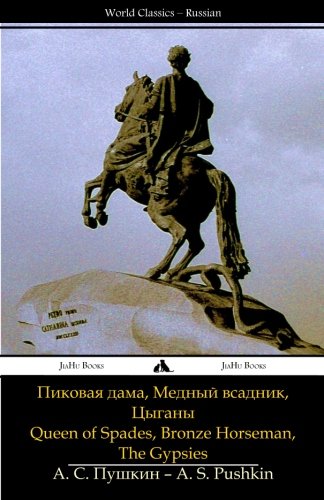
Queen of Spades, Bronze Horseman, The Gypsies by Aleksandr Sergeyevich Pushkin book cover
Queen of Spades, Bronze Horseman, The Gypsies by Aleksandr Sergeyevich Pushkin
1781
First Published
4.00
Average Rating
74
Number of Pages
Alexander Sergeyevich Pushkin was a Russian author of the Romantic era who is considered by many to be the greatest Russian poet and the founder of modern Russian literature. Notoriously touchy about his honour, Pushkin fought as many as twenty-nine duels, and was fatally wounded in such an encounter with Georges-Charles de Heeckeren d'Anthes. This volume contains three of his best known works - the moral tale Queen of Spades, and the narrative poems The Bronze Horseman and The Gypsies."

Avg Rating
4.00
Number of Ratings
4
5 STARS
25%
4 STARS
50%
3 STARS
25%
2 STARS
0%
1 STARS
0%
goodreads

Author

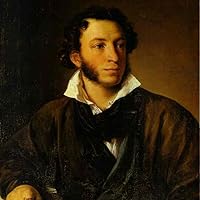
Alexander Pushkin
Alexander Pushkin
Author · 133 books

Works of Russian writer Aleksandr Sergeyevich Pushkin include the verse novel Eugene Onegin (1831), the play Boris Godunov (1831), and many narrative and lyrical poems and short stories. See also: Russian: Александр Сергеевич Пушкин French: Alexandre Pouchkine Norwegian: Aleksander Pusjkin Spanish:Aleksandr Pushkin People consider this author the greatest poet and the founder of modern literature. Pushkin pioneered the use of vernacular speech in his poems, creating a style of storytelling—mixing drama, romance, and satire—associated ever with greatly influential later literature. Pushkin published his first poem at the age of 15 years in 1814, and the literary establishment widely recognized him before the time of his graduation from the imperial lyceum in Tsarskoe Selo. Social reform gradually committed Pushkin, who emerged as a spokesman for literary radicals and in the early 1820s clashed with the government, which sent him into exile in southern Russia. Under the strict surveillance of government censors and unable to travel or publish at will, he wrote his most famous drama but ably published it not until years later. People published his verse serially from 1825 to 1832. Pushkin and his wife Natalya Goncharova, whom he married in 1831, later became regulars of court society. In 1837, while falling into ever greater debt amidst rumors that his wife started conducting a scandalous affair, Pushkin challenged her alleged lover, Georges d'Anthès, to a duel. Pushkin was mortally wounded and died two days later. Because of his liberal political views and influence on generations of Russian rebels, Pushkin was portrayed by Bolsheviks as an opponent to bourgeois literature and culture and a predecessor of Soviet literature and poetry. Tsarskoe Selo was renamed after him.

548 Market St PMB 65688, San Francisco California 94104-5401 USA
© 2026 Paratext Inc. All rights reserved