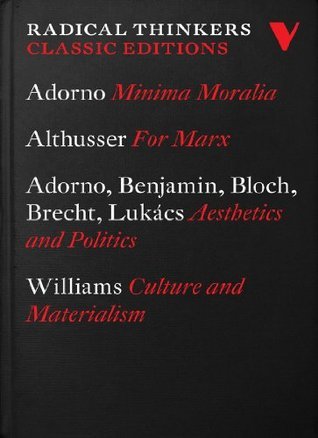



Four classic Verso titles in beautifully designed hardcovers, shrinkwrapped as a set, to commemorate Verso's 40 years at the forefront of theory publishing. In Radical Thinkers Classics, Verso reissues, in elegantly designer new hardcovers, four classic theory books. This set of four volumes Minima Moralia by Theodor Adorno : A reflection on everyday existence in the 'sphere of consumption of late Capitalism', this work is Adorno's literary and philosophical masterpiece built from aphorisms and reflections, shifting in register from personal experience to the most general theoretical problems. For Marx by Louis Althusser : the founding text of the school of “structuralist Marxism” which was presided over by the fascinating and enigmatic figure of Louis Althusser. Structuralism constituted an intellectual revolution in the 1960s and 1970s and radically transformed the way philosophy, political and social theory, history, science, and aesthetics were discussed and thought about. Culture and Materialism by Raymond Williams : A comprehensive introduction to the work of one of the outstanding intellectuals of the twentieth century, Williams' most significant work from over a twenty-year period in which he wrestled with the concepts of materialism and culture and their interrelationship. Aesthetics and Politics by Theodor Adorno, Walter Benjamin, Ernst Bloch, Bertolt Brecht, and Georg Lukacs : The most remarkable aesthetic debates in European cultural history, with an afterword by Fredric Jameson. The key texts of the great Marxist controversies over literature and art during these years are assembled in this single volume—a continuous, interlinked debate between thinkers who have become giants of twentieth-century intellectual history.
Authors


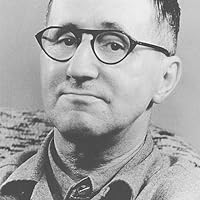
Bertolt Brecht (born Eugen Berthold Friedrich Brecht) was a German poet, playwright, and theatre director. A seminal theatre practitioner of the twentieth century, Brecht made equally significant contributions to dramaturgy and theatrical production, the latter particularly through the seismic impact of the tours undertaken by the Berliner Ensemble—the post-war theatre company operated by Brecht and his wife and long-time collaborator, the actress Helene Weigel—with its internationally acclaimed productions. From his late twenties Brecht remained a life-long committed Marxist who, in developing the combined theory and practice of his 'epic theatre', synthesized and extended the experiments of Piscator and Meyerhold to explore the theatre as a forum for political ideas and the creation of a critical aesthetics of dialectical materialism. Brecht's modernist concern with drama-as-a-medium led to his refinement of the 'epic form' of the drama (which constitutes that medium's rendering of 'autonomization' or the 'non-organic work of art'—related in kind to the strategy of divergent chapters in Joyce's novel Ulysses, to Eisenstein's evolution of a constructivist 'montage' in the cinema, and to Picasso's introduction of cubist 'collage' in the visual arts). In contrast to many other avant-garde approaches, however, Brecht had no desire to destroy art as an institution; rather, he hoped to 're-function' the apparatus of theatrical production to a new social use. In this regard he was a vital participant in the aesthetic debates of his era—particularly over the 'high art/popular culture' dichotomy—vying with the likes of Adorno, Lukács, Bloch, and developing a close friendship with Benjamin. Brechtian theatre articulated popular themes and forms with avant-garde formal experimentation to create a modernist realism that stood in sharp contrast both to its psychological and socialist varieties. "Brecht's work is the most important and original in European drama since Ibsen and Strindberg," Raymond Williams argues, while Peter Bürger insists that he is "the most important materialist writer of our time." As Jameson among others has stressed, "Brecht is also ‘Brecht’"—collective and collaborative working methods were inherent to his approach. This 'Brecht' was a collective subject that "certainly seemed to have a distinctive style (the one we now call 'Brechtian') but was no longer personal in the bourgeois or individualistic sense." During the course of his career, Brecht sustained many long-lasting creative relationships with other writers, composers, scenographers, directors, dramaturgs and actors; the list includes: Elisabeth Hauptmann, Margarete Steffin, Ruth Berlau, Slatan Dudow, Kurt Weill, Hanns Eisler, Paul Dessau, Caspar Neher, Teo Otto, Karl von Appen, Ernst Busch, Lotte Lenya, Peter Lorre, Therese Giehse, Angelika Hurwicz, and Helene Weigel herself. This is "theatre as collective experiment [...] as something radically different from theatre as expression or as experience." There are few areas of modern theatrical culture that have not felt the impact or influence of Brecht's ideas and practices; dramatists and directors in whom one may trace a clear Brechtian legacy include: Dario Fo, Augusto Boal, Joan Littlewood, Peter Brook, Peter Weiss, Heiner Müller, Pina Bausch, Tony Kushner and Caryl Churchill. In addition to the theatre, Brechtian theories and techniques have exerted considerable sway over certain strands of film theory and cinematic practice; Brecht's influence may be detected in the films of Joseph Losey, Jean-Luc Godard, Lindsay Anderson, Rainer Werner Fassbinder, Nagisa Oshima, Ritwik Ghatak, Lars von Trier, Jan Bucquoy and Hal Hartley. During the war years, Brecht became a prominent writer of the Exilliteratur. He expressed his opposition to the National Socialist and Fascist movements in his most famous plays.


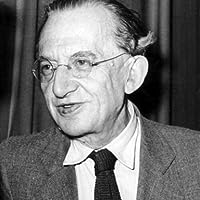
Theodor Wiesengrund Adorno was one of the most important philosophers and social critics in Germany after World War II. Although less well known among anglophone philosophers than his contemporary Hans-Georg Gadamer, Adorno had even greater influence on scholars and intellectuals in postwar Germany. In the 1960s he was the most prominent challenger to both Sir Karl Popper's philosophy of science and Martin Heidegger's philosophy of existence. Jürgen Habermas, Germany's foremost social philosopher after 1970, was Adorno's student and assistant. The scope of Adorno's influence stems from the interdisciplinary character of his research and of the Frankfurt School to which he belonged. It also stems from the thoroughness with which he examined Western philosophical traditions, especially from Kant onward, and the radicalness to his critique of contemporary Western society. He was a seminal social philosopher and a leading member of the first generation of Critical Theory. Unreliable translations hampered the initial reception of Adorno's published work in English speaking countries. Since the 1990s, however, better translations have appeared, along with newly translated lectures and other posthumous works that are still being published. These materials not only facilitate an emerging assessment of his work in epistemology and ethics but also strengthen an already advanced reception of his work in aesthetics and cultural theory.


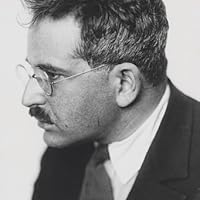
Walter Bendix Schönflies Benjamin was a German-Jewish Marxist literary critic, essayist, translator, and philosopher. He was at times associated with the Frankfurt School of critical theory and was also greatly inspired by the Marxism of Bertolt Brecht and Jewish mysticism as presented by Gershom Scholem. As a sociological and cultural critic, Benjamin combined ideas drawn from historical materialism, German idealism, and Jewish mysticism in a body of work which was a novel contribution to western philosophy, Marxism, and aesthetic theory. As a literary scholar, he translated the Tableaux Parisiens edition of Baudelaire's Les Fleurs du mal as well as Proust's In Search of Lost Time. His work is widely cited in academic and literary studies, in particular his essays The Task of the Translator and The Work of Art in the Age of Mechanical Reproduction. Influenced by Bachofen, Benjamin gave the name "auratic perception" to the aesthetic faculty through which civilization would recover a lost appreciation of myth.

György Lukács was a Hungarian Marxist philosopher, aesthetician, literary historian and critic. He is a founder of the tradition of Western Marxism, an interpretive tradition that departed from the Marxist ideological orthodoxy of the Soviet Union. He developed the theory of reification, and contributed to Marxist theory with developments of Karl Marx's theory of class consciousness. He was also a philosopher of Leninism. He ideologically developed and organised Lenin's pragmatic revolutionary practices into the formal philosophy of vanguard-party revolution. His literary criticism was influential in thinking about realism and about the novel as a literary genre. He served briefly as Hungary's Minister of Culture as part of the government of the short-lived Hungarian Soviet Republic.