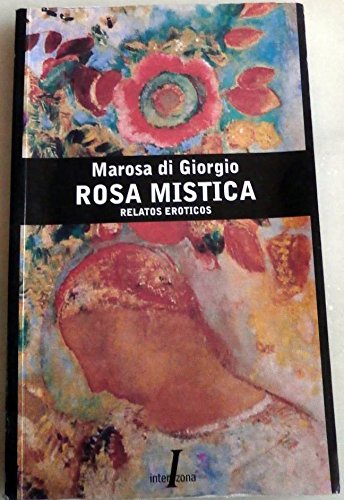
Uma das raras vozes surrealistas da literatura latino-americana, a uruguaia Marosa di Giorgio estreia no Brasil com livro de contos eróticos, pela coleção Sete Chaves Animais, folhas, flores, pedras preciosas, fluidos incontroláveis. O universo erótico de Marosa di Giorgio é personalíssimo e espantoso em sua exploração dos mistérios do corpo. Considerada uma das raras vozes surrealistas da literatura latino-americana, a uruguaia desenvolve narrativas em que o absurdo se apresenta em imagem alucinatórias, vivenciadas sem espanto pelos personagens. Nos contos, uma mulher copula com um furão; outra bota ovos; um olho nasce nas costas de uma terceira; outra ainda, muito jovem e recém-iniciada na vida sexual, se autofecunda e acredita que está se tornando Deus. As surpresas se sucedem em quarenta histórias breves, sob o nome Lumínile (luminosidade, em romeno), mais a narrativa extensa que dá título à coletânea, última obra publicada pela escritora, em 2003. As heroínas de Di Giorgio são mulheres, amiúde em seus momentos de desvirginização ou casamento. São tão importantes seus atos quanto as formas que brotam de seus corpos em mutações espontâneas.
Author

Marosa di Giorgio (1932–2004) was a Uruguayan poet and novelist. Marosa di Giorgio is considered one of the most singular voices in Latin America. Critics tend to agree that her writing is greatly influenced by European surrealism, although her vocabulary, style, and imagery are uniquely her own. Her work deals predominately with the imaginary world of childhood and nature. In the past few years, Latin American critics such as Hugo Achugar, Luis Bravo, Leonardo Garet, Sylvia Guerra, María Alejandra Minelli, and María Rosa Olivera-Williams have explored Marosa Di Giorgio's writing. Uruguayan poet Roberto Echavarren published in 1991 "Transplatinos", which offers an excellent introduction to Di Giorgio's writing. Selected poems from The March Hare have been translated into English by K.A. Kopple and published in the 1995 by Exact Change Yearbook. An article discussing gender politics, parody, and desire (as elaborated by Gilles Deleuze) also written by K.A. Kopple appeared in March 2000 in the Journal of Latin American Cultural Studies. In'Identity, Nation, Discourse: Latin American Women Writers and Artists, edited by Claire Taylor (Cambridge Scholars Publishing, 2009), Soledad Montañez opens up a new discussion of Di Giorgio's erotic writing. Montañez shows how "Di Giorgio's erotic prose illustrates the representation and performance of patriarchal hierarchy as a perverse comedy, creating a genre that constructs gender narratives in order to undermine the patriarchal system from within."Montañez also affirms that "The effect achieved in Marosa's radicalised narrative is ultimately a mocking performance, a burlesque discourse that reveals and denounces domination and power. Through a perverse representation Marosa exposes the complicated matter of culturally constructed sexual norms and develops a writing that is at the same time disturbing and astonishing" (2009: 158). In 1982 she received the Fraternity Award for literature